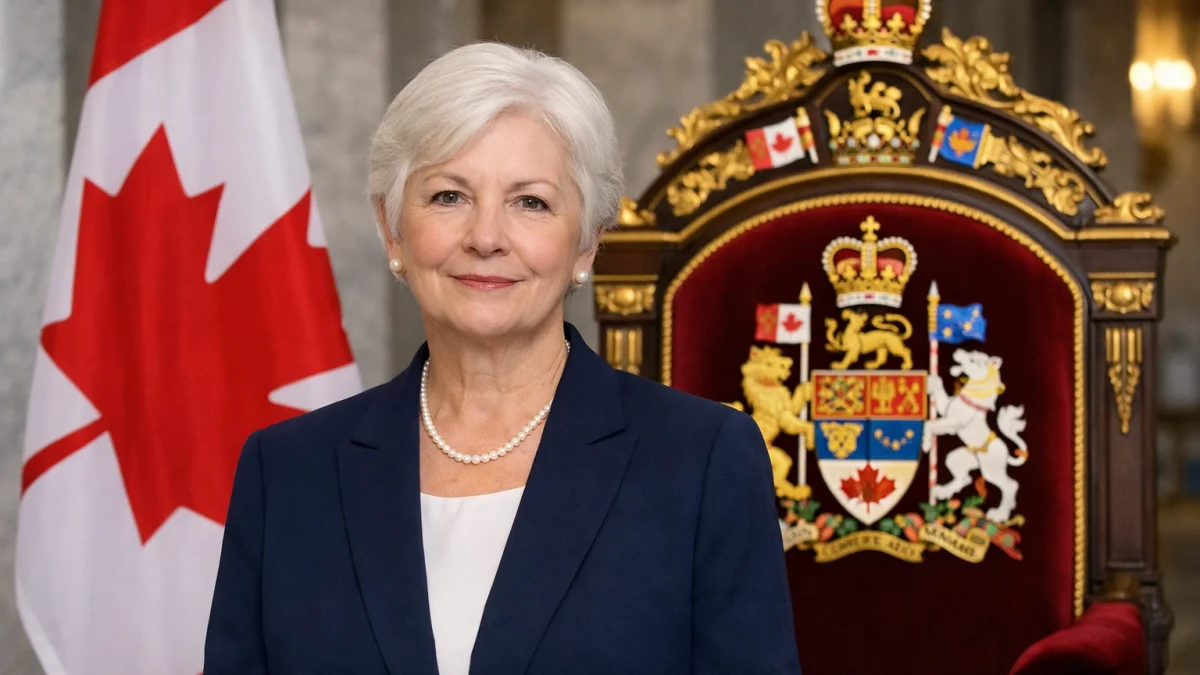


OTTAWA — Retired Supreme Court Justice Louise Arbour was sworn in as Canada’s 31st Governor General on Monday, becoming the representative of King Charles III in the country’s constitutional monarchy, Prime Minister Mark Carney’s office said.
Arbour, 79, succeeded Mary Simon, Canada’s first Indigenous governor general, in a ceremony at the Senate building in Ottawa. The appointment was announced by Carney on May 5 after approval by the King.


The Governor General serves as the head of state’s representative, performing constitutional duties including granting royal assent to legislation, appointing senators and Supreme Court justices, and representing Canada at home and abroad. Arbour is a veteran jurist with a long career in human rights and international justice.
Arbour was appointed to the Supreme Court of Canada in 1999 after serving on the Ontario Court of Appeal. She previously worked as chief prosecutor for the International Criminal Tribunals for the former Yugoslavia and Rwanda and as UN High Commissioner for Human Rights.
In her installation speech, Arbour emphasized national unity and Canada’s role in global affairs. "Canada is near perfect," she said, according to reports from the ceremony, while acknowledging challenges including technological change and the need for social cohesion.
Carney praised Arbour’s decades of service. "As Canada’s next Governor General, Louise Arbour will represent the best of Canada to our citizens and to the world," he said in the May announcement.
The role is largely ceremonial but holds reserve powers in rare constitutional crises. Arbour is the first Governor General appointed during King Charles III’s reign.
Opposition figures offered mixed reactions. Conservative Leader Pierre Poilievre did not attend the ceremony, citing policy differences with Arbour’s past judicial record, media reports indicated.
As of Tuesday, Arbour had begun her official duties. Further details on her immediate agenda or transition plans were not immediately released by Rideau Hall, the Governor General’s residence. The installation marked a significant moment in Canada’s vice-regal tradition.