DUBAI — Oil prices fell on Thursday as tanker traffic increased through the Strait of Hormuz and concerns over immediate supply disruptions eased following a preliminary agreement aimed at reducing tensions involving Iran, according to market data and statements from U.S. officials.
Brent crude and U.S. West Texas Intermediate futures declined to levels last seen before the escalation of hostilities involving Iran earlier this year. Traders cited improving oil flows through the strategically important waterway, which carries a significant share of global seaborne crude exports, as a key factor behind the market move.
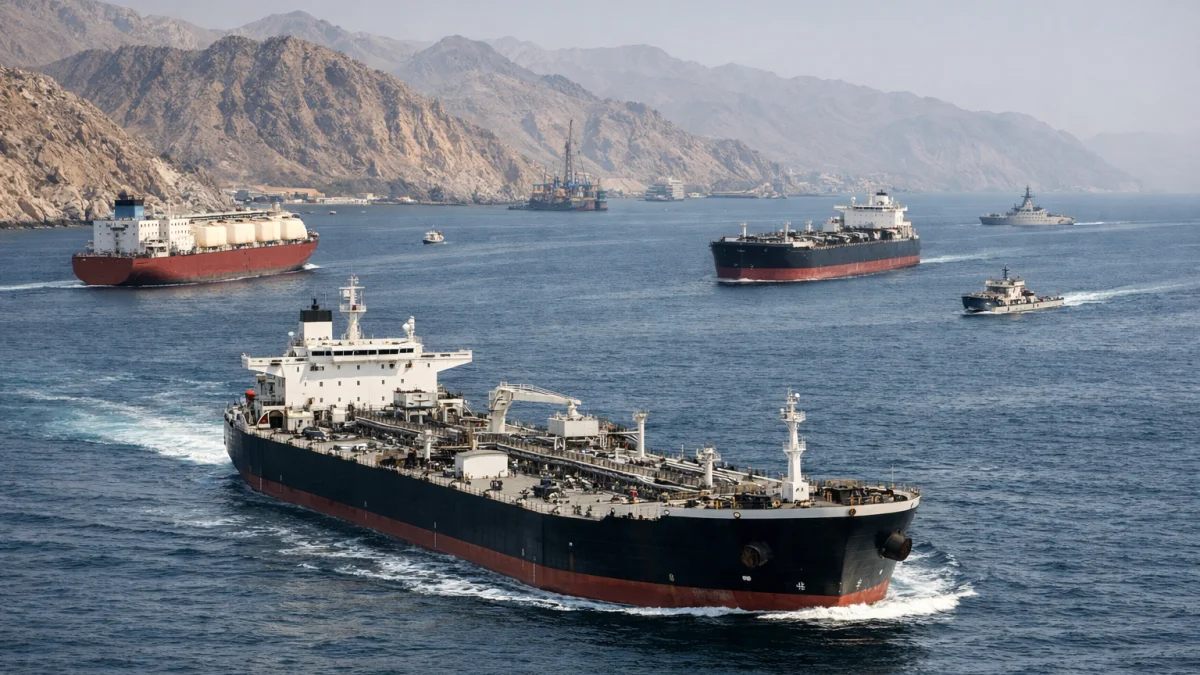
U.S. Energy Secretary Chris Wright said on Thursday that shipments through the Strait of Hormuz were approaching normal levels. According to Wright, at least 20 million barrels of oil exited the strait during the previous 24 hours, reflecting a recovery in maritime traffic after disruptions linked to regional tensions.
“Flows through the Strait of Hormuz are nearing normal,” Wright said during remarks reported by Reuters. His comments came as U.S. officials continued diplomatic efforts in Gulf countries following the announcement of a preliminary arrangement intended to reduce the risk of further escalation in the region.
Market participants said the return of tanker traffic helped alleviate concerns that oil supplies could remain stranded in the Persian Gulf. Reuters reported that vessel backlogs have begun to clear and that expectations of increased Middle Eastern exports contributed to downward pressure on prices.
Shipping activity through the strait had slowed during the recent conflict period, prompting concerns among energy traders and governments about potential supply shortages. The Strait of Hormuz lies between Oman and Iran and serves as a critical route for oil exports from major Gulf producers, including Saudi Arabia, Iraq, Kuwait and the United Arab Emirates.
Separate industry data released on Thursday indicated that Middle Eastern fuel oil exports are expected to reach a four-month high in June as transit conditions improve and producers restore shipments through established routes. However, export volumes remain below levels seen before the conflict escalated, according to trade-flow estimates cited by Reuters.
Analysts said the market was also responding to signs of ample short-term supply. Reuters reported that Brent contracts for immediate delivery traded below later-dated contracts, a market structure often associated with expectations of stronger near-term availability.
As of Thursday afternoon, oil markets continued to monitor shipping activity, diplomatic negotiations and production levels across the Middle East. While tanker movements through the Strait of Hormuz have increased, officials and traders said the situation remains subject to developments in ongoing regional talks.