

In the coastal state of La Guaira, where collapsed buildings still line streets scarred by twin earthquakes, María Andreína Pernalete gathered her two-year-old child, her mother and her husband under a reinforced column in their home as the ground convulsed on the evening of June 24. Seconds apart, a magnitude 7.2 foreshock and a 7.5 mainshock—the strongest in Venezuela in more than a century—ripped through the region.
The family survived the initial violent shaking with minor damage to their building. Like thousands of others, they could not safely return. They moved instead to a nearby convent that has become a temporary shelter. Pernalete, a communications manager for World Vision in Venezuela, described the disorientation that followed.


Official figures released in the days after the disaster painted a grim picture. At least 920 people were confirmed dead and more than 3,300 injured, according to statements from Venezuelan authorities including National Assembly leader Jorge Rodríguez. Some estimates placed the toll higher, with over 55,000 people reported missing at one point and fears that the final number of fatalities could rise significantly as search teams reached more remote or heavily damaged areas.
The earthquakes struck near San Felipe in Yaracuy state but caused the most severe destruction in La Guaira and parts of Caracas. Hospitals quickly filled beyond capacity. Rescue workers, both local volunteers and international teams from countries including the United States, Mexico and others, pulled survivors from rubble, including an 18-day-old baby and its mother, Dayana Patiño, along with other children and even pets in some reported cases.
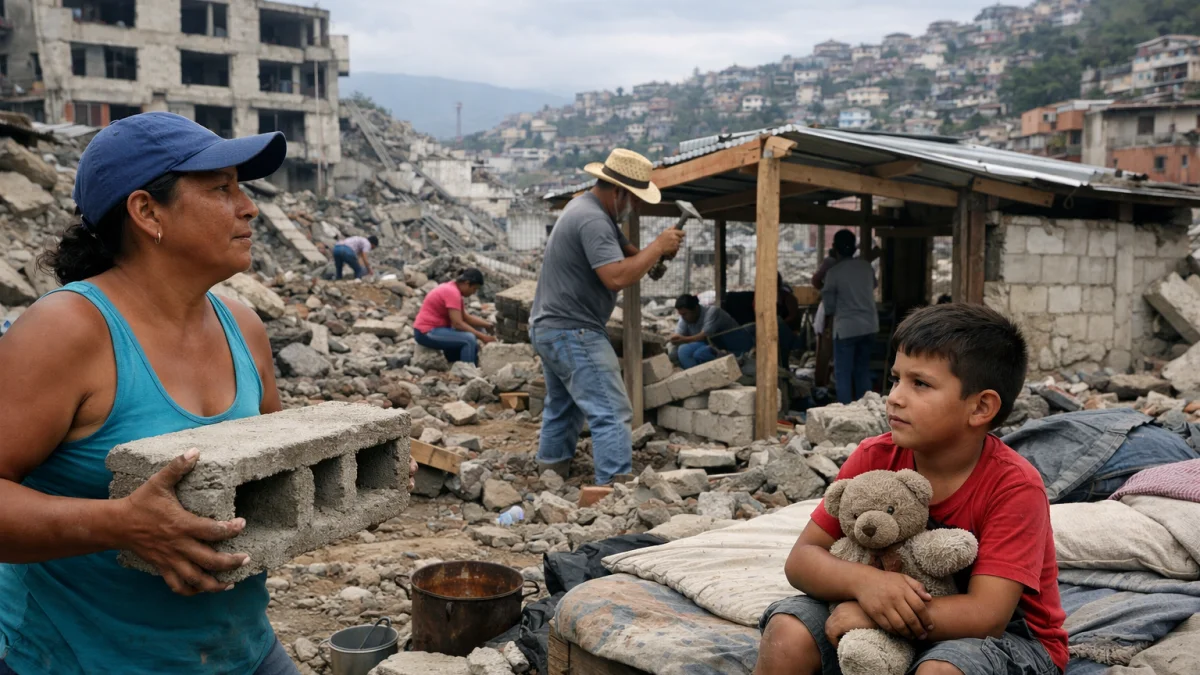
In neighborhoods like Catia La Mar, ordinary residents took up the search themselves when organized teams were stretched thin. With the critical 72-hour window for live rescues closing, people dug through debris with their bare hands, calling out names of missing loved ones. One resident told reporters she leapt from a first-floor window, breaking her foot, while fearing for relatives still inside.
The disaster struck a country already navigating complex challenges. Many buildings in affected urban areas were older or constructed under varying standards, leaving them vulnerable to the intense shaking. Aftershocks continued to rattle nerves and complicate efforts, with more than 100 recorded in the initial days.
For those who escaped with their lives, daily existence shifted abruptly. Displaced families crowded into shelters, relying on limited supplies of food, water and medicine. Health officials warned of risks from disrupted sanitation and overwhelmed medical facilities. In Caracas and La Guaira, scenes of volunteers distributing aid mixed with quiet moments of families sifting through what remained of their homes.
International assistance arrived quickly in some cases. The United States dispatched rescue workers, ships and aircraft. Humanitarian organizations mobilized to support search and recovery while assessing longer-term needs for housing and infrastructure repair. Estimates suggested billions of dollars in damage to homes and the economy.
Santiago Rodríguez Reggeti, a survivor, later described creating an app to help families track loved ones in hospitals amid the chaos. “I thought I was going to die,” another resident recounted to reporters, capturing the sudden terror many felt as the earth moved without significant warning.
As the immediate rescue phase transitions toward recovery, communities face the slow work of clearing rubble, mourning losses and planning rebuilding. In a nation where resilience has long been tested, the human cost of these earthquakes—measured in shattered homes, interrupted lives and uncertain futures—will shape daily reality for months and years ahead. For now, in makeshift shelters and amid the debris, Venezuelans continue the quiet, determined labor of moving forward one day at a time.