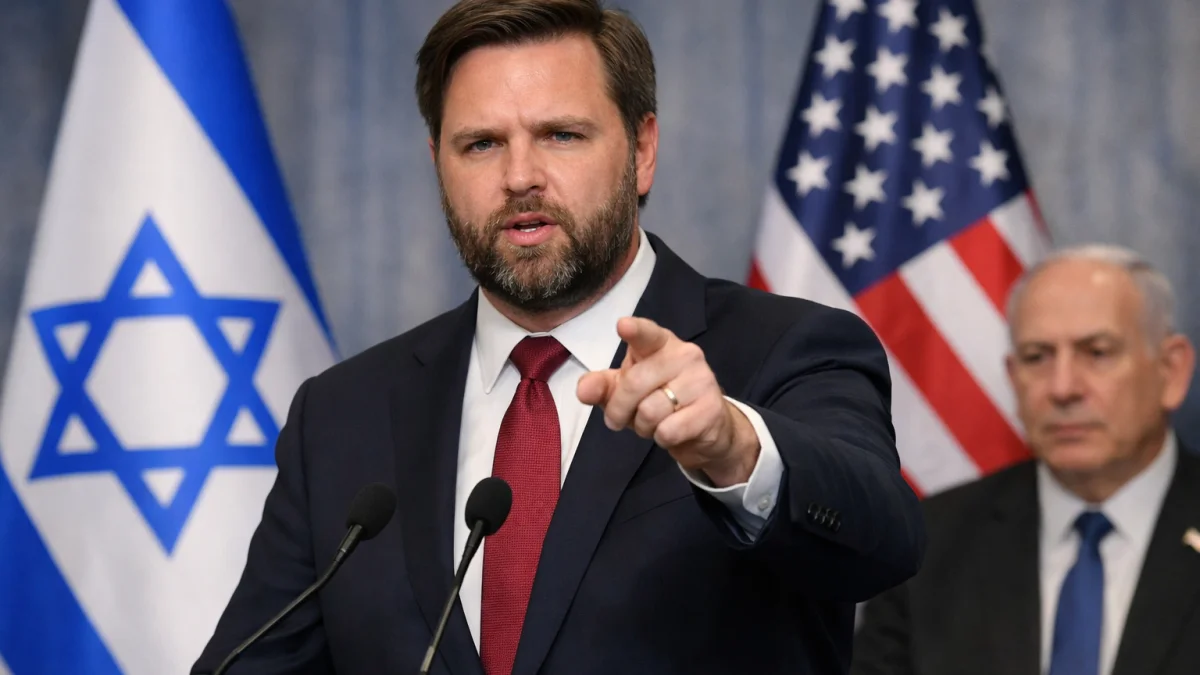
WASHINGTON — Vice President JD Vance warned Israeli officials on Thursday against criticizing the Trump administration’s agreement with Iran, urging them to support the deal as the United States’ key ally in the region.
Vance made the remarks during a White House briefing and in interviews, following the signing of a memorandum of understanding between the United States and Iran this week. The agreement aims to halt recent fighting, reopen the Strait of Hormuz to shipping and begin further negotiations on nuclear issues over a 60-day period.
The Trump administration has defended the preliminary pact amid domestic and international criticism. Israeli officials, including some in Prime Minister Benjamin Netanyahu’s cabinet, have expressed concerns that the deal does not sufficiently address Iran’s nuclear program, missile capabilities or support for regional proxies.
Vance pushed back against such criticism. “If I was in the cabinet of the Israeli government, I might not be attacking the only powerful ally that I have anywhere left in the entire world,” he said, according to reports of the briefing.
He added that Israeli leaders should “wake up and smell the reality of the situation,” emphasizing that President Donald Trump remains a strong supporter of Israel. Vance also referenced U.S. military aid to Israel, including defensive systems.
The administration has described the memorandum as a step toward regional stability. It includes immediate measures such as lifting aspects of a naval blockade and allowing commercial shipping to resume. Further technical negotiations are scheduled to begin soon.
Critics within the U.S., including some Republicans and Democrats, have questioned details of the agreement and whether it adequately prevents Iran from advancing its nuclear ambitions. Israeli concerns center on enforcement and long-term security implications.
Vance has expressed confidence that Israel will eventually back the deal once its benefits are clear. “What we know is this agreement is going to make Israel safer; it’s going to make the entire region safer,” he said in earlier interviews this week.
The full text of the memorandum has been subject to discussion, with some details still under negotiation. Implementation of initial steps, such as naval adjustments, has already begun, officials said.
Details on the timeline for additional talks and potential congressional involvement remain unclear as of Thursday. The agreement continues to draw reactions from multiple parties as the situation evolves.