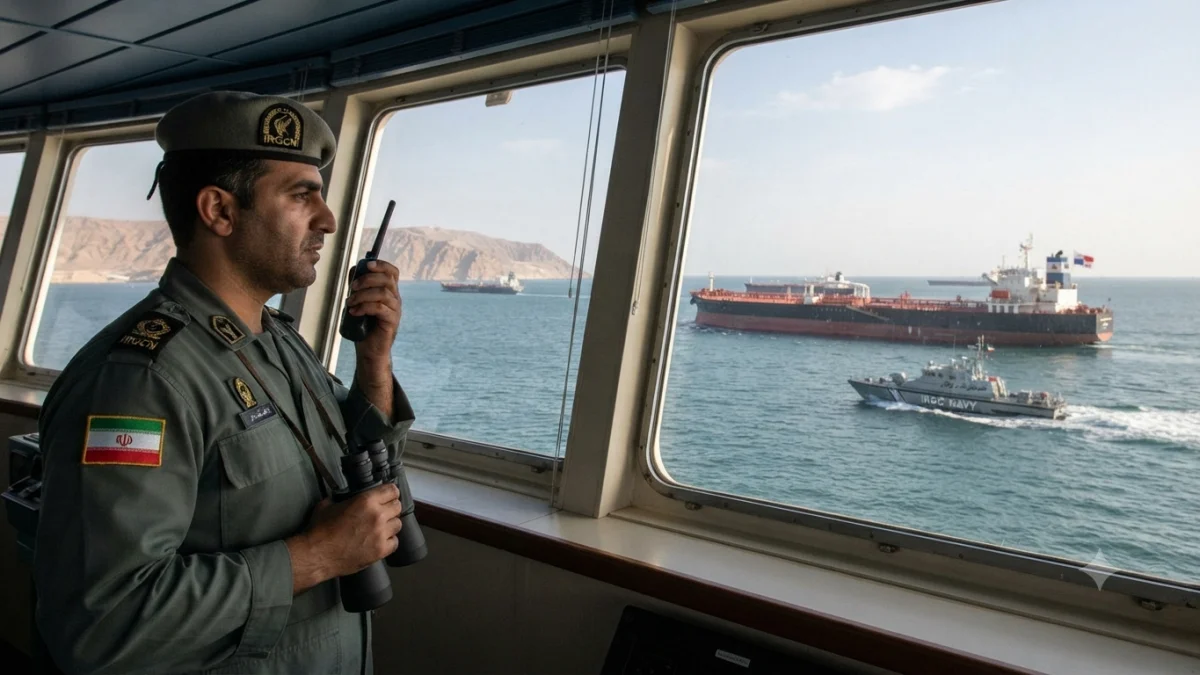


TEHRAN — Iran has set new conditions for fully reopening the Strait of Hormuz, tying access to the vital energy shipping route to a broad package of U.S. political, military and economic concessions, complicating diplomatic efforts to restore normal commercial traffic.
Mohammad Bagher Zolghadr, secretary of Iran’s Supreme National Security Council, said on Saturday that the strait would remain closed until the United States changed what Tehran described as hostile policies. His demands included an end to U.S. threats against Iran, a halt to attacks on Iran and its allies, the lifting of a U.S. naval blockade and sanctions, the withdrawal of U.S. forces from around Iran, compensation for war damage and the release of frozen Iranian assets.


Iranian Revolutionary Guards spokesperson Hossein Mohebbi said reopening the waterway depended on Washington accepting those conditions and was separate from negotiations between Iran and Oman.
“Whenever the United States accepts Iran’s conditions, the Strait of Hormuz will certainly be reopened,” Mohebbi said, according to Iran’s semi-official Tasnim news agency.
The statements came as Tehran and Oman reported progress toward an agreement on arrangements for shipping through the strait. Iranian Foreign Minister Abbas Araqchi said the two countries were close to an agreement on a new shipping route, but that the agreement alone would not reopen the waterway. Iran has rejected the previous traffic separation scheme and is discussing a temporary route with Oman while technical and legal issues are resolved.
The United States has taken a different position. A U.S. official told Reuters that Washington expected to lift its blockade of Iranian ports once commercial shipping through Hormuz was restored without impediments, with U.S. measures tied to Iran fulfilling its commitments.
Oman said negotiations with Iran had been “positive and constructive” and urged all parties to avoid actions that could undermine the talks.
The dispute has kept shipping through the strait, a major route for global oil and gas supplies, well below normal levels. On Saturday, the United Arab Emirates accused Iran of attacking a vessel affiliated with state oil company ADNOC with a missile while it transited the waterway. Iran had not immediately commented on that allegation.
Iranian President Masoud Pezeshkian has nevertheless expressed support for reaching an agreement, saying he believed it was the best time for a deal. Talks involving Oman remain ongoing, with no final agreement to fully reopen the Strait of Hormuz announced.