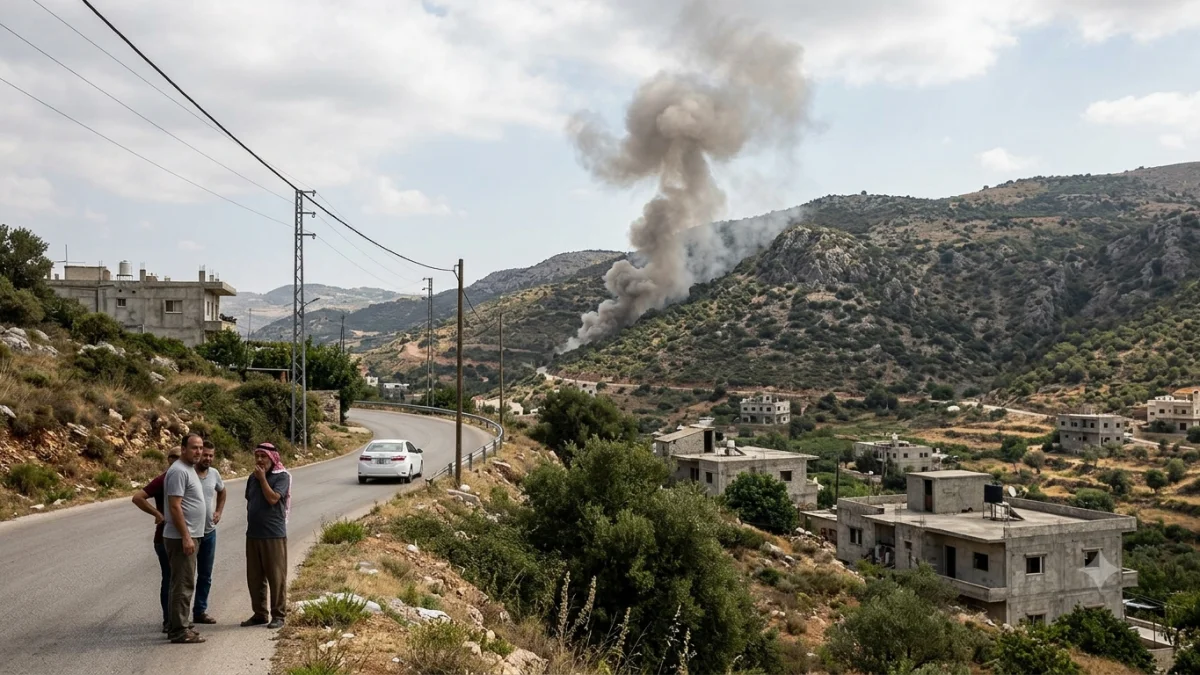


BEIRUT — Israeli forces launched airstrikes in southern Lebanon on Wednesday after the military accused Hezbollah of violating a U.S.-brokered ceasefire arrangement, marking a renewed escalation despite ongoing diplomatic efforts to stabilize the border.
The Israeli military said it had carried out "targeted strikes" against what it described as Hezbollah military infrastructure after issuing an evacuation warning for residents of the village of Mansouri. Military spokesperson Avichay Adraee said the operation was conducted in response to what Israel called a ceasefire violation by Hezbollah, although the military did not publicly specify the alleged breach.


Lebanon's health ministry said an Israeli strike in the Tibnin area killed one person and wounded around a dozen others. The casualty figures could not be independently verified.
The evacuation notice was the first issued by Israel for southern Lebanon in more than a month. Residents were instructed to leave the area before the strikes, which followed weeks of relative calm under a fragile security arrangement intended to reduce hostilities along the frontier.
The strikes came shortly after Lebanese and Israeli officials held U.S.-facilitated talks in Rome aimed at preserving the ceasefire framework and addressing longstanding security concerns, including Israel's military presence in parts of southern Lebanon and efforts to prevent renewed cross-border attacks.
Lebanese authorities condemned the attacks, while state media reported additional strikes in nearby areas. Hezbollah had not immediately announced military action in response, nor had it publicly commented on Israel's allegation of a ceasefire violation.
Israel has maintained that it reserves the right to act against what it says are threats posed by Hezbollah, even under the ceasefire arrangement. Lebanese officials, meanwhile, have repeatedly called for Israel to withdraw from territory it continues to control in southern Lebanon, arguing that continued military operations undermine the agreement.
The latest violence underscores the fragility of the truce reached earlier this year after months of cross-border fighting. While the agreement significantly reduced large-scale hostilities, both sides have traded accusations of repeated violations, and sporadic strikes have continued despite diplomatic efforts to prevent a broader conflict.
Officials involved in the negotiations have not announced any suspension of the diplomatic process, and discussions on border security and implementation of the ceasefire framework are expected to continue.