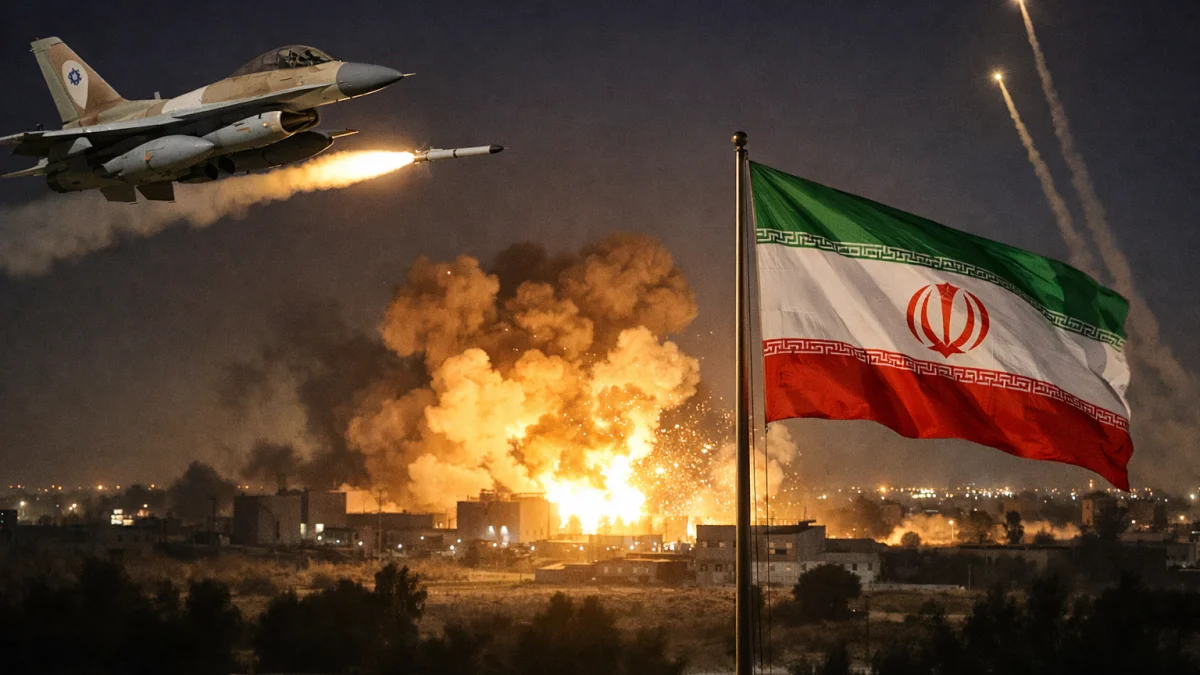


JERUSALEM — Israel launched airstrikes on military targets in western and central Iran early Monday, hours after Iran fired a barrage of missiles at Israel, the Israeli military said.
The exchange marked the most serious escalation between the two countries since a fragile ceasefire took effect in April. Iranian media reported explosions in Tehran, Tabriz and Isfahan, while Iranian authorities said the Karun petrochemical complex in Mahshahr was partially damaged.


The Israeli military said it targeted Iranian military sites in response to the missile attack. It reported no immediate casualties or damage from the Iranian barrage, which triggered air raid sirens across parts of Israel, including Jerusalem.
Iran's Islamic Revolutionary Guard Corps stated that it targeted the Tel Nof and Nevatim airbases in Israel, describing the action as retaliation for prior Israeli strikes, including recent operations in Beirut's southern suburbs.
"The attacks came after Iranian missile fire," an Israeli military spokesperson said in a statement.
The strikes followed Israel's actions in Lebanon on Sunday and occurred amid ongoing tensions in a broader regional conflict that began earlier in 2026. A U.S.-brokered ceasefire had paused major direct exchanges since early April, but the latest events threatened to undermine mediation efforts.
Iranian state media reported multiple waves of missiles launched toward Israel, with air defense systems activated. Israeli officials said most incoming projectiles were intercepted. Details on the extent of damage from Israel's strikes remained unclear in the immediate aftermath.
The developments come as international leaders, including U.S. President Donald Trump, have urged restraint to allow peace talks to progress. No immediate comments were available from Iranian officials on casualties or further responses.
As of Monday afternoon, both sides reported continued monitoring of the situation. Israeli authorities advised the public to follow civil defense instructions, while Iranian media called for heightened vigilance.
The incident highlights the fragility of the ceasefire amid wider hostilities involving regional actors. Further exchanges could not be ruled out, officials from both sides indicated indirectly through statements.
International observers continued to monitor the situation for potential impacts on regional stability and ongoing diplomatic initiatives.