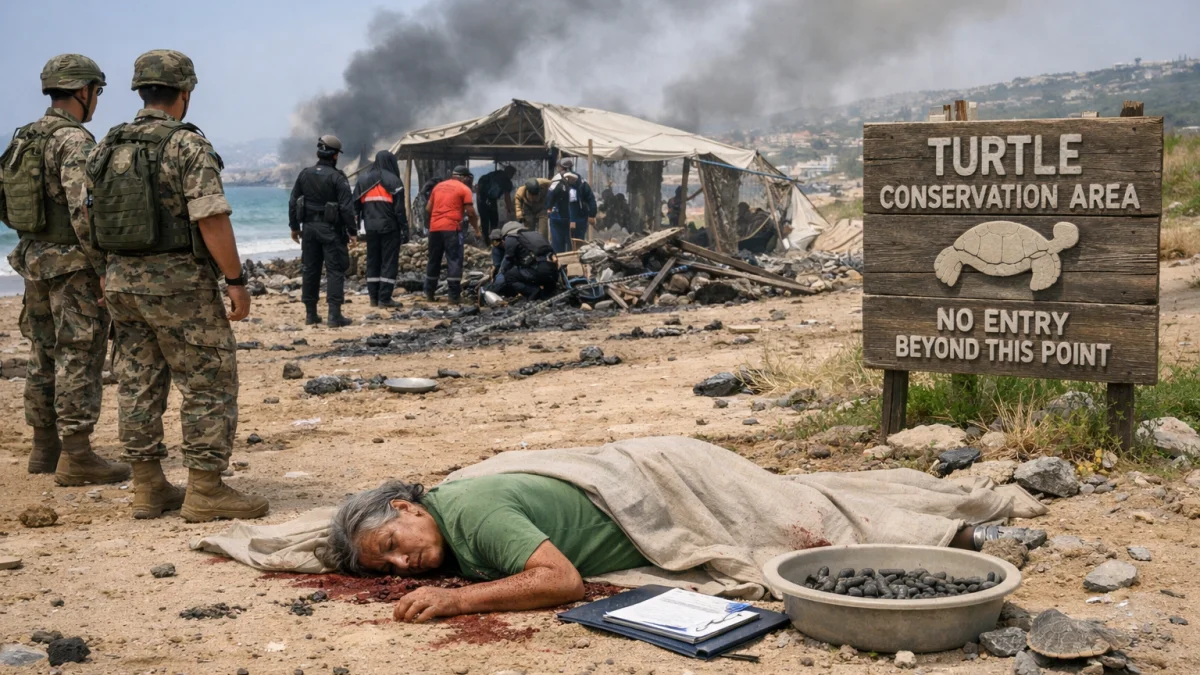


BEIRUT — Lebanese sea turtle conservationist Mona Khalil, known for her decades-long efforts to protect endangered marine life along Lebanon’s southern coast, has died after being critically wounded in an Israeli airstrike that struck her home in the village of Al-Mansouri earlier this month, according to family members, environmental groups and local officials. She was 76.
Khalil died on Friday after undergoing treatment for injuries sustained in the June 4 strike, which hit her beachfront residence near the coastal city of Tyre, according to Lebanese media reports and conservation organizations. An assistant who was also injured in the attack survived and was reported to be recovering.


The Israeli military said Khalil was not the intended target of the strike, according to reporting by The Associated Press. Further details regarding the military objective of the attack were not immediately available.
Khalil was widely recognized in Lebanon for her work protecting nesting grounds for endangered loggerhead and green sea turtles. She helped establish the Orange House project in Al-Mansouri, transforming a family property into a conservation center, ecotourism site and educational hub for volunteers and researchers. Over more than two decades, the initiative became one of the country’s best-known marine conservation efforts.
News of her death prompted tributes from environmental advocates across Lebanon and the wider region. Julien Jreissati, program director at Greenpeace Middle East and North Africa, said Khalil had “dedicated decades of her life to protecting the sea turtles and coastline of Mansouri.” He added that her death represented a loss for environmental activism in Lebanon and beyond.
Mourners gathered in Beirut on Sunday to pay their respects. Former volunteers and colleagues described Khalil as a mentor who inspired generations of conservationists. Journalist and environmental activist Fadia Jomaa, who worked closely with Khalil, told the AP that “Mona became our mother” for many volunteers involved in the project.
Khalil remained committed to her work despite repeated conflicts in southern Lebanon. During earlier hostilities involving Israel and the Lebanese armed group Hezbollah, she initially resisted leaving the coastal area before eventually evacuating for safety, according to colleagues.
Her death comes amid continued tensions and military exchanges in southern Lebanon. The conflict escalated in recent months, causing extensive damage across parts of the region and affecting both civilian communities and environmental sites, including coastal conservation areas near Tyre.
As of Tuesday, tributes to Khalil continued from environmental organizations, former volunteers and residents of southern Lebanon. Plans related to her burial and the future management of the Orange House conservation project remained unclear.