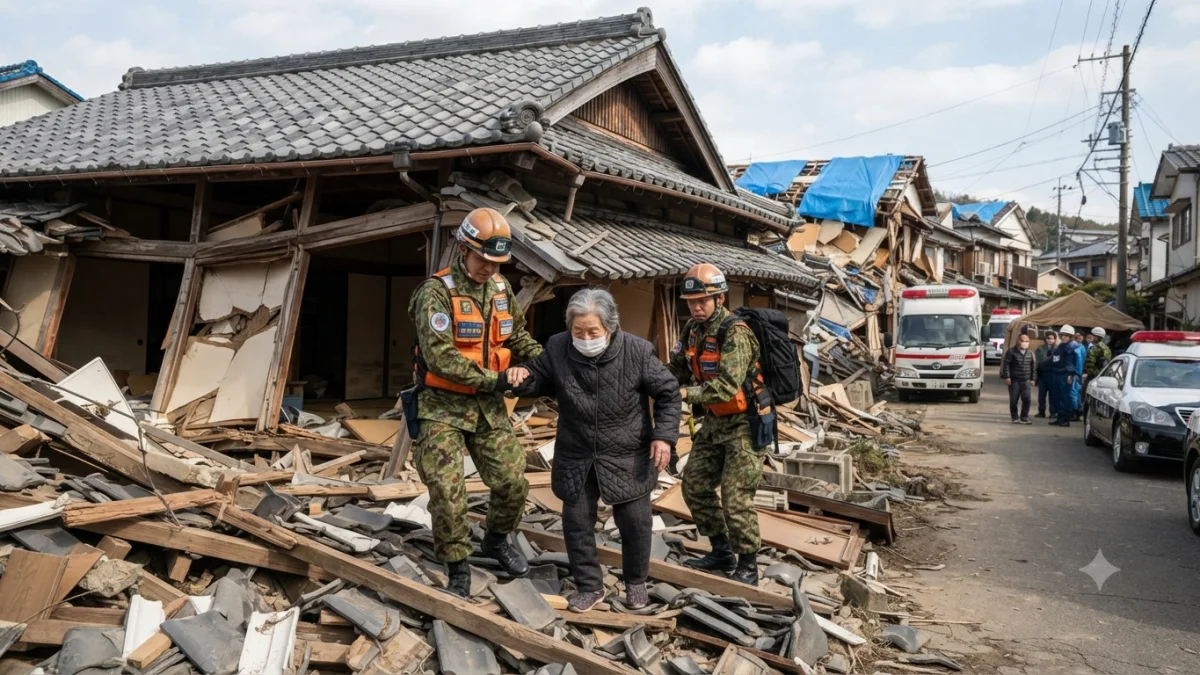


KUMAMOTO, Japan — The death toll from the powerful earthquake that struck southwestern Japan on July 28 has risen to 39, Kumamoto Prefecture said on Saturday, as authorities continued assessing damage and supporting thousands of displaced residents.
The prefectural government said one additional death had been confirmed in connection with the disaster, bringing the total to 39. Thirty-six people died directly as a result of the earthquake, while one person died apparently from heatstroke in circumstances believed to be related to the disaster. Two other deaths were under investigation for possible links to the quake, according to the prefecture.


The magnitude 7.1 earthquake struck at about 4:27 p.m. local time on July 28, with maximum seismic intensity of 7 recorded in Uki city and Hikawa town, the highest level on Japan's seven-point intensity scale.
Kumamoto Prefecture said the disaster had resulted in 205 casualties, including 23 people who were seriously injured. As of Aug. 8, about 6,355 people remained evacuated, according to local reporting citing prefectural figures.
The earthquake caused widespread structural and infrastructure damage across Kumamoto. The blast and partial collapse of Aeon Mall Kumamoto in Kashima was among the most serious incidents. Earlier reports said people were trapped after the explosion, which authorities believed was associated with a gas leak. The incident ultimately accounted for multiple deaths.
The quake also damaged roads and other infrastructure and disrupted utilities. Authorities have been working to restore essential services while residents in heavily affected areas deal with prolonged displacement and extreme summer temperatures.
Japan's government mobilized emergency personnel immediately after the earthquake. The Defense Ministry said it deployed aircraft for aerial damage assessments and sent liaison personnel to local governments to help gather information and coordinate the response.
The Japan Meteorological Agency and authorities had warned residents to remain alert for strong aftershocks following the initial quake. A tsunami advisory issued after the earthquake was later lifted. No abnormalities were reported at nearby nuclear facilities.
Officials continued to update casualty and damage figures as investigations progressed, with the prefectural government saying the latest death was newly determined to be connected to the disaster.