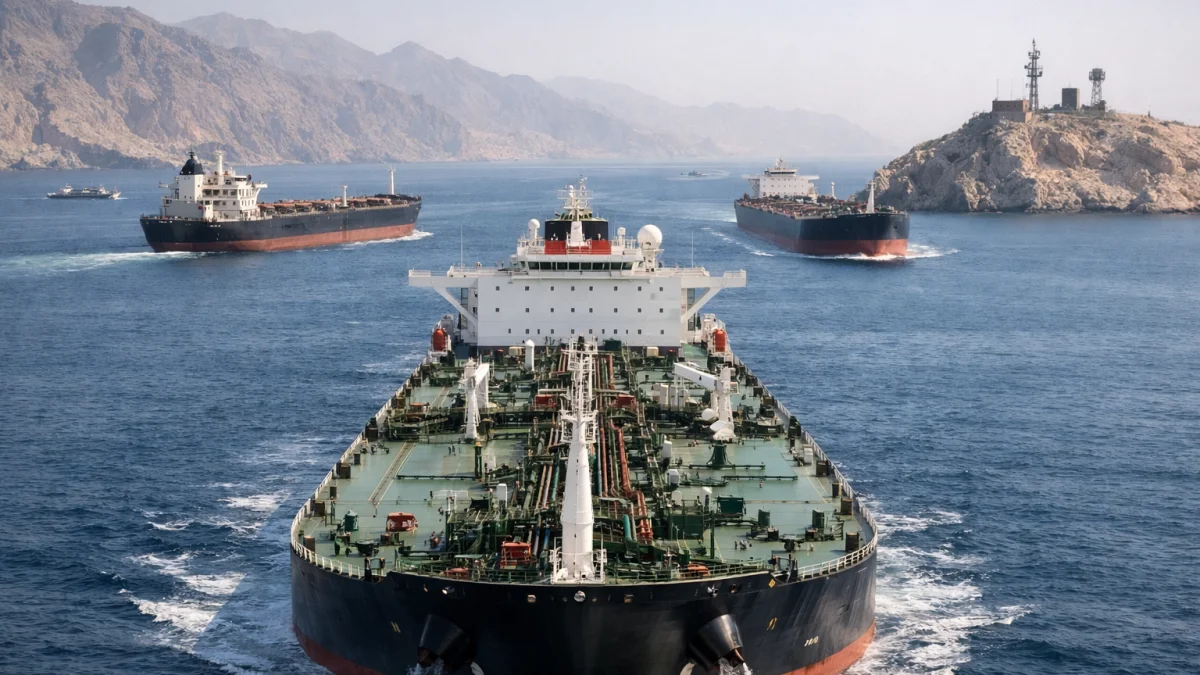


DUBAI — Oil tanker traffic through the Strait of Hormuz has begun to increase following the signing of a preliminary U.S.-Iran agreement this week that includes reopening the vital shipping chokepoint, maritime tracking data showed on Saturday.
Vessel trackers reported a surge in movements compared to recent weeks when traffic had been severely restricted amid the conflict, with several tankers and other commercial vessels transiting the strait after the memorandum of understanding took effect. The agreement, signed by U.S. President Donald Trump and Iranian President Masoud Pezeshkian, calls for an immediate ceasefire, the lifting of the U.S. naval blockade on Iranian ports, and resumed safe passage for commercial shipping.


MarineTraffic and other monitoring services indicated tankers crossing on Friday and Saturday, following the deal's provisions for toll-free transit for an initial 60-day period under Iranian administration in coordination with Oman. Iran’s Revolutionary Guard Corps navy stated that dozens of vessels, including oil tankers, had received permits and crossed with its coordination.
“This agreement allows for the safe and free passage of commercial vessels,” an Iranian official said, according to state media reports.
The strait, through which about a fifth of global oil supplies normally pass, had seen traffic drop sharply since late February 2026 due to hostilities, mine risks and the U.S. blockade. Pre-conflict daily transits averaged around 60 large vessels, but recent weeks saw only a trickle of five to 10 ships per day, according to industry data. Full recovery to prewar levels is expected to take time due to lingering security concerns, insurance issues and clearance requirements.
U.S. officials confirmed the naval blockade has been lifted as part of the deal, which also includes provisions for Iran to ease restrictions and facilitate oil exports. Oil prices eased in response to expectations of increased supply, though traders remain cautious.
The memorandum establishes a 60-day window for further negotiations on unresolved issues, including Iran’s nuclear program. Both sides have described the pact as a step toward stability, but implementation details on verification and sanctions relief remain under discussion.
Shipping sources said early transits were mostly smaller vessels and some pre-arranged movements, with larger crude tankers expected to follow as conditions stabilize. No major incidents were reported in initial crossings after the agreement.
Authorities in the region continue to monitor the situation as more vessels seek clearance through the Persian Gulf Strait Administration.