

BEIJING — China’s producer price inflation eased more than expected in July, while exports maintained rapid growth, underscoring the widening gap between strong external demand and weaker domestic price pressures in the world’s second-largest economy.
The producer price index (PPI), a measure of prices received by manufacturers, rose 3.5% year on year in July, the National Bureau of Statistics said on Sunday. That was down from a 4.1% increase in June and below the 3.8% rise forecast by economists in a Reuters poll.


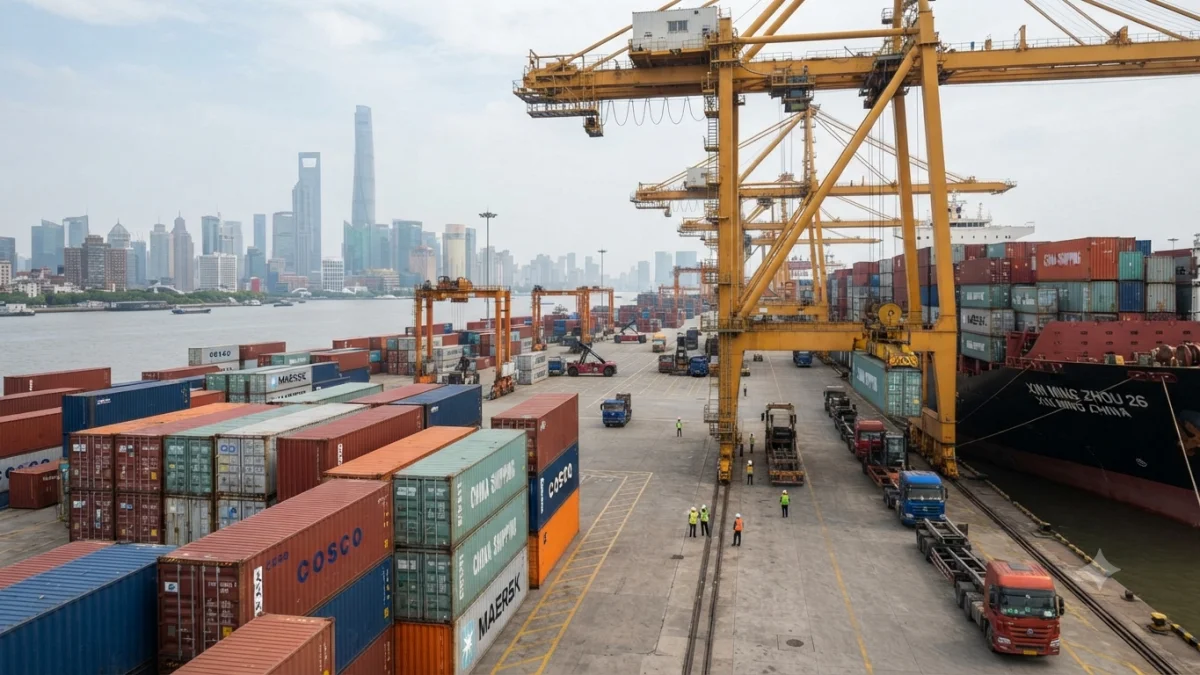
The data came two days after customs figures showed exports rose 23.9% in July from a year earlier in U.S. dollar terms. Although the pace slowed from June’s 27% increase, it exceeded the 22.2% growth forecast in a Reuters poll.
Strong overseas demand for high-technology products has helped sustain Chinese manufacturing as domestic consumption and investment have weakened. Semiconductor exports almost doubled in value during the first seven months from a year earlier, while overall high-tech exports increased 40.7%, customs data showed.
The export gains were broad geographically. Shipments to the United States rose 17% in July, while exports to the European Union increased 16%. Exports to South Korea jumped 46.6%, reflecting strong demand for high-tech products. China’s trade surplus narrowed to $112.5 billion in July from $125.62 billion in June.
Analysts said the combination of strong exports and softer producer prices highlighted the uneven nature of China’s economic recovery.
“Lower oil prices, combined with weakening demand, caused both (consumer and producer price inflation) in July to come in below expectations,” said Zhaopeng Xing, senior China strategist at ANZ, according to Reuters. He said the effect of faster fiscal spending was likely to be felt with a lag.
China’s gross domestic product grew 4.3% year on year in the second quarter, slowing from 5% in the first quarter and below the government’s full-year growth target of 4.5% to 5%. Policymakers have pledged to accelerate fiscal spending and strengthen domestic demand, while recent policy signals have also emphasized the development of high-tech industries.
Trade risks remain as the United States and other partners increase scrutiny of Chinese exports. Economists have warned that growing trade imbalances could encourage additional protectionist measures, even as diversified markets continue to support China’s export performance.