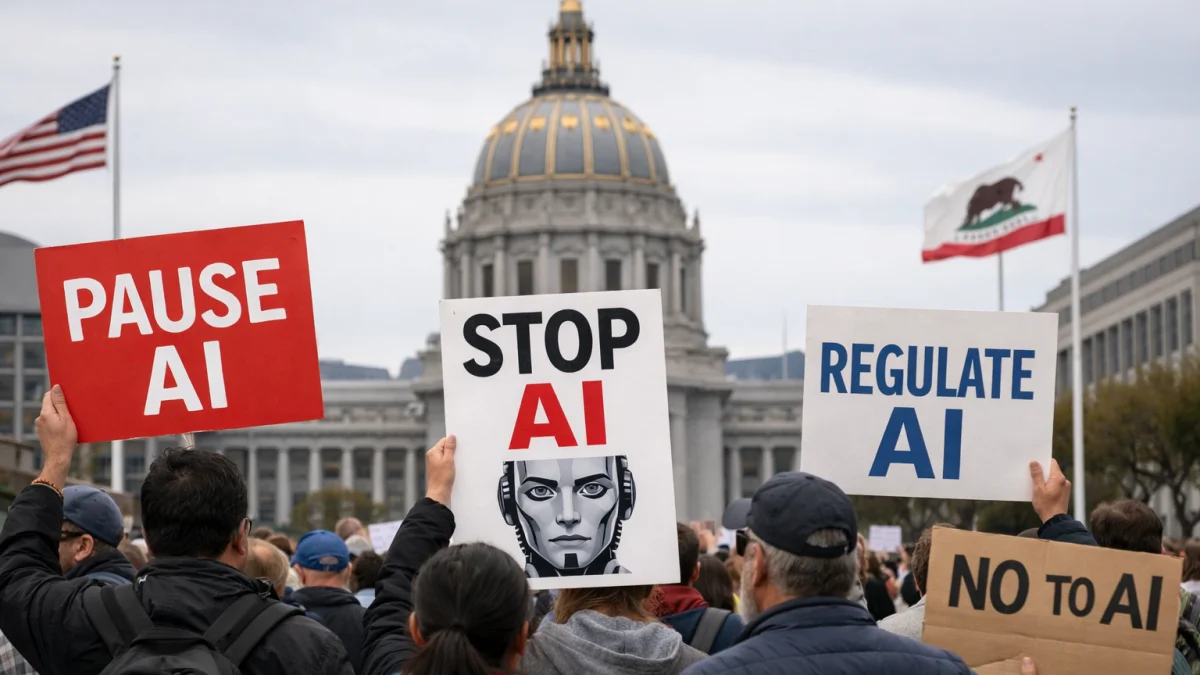


SAN FRANCISCO — Protests erupted in San Francisco on Wednesday as demonstrators called for a pause in advanced artificial intelligence development, gathering outside offices of major AI companies amid ongoing debates over safety and regulation, officials and organizers said.
Hundreds of participants marched between headquarters of firms including OpenAI, Anthropic and xAI, organized by groups advocating for coordinated halts on frontier AI systems. The demonstrations highlighted concerns about rapid technological advancement outpacing safety measures.


Organizers from the Stop the AI Race coalition demanded that companies commit to a conditional pause on training more powerful models unless all major developers worldwide agree to the same. Protesters cited risks including existential threats, environmental impacts from data centers and potential societal disruptions.
“We cannot continue this uncontrolled race where one company’s progress forces everyone else to keep up at the expense of humanity’s safety,” one organizer told reporters during the march.
Industry representatives have pushed back against pause proposals, arguing that such measures could hinder innovation and cede technological leadership to international competitors. Companies like OpenAI and Anthropic have emphasized internal safety protocols, alignment research and collaboration with governments instead of moratoriums.
The protests come as the Trump administration advances policies promoting AI innovation, including a recent executive order on voluntary cybersecurity reviews for frontier models. Federal efforts focus on maintaining U.S. competitiveness while addressing security risks, rather than imposing development pauses.
San Francisco police reported the demonstrations remained largely peaceful, with officers monitoring the marches. No major arrests or injuries were immediately confirmed. Similar actions have occurred in the city earlier in 2026, reflecting persistent activism around AI governance.
Environmental advocates joined the events, pointing to the energy consumption of AI training facilities. Counter-demonstrators and tech supporters also appeared in smaller numbers, emphasizing economic benefits and job creation from the industry.
City officials noted that permits were issued for the gatherings. The protests concluded without immediate policy changes announced by companies or government representatives. Further demonstrations and related advocacy efforts are anticipated as national discussions on AI oversight continue in Washington.