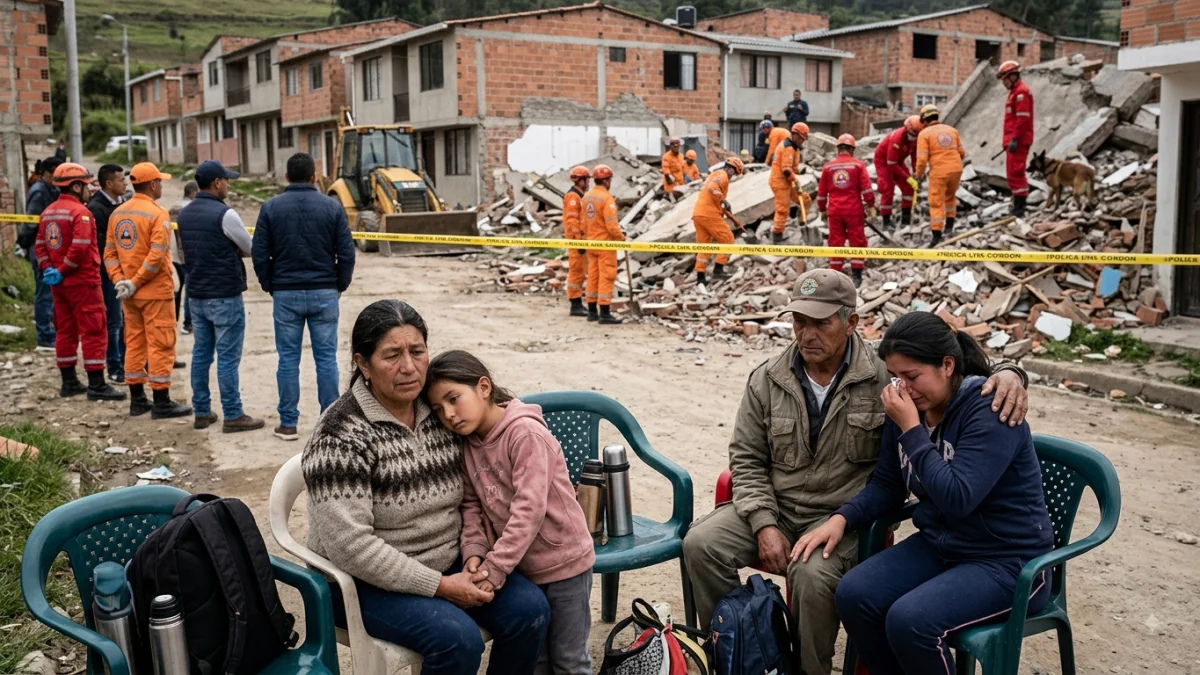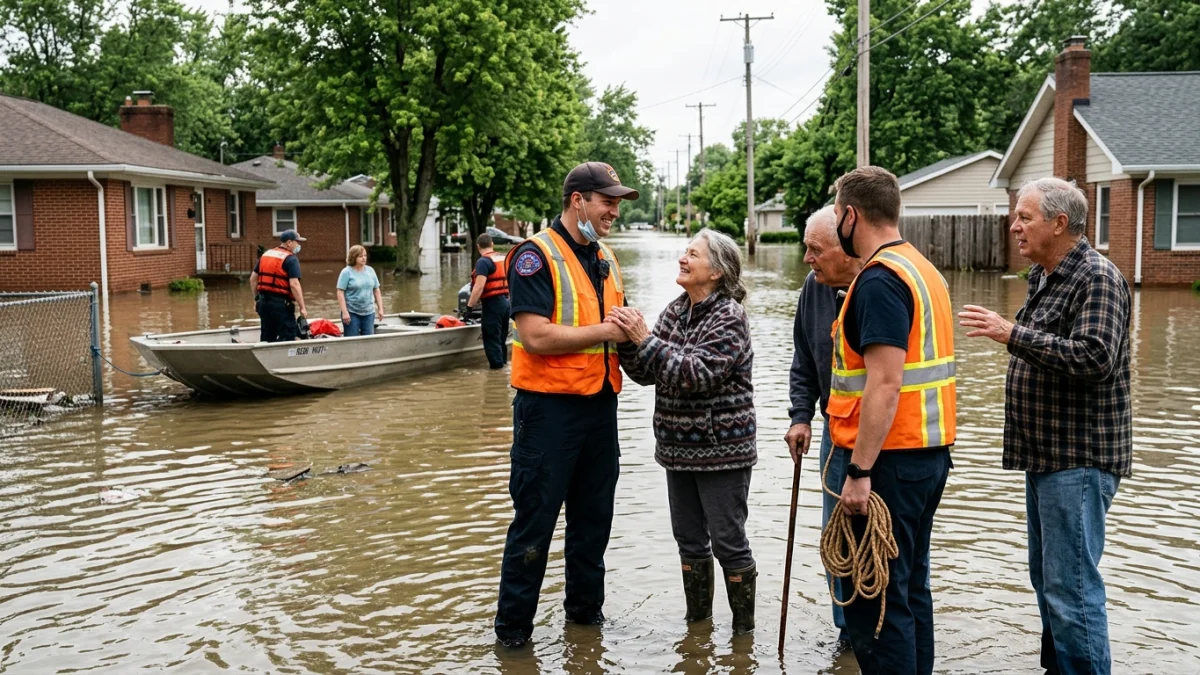


When the water began rising across parts of Ohio this week, emergency crews were not the only people moving toward danger.
In Athens County, hundreds of emergency calls came as severe storms brought flash flooding, while in Crooksville, a family was stranded by rapidly rising water and had to be rescued. Across the region, firefighters, police officers, National Guard personnel and other responders worked through flooded roads, blocked routes and widespread storm damage.


For residents caught inside the emergency, the boundary between rescuer and neighbor could become less clear. A person waiting for help might depend first on someone nearby who knew the road, the house or the rising water. And responders themselves often relied on local knowledge to reach places where normal access had disappeared.
That informal network mattered as a powerful storm system swept across the Midwest on Aug. 11 and 12, bringing tornadoes, damaging winds and intense rainfall to Illinois, Indiana, Ohio and neighboring states. More than 600,000 electricity customers lost power at one point, while flooding closed roads and complicated emergency responses. Wind gusts reached 99 mph in Gary, Indiana, and Dayton, Ohio, recorded a daily rainfall record.
In Ohio, the scale of the response quickly stretched beyond ordinary emergency calls.
Governor Mike DeWine deployed 40 Ohio National Guard members to assist with rescue and recovery as local authorities confronted flooded roads and damaged infrastructure. Officials warned that the danger was continuing even after the most intense storms passed, with additional flooding possible through Friday.
The danger was not simply the depth of the water. It was the speed with which familiar places became inaccessible.
In Crooksville, a family became stranded as floodwaters rose, one of several water rescues reported during the storms. In Athens County, emergency officials handled hundreds of calls as flooding spread through communities. Such incidents illustrate a recurring problem during flash floods: the roads that normally connect residents to fire stations, hospitals and one another can become hazards themselves.
The same pattern has appeared repeatedly across the Midwest during a summer marked by heavy rainfall and successive flooding events.
In southeastern Missouri in July, for example, the National Weather Service documented rainfall totals of 6 to 10 inches over a broad area, with isolated amounts reaching 12 inches. The flooding produced numerous swift-water rescues, including a large-scale operation at Camp Taum Sauk, where hundreds of campers and staff members were evacuated by National Guard helicopters.
Missouri officials said more than 200 water rescues were conducted during the July flooding. Missouri Task Force 1 was activated with 50 members and specialized rescue equipment, while state agencies worked with local emergency responders. Governor Mike Kehoe described the response as a coordinated effort involving first responders and local teams.
The Missouri experience also showed how quickly ordinary residents can become part of a community's emergency system. Roads were submerged, homes were inundated and access routes disappeared. In some places, rescuers had to reach people from rooftops or through floodwaters, according to the governor's office.
Earlier in July, central Iowa faced another sequence of flash floods. The National Weather Service reported that 5 to 10 inches of rain fell across parts of Polk and Story counties during one episode, producing significant flooding and pushing Fourmile Creek to a preliminary second-highest crest at an observation point in the Des Moines area. A second round of heavy rain followed the next night.
Further north, parts of southeastern Minnesota and northeastern Iowa received more than 12 inches of rain during back-to-back July events, according to the National Weather Service office in La Crosse. The rainfall produced flash flooding, urban flooding and river flooding, while additional rain between the events limited the time available for the ground to dry.
Those episodes provide a wider context for the latest storms. Flood emergencies rarely end when the rain stops. They continue through blocked roads, damaged homes, power failures and the difficult task of checking on people who may be isolated.
The Aug. 11 storms also exposed the consequences when that network of access breaks down. In Roseville, Ohio, flooding prevented emergency responders from reaching a resident experiencing a health emergency, and the person died, according to reports.
The incident underscored a difficult reality of modern flood response: even well-trained crews cannot always reach someone when roads themselves have become part of the hazard.
That is why the work of neighbors can matter without replacing professional rescue services. Residents may be the first to recognize that water is entering a home, notice that someone has not evacuated, or alert others to a road that has become impassable. Professional responders bring specialized equipment and training, but emergencies unfold within communities whose residents often know the terrain better than anyone arriving from outside.
The relationship is not romantic or risk-free. Officials repeatedly warn residents not to enter floodwater or drive through flooded roads. The National Weather Service stresses that floodwater can move vehicles and create dangers that are difficult to judge from the surface. During the Missouri floods, state officials similarly urged residents to seek higher ground and avoid roads covered by water.
Still, the repeated rescues across the Midwest reveal something practical about disaster response: formal emergency systems and informal community networks operate side by side.
A firefighter arriving by boat, a National Guard crew moving through an isolated area, a dispatcher answering another emergency call and a neighbor checking whether the family next door has made it to safety are different parts of the same response.
As floodwaters recede and power crews begin repairing damaged networks, those relationships remain important. The immediate emergency may be measured in inches of rainfall, numbers of rescues and hours without electricity. But for the people who lived through it, the response is also remembered through the people who helped them reach higher ground.
In communities repeatedly tested by sudden water, the first line of help is sometimes the person already nearby. And when professional rescuers arrive, they often find that the community has already begun the work of looking after itself.