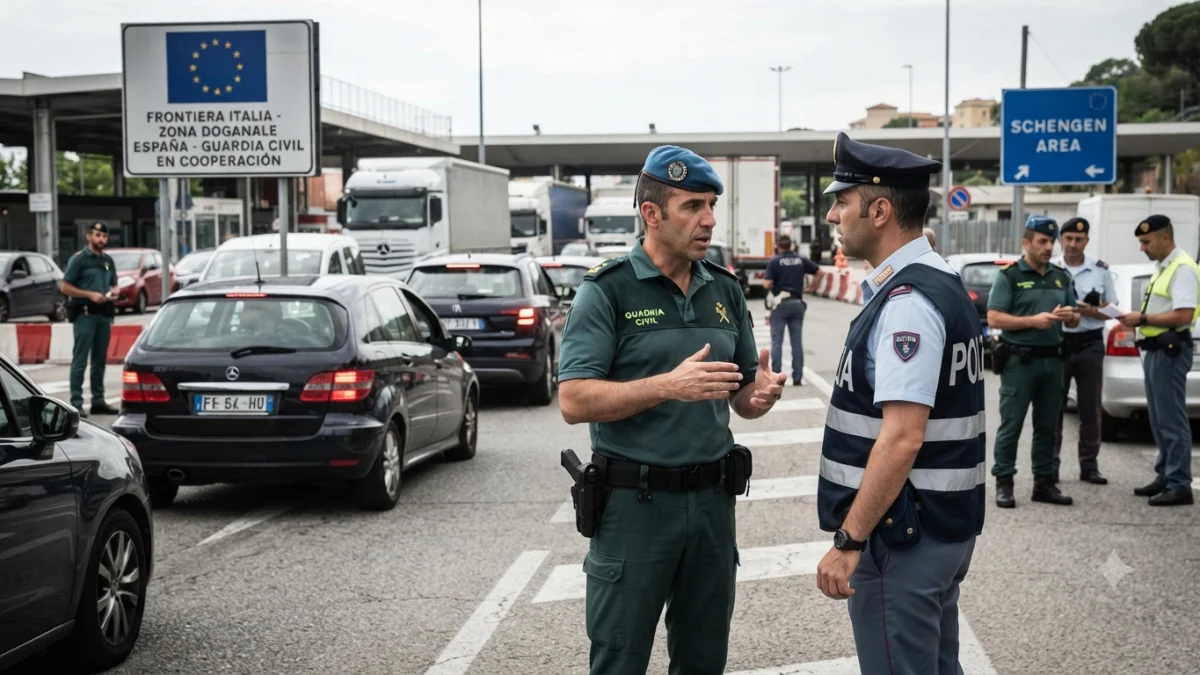


ROME — Spain and Italy clashed over Schengen border rules on Saturday as Madrid began checks on travellers arriving from Italy, after Rome refused to withdraw restrictions imposed on people travelling from Spain amid a dispute over irregular migration.
Spain's government said the controls on flights and ships from Italy would run from midnight on Saturday until Sept. 7, with authorities checking passports, nationality and visas. Madrid said the measure was a response to what it called persistent irregular migratory pressure and was intended to match Italy's restrictions.


The dispute began after Italy introduced temporary controls on arrivals from Spain following a mass influx of migrants into Ceuta, a Spanish enclave on Morocco's northern coast. Rome said its measures were necessary because of security and migration concerns and said they would remain in place at least until Aug. 15.
Italy rejected a Spanish demand to lift the restrictions by Sunday. The government in Rome said it would not accept "ultimatums or impositions" from Madrid and indicated that any review would depend on the absence of terrorism or security risks and further migration surges.
Spain has described Italy's action as unjustified and discriminatory, arguing that the situation in Ceuta did not justify restricting movement between the two Schengen countries. Madrid said most migrants who entered Ceuta had subsequently returned to Morocco and disputed the suggestion that the influx posed a direct migration risk to Italy.
Italy and Spain are both members of the Schengen area, where internal border controls are normally abolished. EU rules allow countries to temporarily reintroduce controls at internal borders in response to serious threats to public policy or internal security, subject to conditions set out in the Schengen Borders Code.
The measures are also affecting travel during Europe's peak summer season. Because Italy and Spain do not share a land border, the restrictions primarily concern air and sea connections between the countries. Italy's initial measures targeted non-EU nationals travelling from Spain, while Spain's reciprocal checks apply to travellers arriving from Italy.
The dispute follows a broader European debate over migration after the large-scale arrival in Ceuta, which prompted emergency discussions among EU interior ministers on tighter border security, cooperation with non-EU countries and measures against migrant-smuggling networks.
As of Saturday, both countries' controls remained in force, with Spain's measures scheduled to continue through Sept. 7 and Italy maintaining its restrictions at least through Aug. 15.