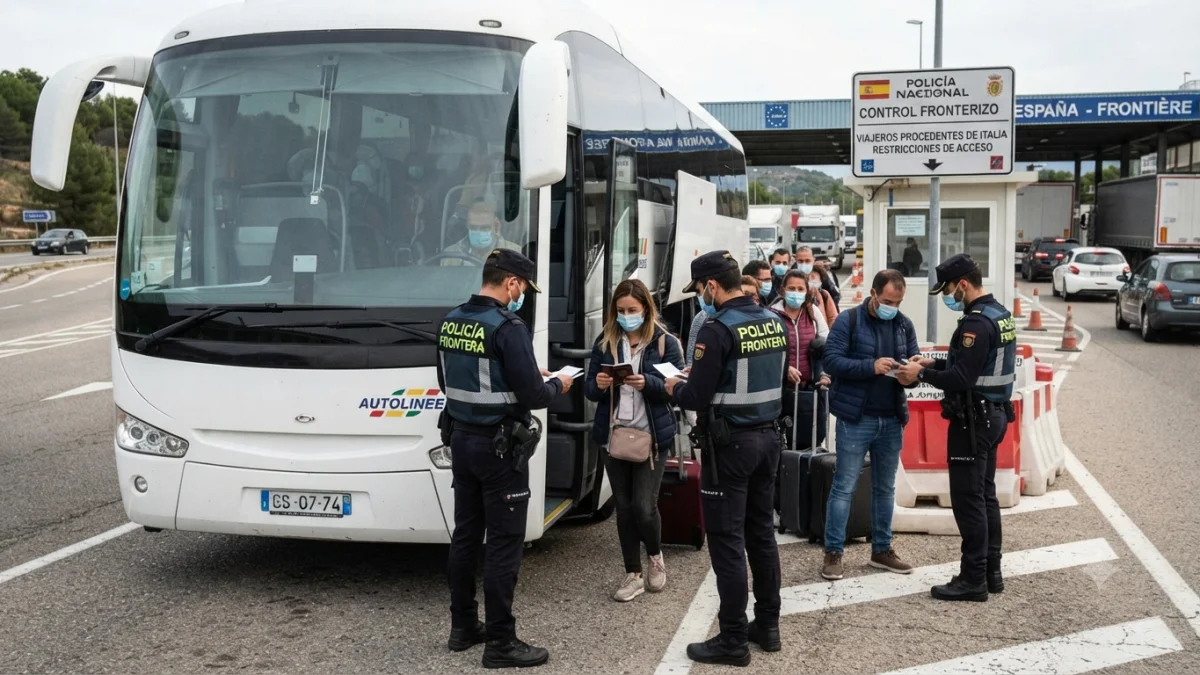


MADRID — Spain will impose temporary border controls on travellers arriving from Italy by air and sea from midnight on Saturday until Sept. 7, the government said, escalating a dispute with Rome over migration and the suspension of free movement within the Schengen area.
The checks will include verification of passports, nationality and visas for Italian citizens and other travellers arriving from Italy, according to the Spanish government. The measure follows Italy's introduction of controls on travellers arriving from Spain last week.


Spain said it was acting in response to what it described as persistent irregular migratory pressure originating from Italy. The move comes after a major migration incident in Spain's North African enclave of Ceuta on July 30, when tens of thousands of migrants attempted to enter the territory from Morocco.
Italy has defended its own measures, saying they are necessary because of security and migration concerns. Rome has rejected a Spanish demand to lift the controls, which Italy said it would maintain at least until Aug. 15.
The dispute has put the two European Union members at odds over the management of migration and the rules governing the Schengen zone, which normally allows passport-free travel between participating countries. Spain and Italy are both members of the 29-country Schengen area.
Spain has argued that migrants who entered Ceuta have not been transported to mainland Spain and therefore do not pose the migration risk to Italy cited by Rome. Italian authorities have maintained that security concerns justify the temporary restrictions.
The Spanish decision also represents a reciprocal response to Italy's controls on travellers from Spain. Madrid had warned that it would take similar action if Rome did not remove its restrictions.
The measures affect travel by air and sea rather than a land border, as Spain and Italy do not share a land frontier. Authorities will carry out document checks on passengers arriving from Italy at relevant Spanish ports and airports.
The European Commission's framework allows Schengen countries to temporarily reintroduce internal border controls under specified circumstances, including serious threats to public policy or internal security. Italy was already listed by the European Commission as maintaining certain internal border controls for security and migration-related reasons.
Spain's controls are scheduled to remain in force until Sept. 7. The latest measures leave the dispute unresolved as both governments continue to defend their respective positions on migration and border security.