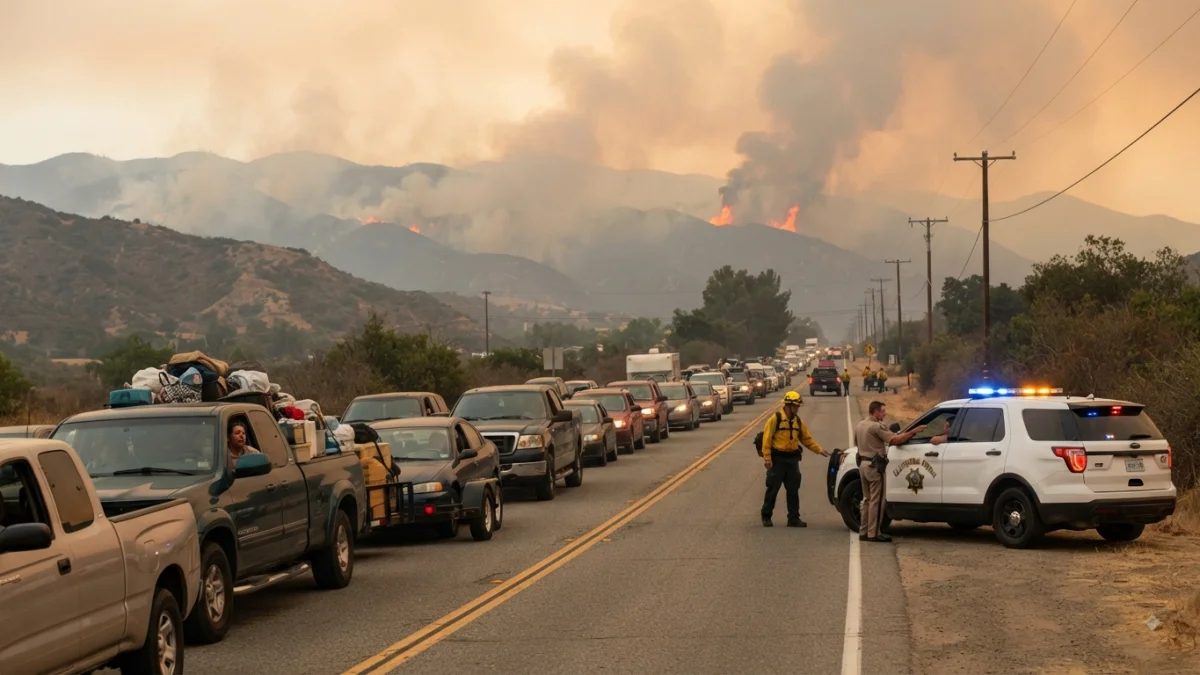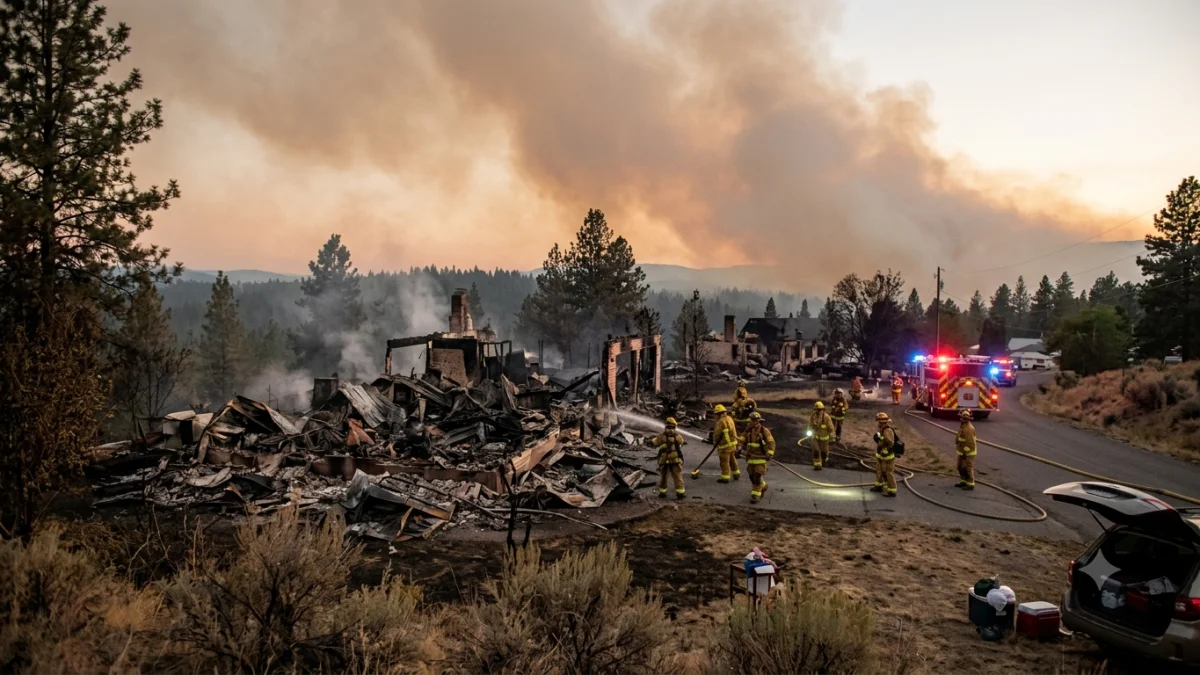


Wildfires around Spokane have triggered one of the largest evacuation operations in Washington state's recent history, forcing about 60,000 residents from their homes after fast-moving fires destroyed around 600 structures, according to local and state officials. The scale of the disaster, combined with the concentration of damage in and around the state's second-largest city, marks a significant shift from remote forest fires toward increasingly destructive wildland-urban interface emergencies that directly threaten populated communities.
The immediate significance extends beyond the number of buildings lost. The fires demonstrate how extreme weather conditions, expanding development along fire-prone landscapes, and strained emergency response systems can combine to produce large-scale urban evacuations in a matter of hours. Washington Governor Bob Ferguson declared a statewide emergency as officials sought federal assistance, while Spokane Mayor Lisa Brown described the event as the most severe natural disaster the region has experienced. Fire officials said the fires remained uncontained, underscoring that the situation continued to evolve despite a massive firefighting response.


Authorities identified multiple fires—including the Old Trails, Fairview, and Meadowview fires—as part of the broader Spokane-area emergency. Strong winds, exceptionally dry vegetation and prolonged hot weather allowed flames to spread rapidly across neighborhoods, overwhelming initial containment efforts. About 10,000 customers also lost electricity after fire damaged infrastructure, illustrating how wildfire impacts increasingly extend beyond burned acreage to critical public services.
The absence of confirmed fatalities or serious injuries despite the scale of destruction reflects the importance of rapid evacuation orders and coordinated emergency management. Officials evacuated patients from a Veterans Affairs hospital, opened emergency shelters, and deployed extensive local, state and federal resources. Emergency managers have emphasized, however, that damage assessments remain preliminary and conditions could change as crews gain access to affected areas.
The Spokane fires also illustrate broader trends shaping the 2026 U.S. wildfire season. According to the National Interagency Fire Center, the number of large active fires and total acreage burned nationally have exceeded the 10-year average. Washington has emerged as one of several western states facing multiple simultaneous large fires, alongside Oregon, Idaho and Montana, stretching firefighting resources across the region.
Meteorological conditions played a central role in the disaster. The National Weather Service issued what officials described as Washington state's first "particularly dangerous situation" red flag warning, reflecting an unusual combination of high winds, low humidity and critically dry fuels. Fire behavior under these conditions can shift rapidly, reducing the time available for residents to evacuate and complicating suppression efforts even when substantial firefighting resources are deployed.
Scientists have consistently linked increasing wildfire risk across much of the western United States to a combination of climatic and land-management factors. While no individual wildfire can be attributed solely to climate change, researchers have found that rising temperatures, longer periods of drought and more frequent extreme fire weather have increased the likelihood of large, fast-moving fires. At the same time, continued residential development in fire-prone landscapes has expanded the number of homes and businesses exposed to wildfire hazards, increasing potential economic losses even when burned areas are relatively limited.
The Spokane emergency also highlights the operational challenge facing emergency agencies during severe fire seasons. California dispatched an incident management team to assist Washington authorities, reflecting the increasingly interstate nature of wildfire response. Mutual-aid systems have become an essential component of U.S. wildfire management as simultaneous incidents compete for firefighters, aircraft and specialized equipment across multiple states.
Economic consequences are likely to extend well beyond immediate property losses. Damage to homes, commercial buildings, power infrastructure and transportation networks can affect local businesses, insurance claims and reconstruction costs for months or years after flames are extinguished. Public health impacts, including degraded air quality across parts of the Pacific Northwest, may also persist even outside evacuation zones, according to forecasts cited by officials.
The fires follow earlier destructive wildfire activity in the Spokane area during June, when wind-driven blazes forced thousands of evacuations and destroyed homes. Although the current emergency is substantially larger, the earlier incidents underscored vulnerabilities that have since re-emerged under more extreme weather conditions.
As firefighting operations continue, officials remain focused on containing the active fires, protecting threatened communities, restoring damaged infrastructure and completing detailed assessments of structural losses. Investigators have not announced confirmed causes for the fires, and authorities continue to monitor weather conditions, fire behavior and evacuation zones while determining when residents can safely return to affected areas.