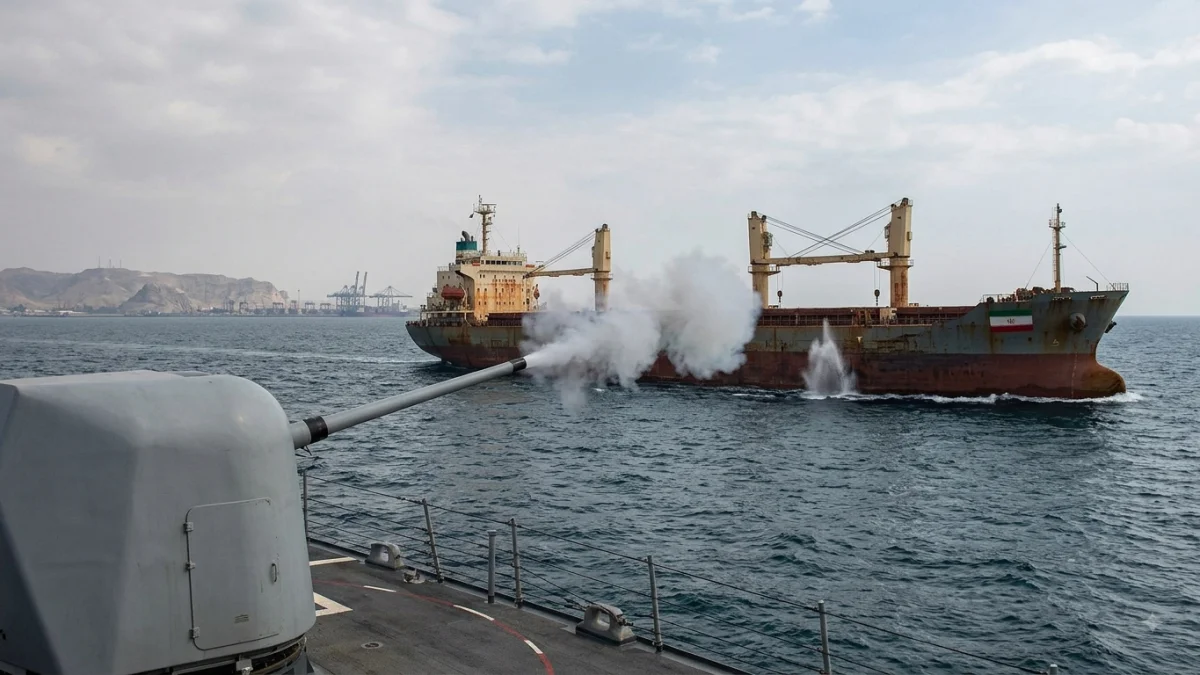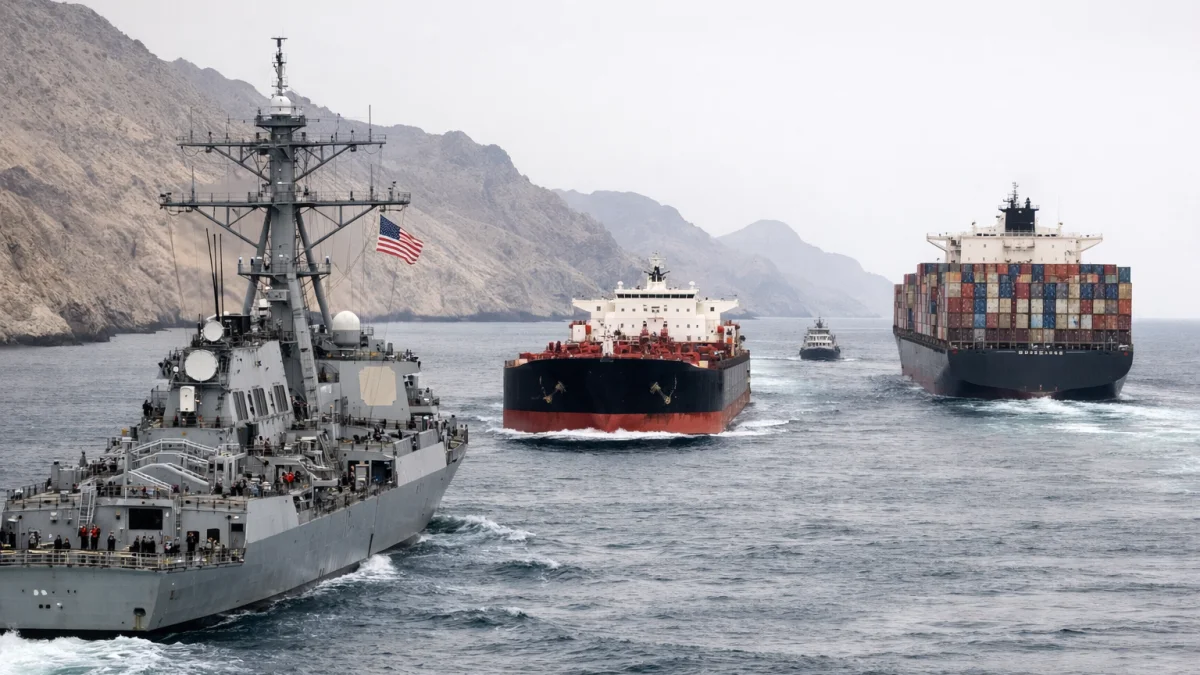


DUBAI — A maritime body overseen by the U.S. Navy said on Saturday it had expanded a commercial shipping route along Oman's coast in the Strait of Hormuz to allow simultaneous inbound and outbound vessel traffic, marking the latest U.S.-backed effort to increase maritime transit through one of the world's most important energy corridors.
The change comes as the United States seeks to restore commercial navigation through the strait following months of disruption linked to heightened tensions with Iran. The Strait of Hormuz, through which roughly one-fifth of the world's oil and natural gas shipments traditionally pass, remains a critical chokepoint for global energy markets. The expanded routing also follows renewed military exchanges between the United States and Iran that have raised security concerns for commercial shipping.


The Joint Maritime Information Center (JMIC), which operates under the U.S.-led Combined Maritime Forces, said the widened corridor near Oman's shoreline now accommodates two-way commercial traffic instead of alternating vessel movements. The announcement was issued through a maritime advisory to shipping operators.
"The route through the Strait of Hormuz near Oman's shores is expanding to allow for both inbound and outbound traffic," the Joint Maritime Information Center said in its advisory, according to the official notice.
The advisory represents another indication that Washington intends to maintain commercial access through the waterway despite Iranian assertions that vessels should comply with its instructions when transiting the strait. Iranian authorities have also warned they could begin charging transit fees for ships using the passage, a position rejected by the United States and Gulf Arab states, which regard the strait as an international waterway under international law despite the territorial waters of Iran and Oman.
The expansion follows previous U.S. military efforts to establish and protect shipping lanes farther from Iran's coastline after maritime security concerns increased earlier this year. U.S. Central Command has said commercial vessels seeking safe passage can coordinate with naval authorities using designated transit routes through the area.
The announcement also came after a tanker reported being struck in the Strait of Hormuz on Saturday, following an earlier attack on a commercial cargo vessel that U.S. officials attributed to Iran. Tehran has disputed U.S. accusations surrounding recent military exchanges, while both sides have accused the other of violating a fragile interim agreement intended to reduce hostilities.
As of Saturday, the Joint Maritime Information Center had not announced additional operational changes beyond the expanded routing, and commercial vessels continued to receive updated navigational guidance while maritime security advisories for the region remained in effect.