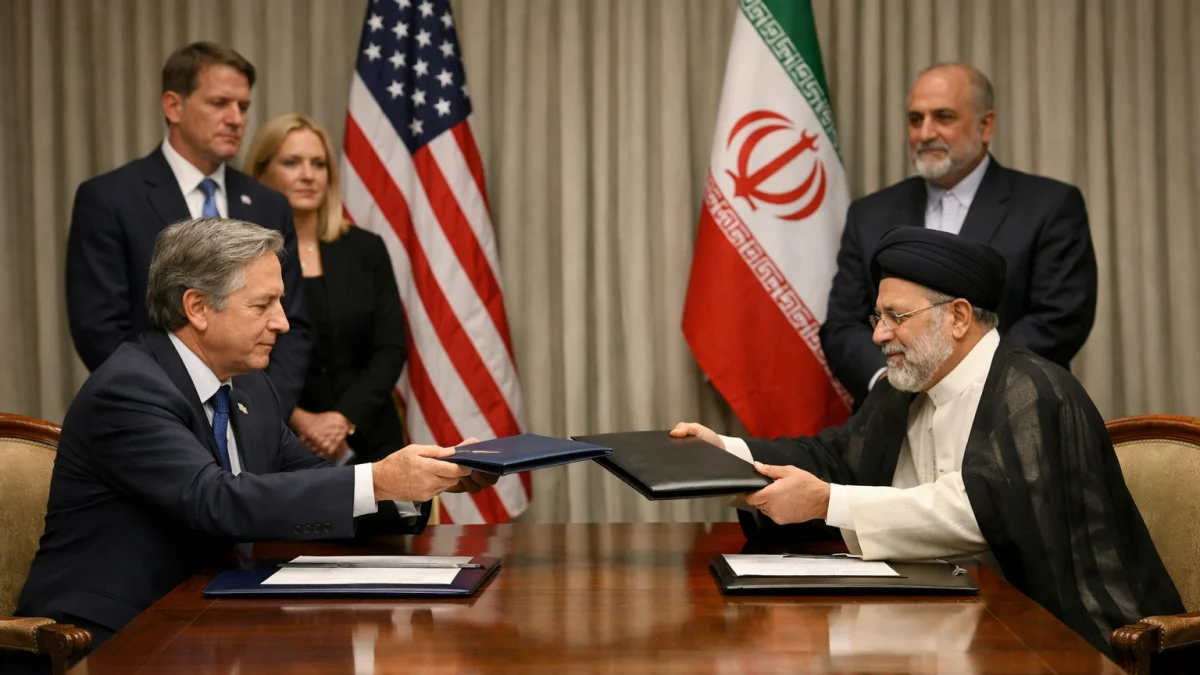


WASHINGTON — U.S. and Iranian negotiators have agreed on the final text of a peace deal framework aimed at ending their conflict, Pakistan's prime minister said on Friday, according to officials and mediators involved in the talks.
The announcement came as both sides signaled progress toward formalizing a memorandum of understanding that would build on an April ceasefire, Pakistani Prime Minister Shehbaz Sharif said. Pakistan has led mediation efforts between Washington and Tehran.


Details of the framework remain unclear. Sharif said Pakistan was working with both countries on next steps, including a possible signing. Iran's foreign ministry has described the situation as one in which a deal "has never been closer," while cautioning that nuclear-related issues would be addressed in subsequent talks, Iranian state media reported.
U.S. President Donald Trump has previously stated that discussions were advancing and that he had canceled planned military strikes on Iran, citing progress in negotiations. Iranian officials have acknowledged movement but emphasized that no final accord has been sealed and that their supreme leader's approval would be required.
The framework follows months of conflict that began earlier in 2026 with U.S. and Israeli strikes on Iranian targets. A two-week ceasefire was announced in April, mediated by Pakistan, which included provisions to reopen the Strait of Hormuz for shipping.
Negotiations have centered on Iran's nuclear program, the reopening of key maritime routes, the lifting of blockades and potential sanctions relief. Mediators from Pakistan and Qatar have facilitated indirect talks. Reports indicate the text addresses an initial halt to hostilities and sets a 60-day period for further negotiations on more complex issues, such as Iran's nuclear capabilities and enriched uranium stockpiles, though specifics were not publicly detailed.
"The final, agreed upon text of a U.S.-Iran peace deal has been reached," Sharif said, according to statements reported by multiple outlets. Iranian Foreign Minister Abbas Araghchi told state television that both sides were working toward signing an initial agreement to end the war on all fronts.
U.S. officials have stressed that any agreement must prevent Iran from developing nuclear weapons and address regional security concerns. Iranian representatives have pushed for sanctions relief and the unfreezing of assets as part of any broader settlement. Differences in publicly reported terms from each side have persisted, with both governments cautioning against over-optimism.
As of Friday, no signing date or location had been confirmed. Officials said technical-level discussions were expected to continue in the coming days. The situation in the region remains tense, with recent incidents involving drones near the Strait of Hormuz reported despite the ceasefire.
The development marks the latest in a series of diplomatic efforts following indirect talks that have included input from regional actors. Further details on implementation and verification mechanisms were not immediately available.