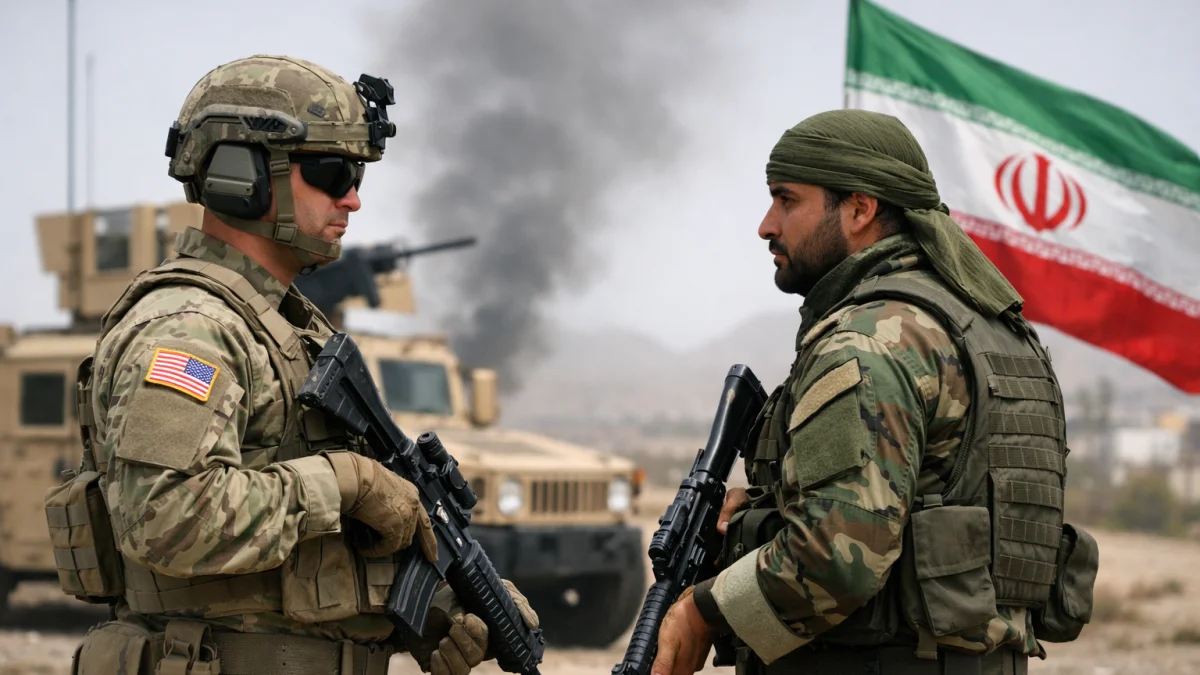


WASHINGTON — The United States and Iran exchanged strikes in the Gulf region over the weekend, further testing a fragile ceasefire agreement in place since early April, U.S. and Iranian officials said.
U.S. Central Command reported that American forces shot down four Iranian one-way attack drones launched toward the Strait of Hormuz on Friday, which it said posed an immediate threat to regional maritime traffic. U.S. forces then conducted strikes on Iranian coastal surveillance radar sites in Goruk and on Qeshm Island, according to a CENTCOM statement.


Iran responded by firing ballistic missiles toward U.S. bases and facilities in Kuwait and Bahrain, Iranian state media reported. Kuwaiti authorities said their forces engaged incoming missiles, with debris causing minor damage but no reported casualties. Bahrain activated sirens and urged residents to seek shelter, officials there said.
The Iranian foreign ministry described the U.S. strikes on radar installations as a "flagrant" violation of the ceasefire and an attack on Iran's sovereignty. Tehran said it exercised its right to respond, according to statements carried by Iranian news agencies.
The ceasefire, mediated by Pakistan, followed weeks of intense conflict that began in late February with U.S. and Israeli strikes on Iran. It has been extended indefinitely but has faced repeated strains, including prior tit-for-tat actions, as negotiations continue over issues including Iran's nuclear program and shipping through the Strait of Hormuz.
U.S. officials characterized the latest actions as defensive measures to protect maritime traffic and regional partners. "U.S. forces continue to defend our forces while using restraint during the ongoing ceasefire," a CENTCOM spokesperson said.
Gulf states including Kuwait and Bahrain condemned the Iranian attacks. The United Arab Emirates and Qatar also expressed concern over the incidents, according to regional reports.
Details on the full extent of damage from the exchanges remained limited on Monday, with both sides providing selective information. No immediate reports of significant casualties emerged from the weekend strikes.
The flare-up comes amid ongoing diplomatic efforts to stabilize the region. Negotiators have discussed extending the truce further and addressing broader issues, though progress has been slow, sources familiar with the talks have said.
As of Monday, U.S. and Iranian officials indicated that the ceasefire technically remained in effect despite the incidents. Monitoring of the situation in the Gulf continued, with both sides accusing the other of escalation. Further developments were expected in the coming days.