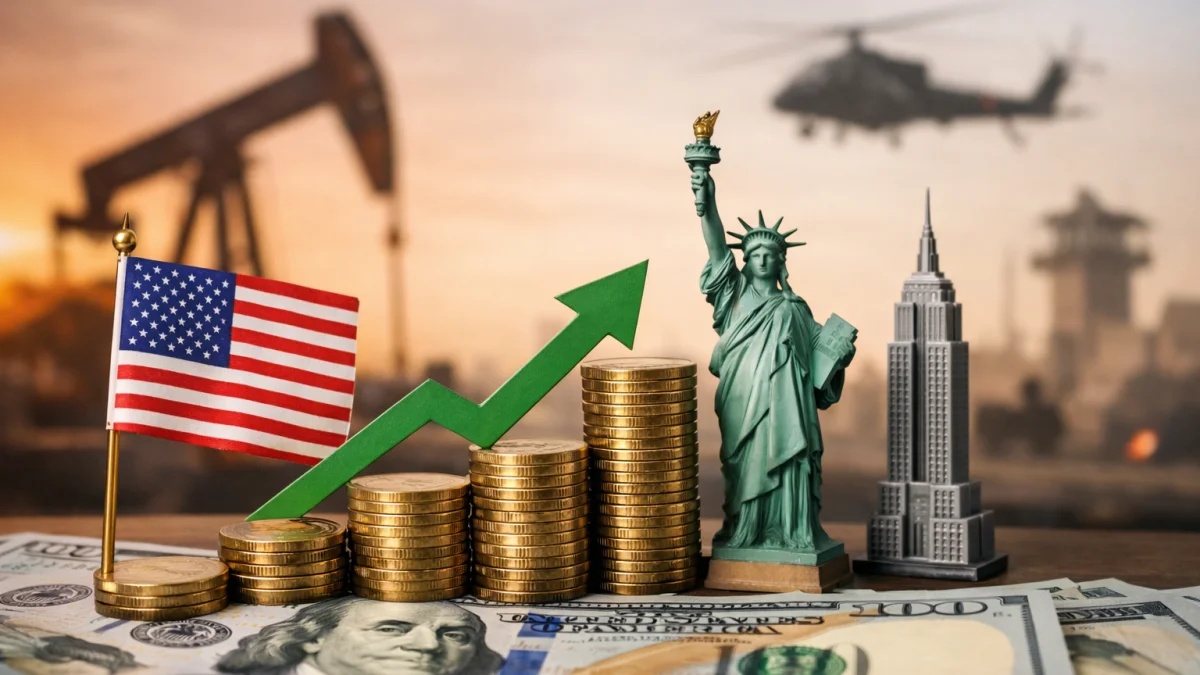


WASHINGTON — The U.S. economy demonstrated resilience in the first quarter of 2026, expanding at a 1.6 percent annual rate despite heightened tensions in the Middle East that have driven up energy prices, according to government data released on Friday.
Gross domestic product grew in the three months through March, supported by consumer spending, exports, investment and government outlays, the Bureau of Economic Analysis reported. The figure marked an improvement from the 0.5 percent pace in the fourth quarter of 2025.


Economists attributed the performance in part to strong domestic energy production, which has helped cushion the impact of global oil price increases linked to the Middle East conflict. U.S. gasoline prices rose to around $4 per gallon in some regions earlier this year but have since moderated somewhat.
The labor market also showed stability. Nonfarm payrolls added 172,000 jobs in May, while the unemployment rate held at 4.3 percent, according to the Labor Department. Average hourly earnings increased 0.3 percent for the month.
Federal Reserve officials have noted the economy's ability to absorb external shocks. In recent remarks, Chair Jerome Powell highlighted productivity gains in the technology sector as a key factor supporting growth amid geopolitical uncertainties.
"Despite the challenges from higher energy costs, the underlying fundamentals remain solid," Powell said in a speech earlier this month.
The Middle East tensions, including the ongoing conflict involving Iran, have contributed to volatility in global commodity markets. Oil prices surged following disruptions, pushing up inflation expectations, with the consumer price index rising around 2.4 percent year-over-year in early 2026.
Businesses and households have faced higher input costs, particularly in transportation and manufacturing sectors. Some analysts have warned that prolonged uncertainty could weigh on investment decisions.
The administration has pointed to domestic production and policy measures as buffers. Officials said energy independence has limited the spillover effects compared to previous global energy shocks.
Democrats and some economists have called for additional measures to support consumers facing elevated costs. Critics argued that fiscal and trade policies added layers of complexity to the outlook.
Markets reflected mixed sentiment. The Dow Jones Industrial Average reached record highs recently, while technology shares showed volatility amid broader economic concerns.
As of Sunday, forecasters projected U.S. growth for the full year around 2 percent, with risks tilted toward slower expansion if Middle East tensions persist. The Federal Reserve is expected to monitor incoming data closely before adjusting interest rates.
Details on the full second-quarter performance remain unclear pending further releases.