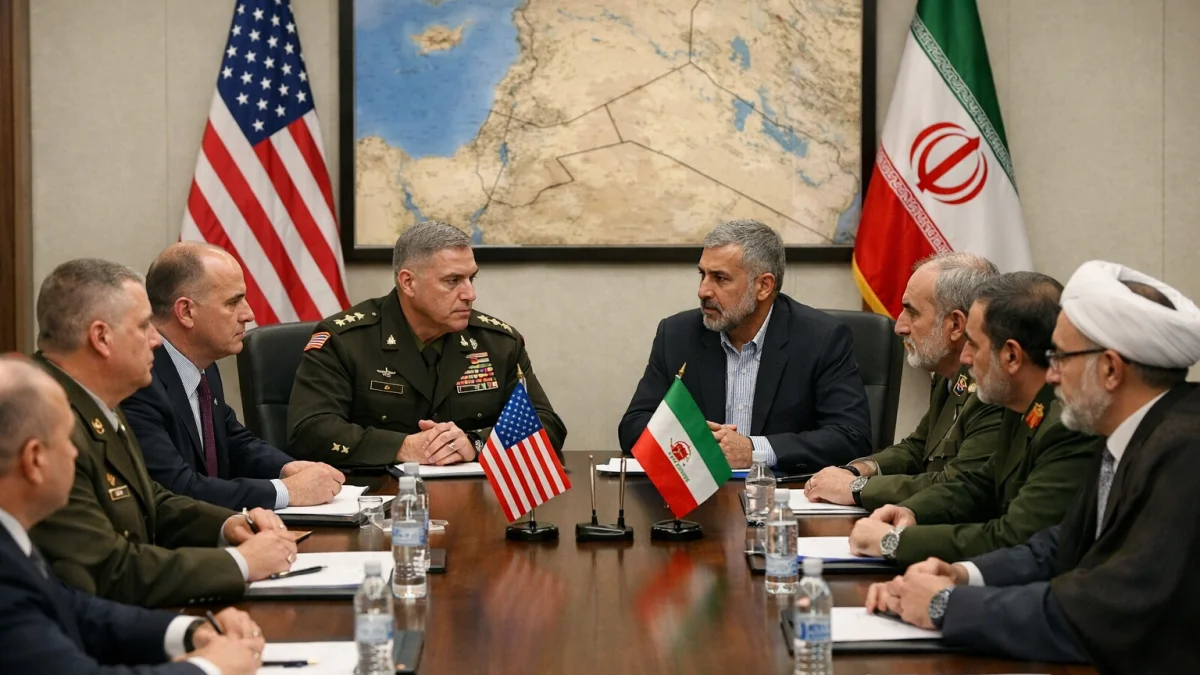


GENEVA — The United States and Iran have agreed to establish a joint “de-confliction cell” involving Lebanese authorities as part of a broader diplomatic effort aimed at halting military operations in Lebanon, mediators and officials said following talks held in Switzerland over the weekend.
The mechanism was announced after high-level negotiations between U.S. and Iranian representatives at the Bürgenstock resort, where talks focused on regional security issues, including continued violence in Lebanon and tensions in the Strait of Hormuz. According to statements issued by mediators from Qatar and Pakistan, the de-confliction arrangement is intended to reduce the risk of military escalation and support the implementation of a ceasefire framework.


The agreement comes after a U.S.-Iran memorandum of understanding signed earlier this month that called for an immediate halt to military operations across multiple fronts, including Lebanon. The memorandum also committed both sides and their allies to refrain from initiating further military action while negotiations continue toward a broader settlement.
According to the mediators, the newly established cell will include coordination with Lebanon's government and will serve as a channel for communication aimed at preventing incidents and addressing violations that could undermine the ceasefire. Details regarding its structure, authority and operational procedures have not been publicly released.
Iranian Foreign Minister Abbas Araghchi said the first day of talks showed signs of progress despite tensions that briefly disrupted negotiations. “Progress” had been achieved, he said, according to media reports following the meeting.
The discussions followed weeks of diplomatic efforts linked to the conflict in Lebanon. Earlier negotiations were complicated by continued military activity in southern Lebanon and disagreements over the implementation of previous ceasefire commitments. Iran had previously suspended communications with the United States, citing what it described as continuing military operations in Lebanon.
U.S. and Iranian negotiators also agreed to establish a separate communication channel intended to reduce the risk of incidents in the Strait of Hormuz, a critical shipping route that has been affected by regional tensions. Mediators said technical discussions on security and nuclear-related issues would continue throughout the week.
The de-confliction cell was described by mediators as one of the most immediate outcomes of the latest round of talks. However, officials acknowledged that significant issues remain unresolved, including the durability of ceasefire arrangements in Lebanon and the terms of any final agreement between Washington and Tehran.
As of Sunday, no timetable had been announced for the de-confliction mechanism to become fully operational. Further negotiations are expected in Switzerland in the coming days, with mediators saying implementation details remain under discussion.