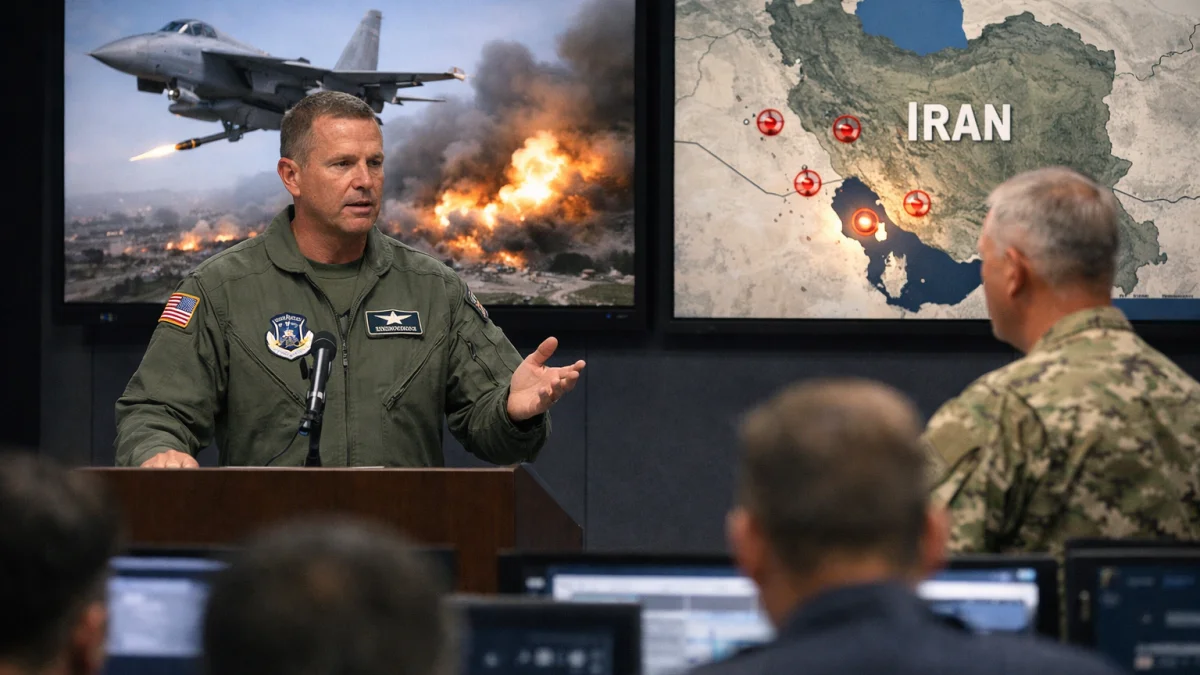


WASHINGTON — The United States launched additional airstrikes on Iranian military targets on Wednesday, following Iranian missile attacks on U.S. and allied bases in the Gulf region, U.S. Central Command said.
The strikes targeted Iranian surveillance capabilities, communication systems and air defense sites, according to CENTCOM. They were carried out in response to what the U.S. military described as Iranian aggression, including missile launches that struck areas near U.S. bases in Gulf states.


Iran’s Revolutionary Guard Corps said it conducted missile and drone attacks on U.S.-linked facilities in Bahrain, Kuwait and Jordan in retaliation, Iranian state media reported. Details on damage or casualties from those strikes remained limited.
The escalation followed the downing of a U.S. Army helicopter near the Strait of Hormuz, which President Donald Trump attributed to Iranian action. U.S. officials said the latest strikes were limited and aimed at degrading threats to American forces and shipping in the region.
CENTCOM described the operation as self-defense measures ordered by the commander in chief. Precision munitions from U.S. Air Force, Marine Corps and Navy assets were used in the strikes, which concluded before sunrise on Thursday in Iran, the command said.
Iranian officials condemned the U.S. action and vowed further responses. Explosions were reported in Tehran, Bandar Abbas and other areas, according to Iranian media.
The exchanges come amid a fragile regional situation linked to broader tensions involving the conflict that has affected energy markets and global shipping through the Strait of Hormuz. U.S. officials have warned of potential further action if threats persist.
"These strikes were necessary to protect our forces and interests," a senior U.S. defense official said, speaking on condition of anonymity to discuss ongoing operations.
Iran has denied responsibility for some incidents, including the helicopter crash, and accused the U.S. of escalating the situation. The U.N. and other international actors have called for restraint to prevent wider fallout.
As of Thursday, both sides reported completing their respective operations, with monitoring continuing in the Gulf. Diplomatic efforts to de-escalate remain active, though details on immediate next steps were unclear. The situation has contributed to higher energy prices and uncertainty in global markets.