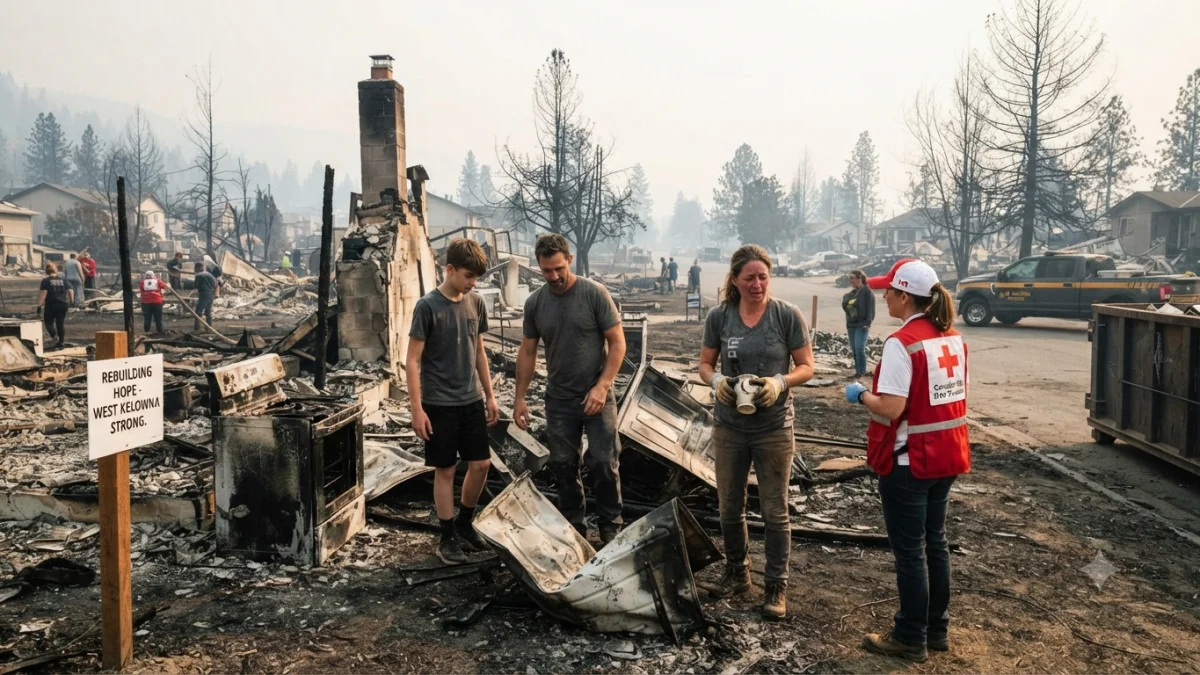


Wildfires are forcing mass evacuations across western Canada while large fires and extreme fire conditions continue to strain firefighting resources in the western United States, underscoring how rapidly fire emergencies can escalate across a region already accustomed to increasingly disruptive summer fire seasons.
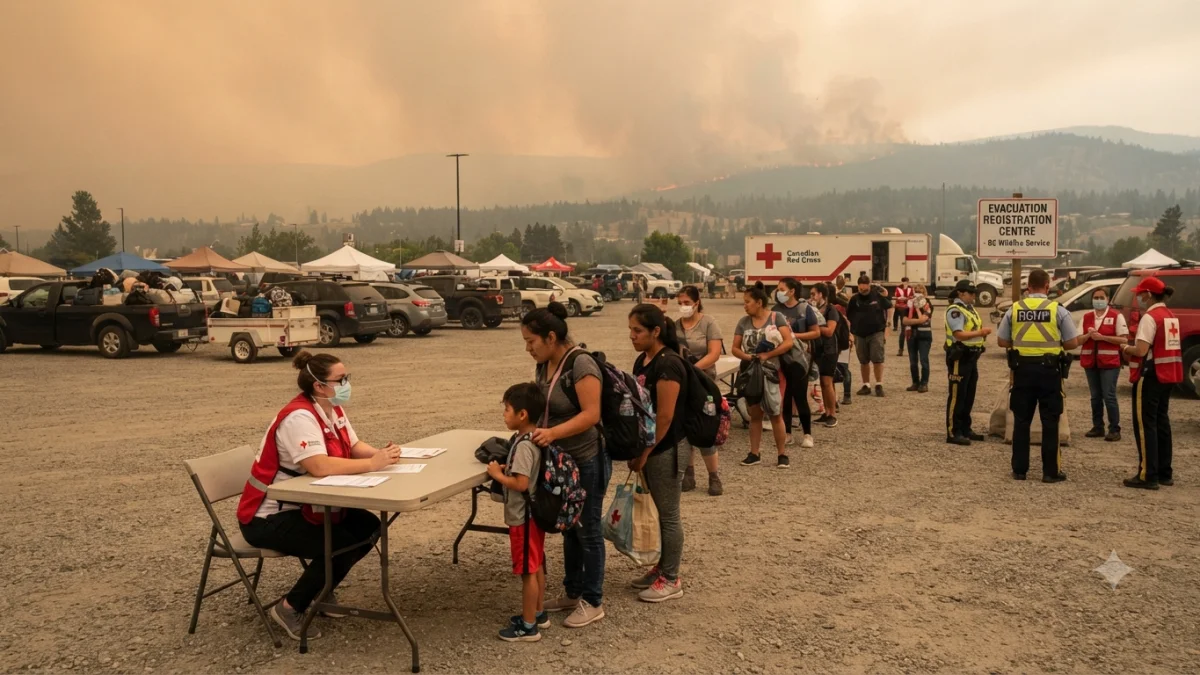
In British Columbia, the most immediate crisis is centered on the Okanagan Valley, where the fast-moving Bald Range wildfire prompted provincial authorities to declare a state of emergency and evacuate residents in and around Summerland and Peachland. Reuters reported on Aug. 9 that about 18,000 people had been evacuated and that the fire had grown to more than 10,300 hectares. The provincial wildfire service said hot and dry conditions were contributing to continued fire spread, while smoke, turbulence and large fires were complicating aerial firefighting.


The scale of the evacuation has pushed the response beyond provincial capacity. Canada's federal government approved a request from British Columbia for assistance with shelter and accommodation for displaced residents, while international firefighters from Australia, New Zealand and Mexico were supporting Canadian crews. The deployment illustrates a longstanding feature of severe wildfire seasons in Canada: firefighting resources can be moved across borders when simultaneous fires overwhelm local capacity.
The human consequences have also become more severe. Canadian authorities confirmed the death of an 80-year-old woman in the Summerland wildfire, adding a fatality to an emergency that had already displaced thousands. The circumstances of the death were being investigated by police, according to reports citing the Royal Canadian Mounted Police.
The situation in the United States is occurring against similarly elevated national fire activity. The National Interagency Fire Center has placed the country at Preparedness Level 5, its highest response stage. The designation reflects the combination of fire activity, weather, fuel conditions and the availability of firefighting resources rather than the severity of any single fire. NIFC says its national system is designed to determine whether sufficient crews, aircraft and equipment are available to respond to new incidents while supporting existing ones.
That resource pressure matters because large fires in the West do not occur in isolation. When several fires require incident-management teams, aircraft and specialized crews simultaneously, agencies must prioritize incidents threatening communities and critical infrastructure. NIFC's coordination system is specifically designed to move resources between geographic areas as fire conditions change.
The broader significance is the increasing overlap between wildfire risk and populated areas. Research examining recent U.S. fires has found that exposure of homes to wildfires has increased substantially in the West, while the ability of structures to survive has been associated with factors including building age, surrounding vegetation and extreme fire weather. The findings indicate that evacuation planning and community preparedness are becoming increasingly important alongside suppression efforts.
Scientific evidence also points to a changing fire environment. A study examining western U.S. wildfire activity from 1992 through 2020 estimated that human-caused climate change accounted for a substantial share of observed burned area and wildfire-smoke exposure, although the contribution varied considerably by region and fire type. The researchers also emphasized the role of natural variability and other factors, making it difficult to attribute any individual wildfire to climate change alone.
Canada's recent experience provides a parallel warning about the consequences of sustained fire activity. British Columbia's government has described 2023 as its most destructive wildfire season on record, while federal officials have continued to expand preparedness and response programs, including investments in risk mapping, evacuation coordination and Indigenous firefighting capacity.
The current emergency therefore represents more than a series of isolated fires. For governments and emergency agencies, the immediate challenge is maintaining enough personnel, aircraft and logistical capacity to protect communities while evacuations expand. For residents, the critical issue is the speed with which conditions can change, particularly when wind, dry fuels and limited visibility restrict the time available to leave.
As of Aug. 10, authorities were continuing to monitor the Bald Range wildfire and other active fires across British Columbia, while U.S. fire agencies remained at the highest national preparedness level. The duration and ultimate extent of the current fire activity remained uncertain, with officials continuing to assess fire behavior, weather, evacuation requirements and the availability of firefighting resources.