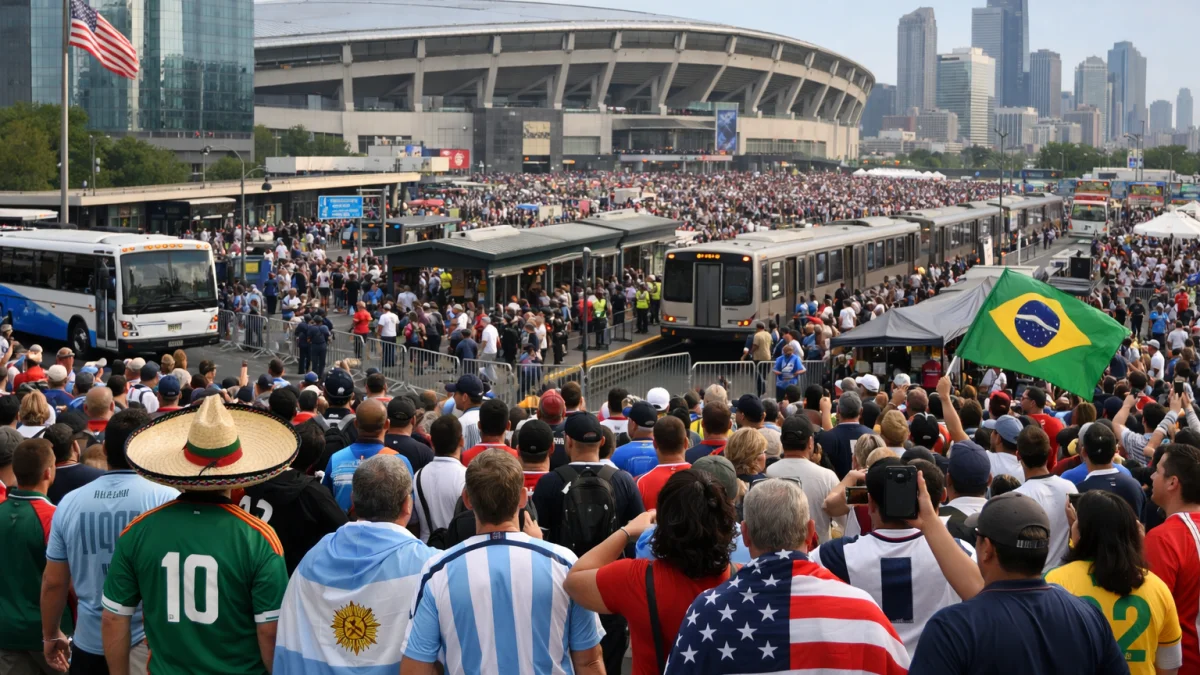


WASHINGTON — Large crowds of soccer fans have gathered in U.S. host cities for the ongoing 2026 FIFA World Cup, putting strain on transportation, hospitality and public infrastructure, local officials and organizers reported.
The tournament, co-hosted by the United States, Canada and Mexico, features matches across 11 U.S. venues including New York New Jersey, Los Angeles, Dallas and Miami. As group stage games progressed in mid-June, fan zones and stadium areas in several cities saw significant attendance, with reports of packed public spaces and increased demand for services.


Host cities have mobilized resources to manage the influx, including enhanced public transit, security and crowd control measures. Challenges have included traffic congestion, public transportation delays and pressure on hotel capacity in some locations, though overall booking data has varied. Officials noted that infrastructure designed for NFL and other events is being tested by the scale of international soccer fans.
The World Cup is the largest edition to date, with 48 teams and 104 matches. U.S. cities have prepared fan festivals, watch parties and dedicated zones to accommodate visitors. Transportation authorities in places like Boston and Atlanta reported heavy usage of trains and roads during match days, leading to some delays.
"Millions of fans. Multiple host cities. Massive infrastructure demands," one planning summary highlighted the logistical scope facing organizers.
While some areas experienced strong turnout, particularly for high-profile matches, broader hospitality reports indicated mixed results with hotel occupancy in certain markets falling short of initial projections amid high pricing. City and federal task forces have coordinated on security and emergency preparedness to address potential overcrowding risks.
Environmental and local groups have raised points about sustainability and resident impacts, while tourism boosters emphasized economic opportunities. FIFA and host committees have worked with U.S. agencies on visa processes and safety protocols.
As of June 17, 2026, matches continue across the host cities with ongoing monitoring of crowd flows. Organizers expect further tests during knockout stages, with adjustments being made based on early experiences. No major incidents have been widely reported in initial coverage, though full assessments of infrastructure performance remain underway.