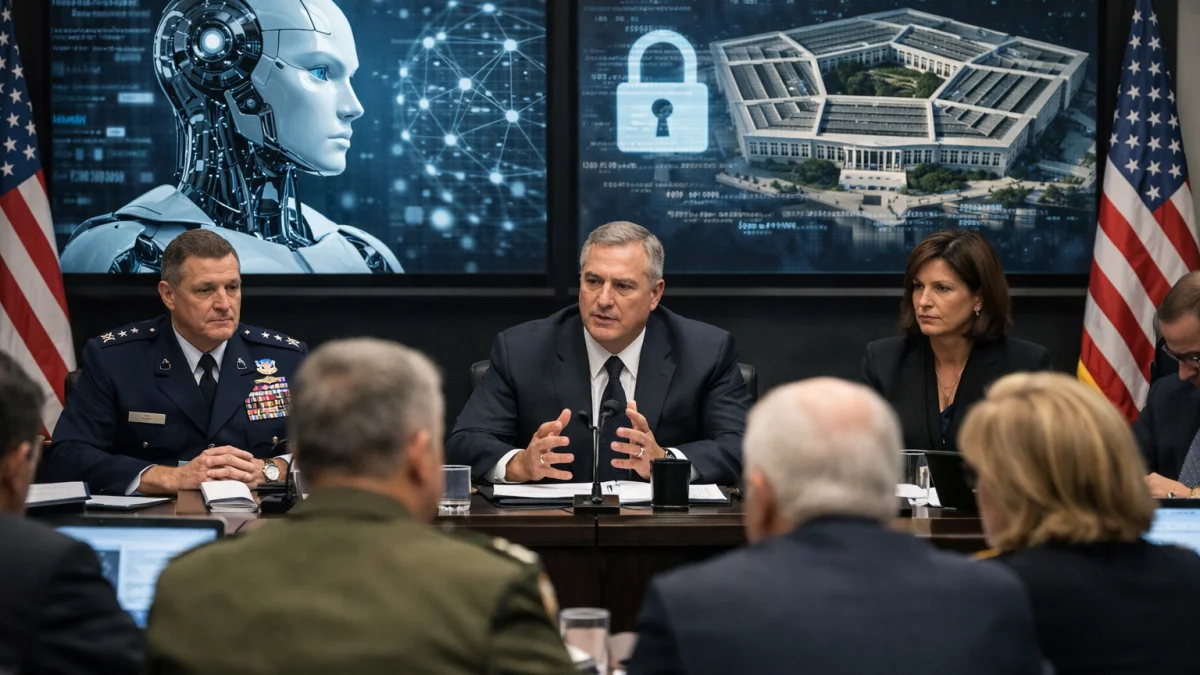


WASHINGTON — Governments in the United States and other countries are increasing reviews of advanced artificial intelligence systems as concerns grow over potential national security risks, according to officials, technology companies and policy announcements issued in recent weeks.
The heightened scrutiny follows rapid advances in AI capabilities, particularly in cybersecurity and software development, prompting authorities to examine how powerful new systems could affect critical infrastructure, intelligence operations and national defense. U.S. officials said this month that they are expanding efforts to evaluate advanced AI models before their public release.


On June 2, President Donald Trump signed an executive order establishing a voluntary framework under which developers of the most advanced AI systems may allow federal agencies to assess national security risks before public deployment. The White House said the policy is intended to address cybersecurity threats while maintaining support for innovation.
“Advanced AI capabilities make our Nation stronger, but also introduce new national security considerations that require coordinated action across executive departments and agencies,” the executive order stated.
The administration subsequently issued a national security memorandum directing federal agencies to accelerate the use of AI in defense and intelligence operations while prohibiting unlawful surveillance activities. President Trump said the United States would “responsibly accelerate” AI adoption across national security functions.
The reviews come amid growing debate over the capabilities of frontier AI models. Earlier this month, the U.S. government imposed restrictions affecting access to some of Anthropic’s most advanced systems after concerns emerged that certain safeguards could potentially be bypassed to identify software vulnerabilities. Anthropic said the risk was narrow and unconfirmed, while criticizing the restrictions.
Technology companies have offered differing views on oversight. Anthropic has called for mandatory safety testing of the most capable AI systems and urged lawmakers to establish federal standards if state regulations are preempted.
Security specialists have also warned that increasingly capable AI tools could be used to discover cyber vulnerabilities or assist malicious actors. Industry surveys released this month found that many security leaders remain concerned about governance and safety as AI-generated software becomes more common.
Several governments have adopted or proposed policies addressing AI-related security concerns, though approaches differ. Officials generally describe the measures as efforts to balance technological development with risk management, while some industry representatives have cautioned against regulations that could slow innovation.
As of mid-June 2026, U.S. agencies were preparing additional cybersecurity directives and implementing new review procedures for advanced AI systems. Further details on how the frameworks will operate in practice remain under development, according to government officials and participating companies.