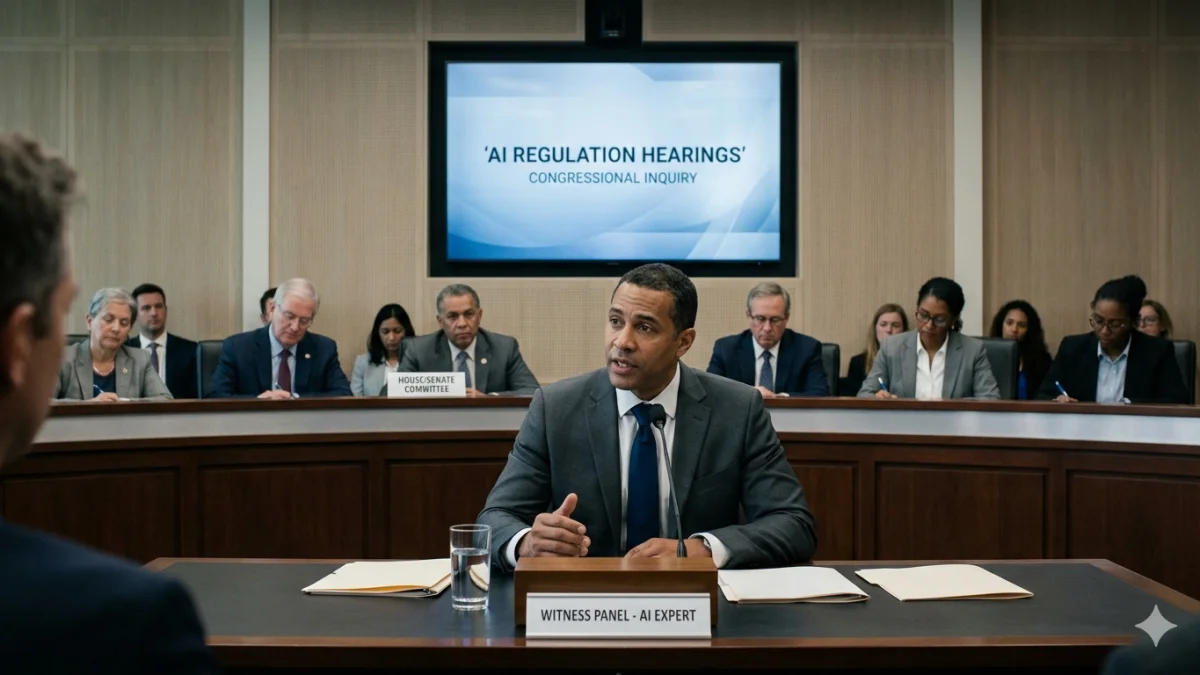


WASHINGTON — Congressional debate over how to regulate artificial intelligence intensified in recent days as lawmakers held hearings, introduced bipartisan legislation and advanced competing proposals aimed at balancing innovation, national security and consumer protections.
The latest discussions come as Congress faces growing pressure to establish a federal framework for AI governance while addressing concerns over cybersecurity risks, workforce impacts and the expanding patchwork of state-level regulations. Several hearings and legislative initiatives were announced or held during the first week of June, reflecting increasing attention to the rapidly developing technology.


On June 4, the House Homeland Security Subcommittee on Cybersecurity and Infrastructure Protection convened a hearing titled “The AI Security Landscape: How Frontier Models, Agentic AI, and AI Coding Tools Are Reshaping Cybersecurity and Critical Infrastructure Resilience.” Witnesses included representatives from Google Threat Intelligence, the Frontier Model Forum, cybersecurity firms and civil liberties organizations. Lawmakers examined both the potential benefits of advanced AI systems and the risks they may pose to critical infrastructure and national security.
Opening the hearing, Subcommittee Chairman Andy Ogles said lawmakers were examining “how artificial intelligence is changing the foundations of cybersecurity and the security of our critical infrastructure.”
At the same time, bipartisan lawmakers Reps. Jay Obernolte and Lori Trahan released a discussion draft of the “Great American Artificial Intelligence Act of 2026.” According to the proposal, the legislation would establish a national AI governance framework and temporarily preempt certain state regulations while federal standards are developed. Supporters have argued that a unified national approach would provide clarity for businesses and developers, while critics contend it could limit state authority to address emerging risks.
Additional proposals have emerged from Senate Democrats, including measures addressing military uses of AI, transparency requirements and oversight of advanced systems. Lawmakers backing those initiatives said stronger safeguards may be needed as AI capabilities expand. Some technology companies and industry groups have indicated support for targeted federal oversight, while warning against regulations they say could hinder innovation.
The debate has also drawn attention from the White House. The Trump administration recently signed an executive order focused on AI innovation and security and has supported efforts to create nationwide standards rather than a broad mix of state regulations. Meanwhile, consumer advocacy organizations and civil liberties groups have urged Congress to adopt stronger protections related to privacy, surveillance and algorithmic accountability.
A Senate Banking Committee hearing titled “AI and the American Dream: Promoting Innovation, Affordability, and American Dominance” is scheduled for June 11, according to committee notices, indicating that congressional scrutiny of AI policy is likely to continue in the coming days. As of June 9, no comprehensive federal AI regulatory framework had been enacted, and discussions among lawmakers, regulators, industry representatives and advocacy groups remained ongoing.