

WASHINGTON — U.S. financial markets have sharply reduced expectations for a Federal Reserve interest-rate increase next month after a weak July employment report showed the economy unexpectedly shed jobs and earlier payroll gains were revised substantially lower.
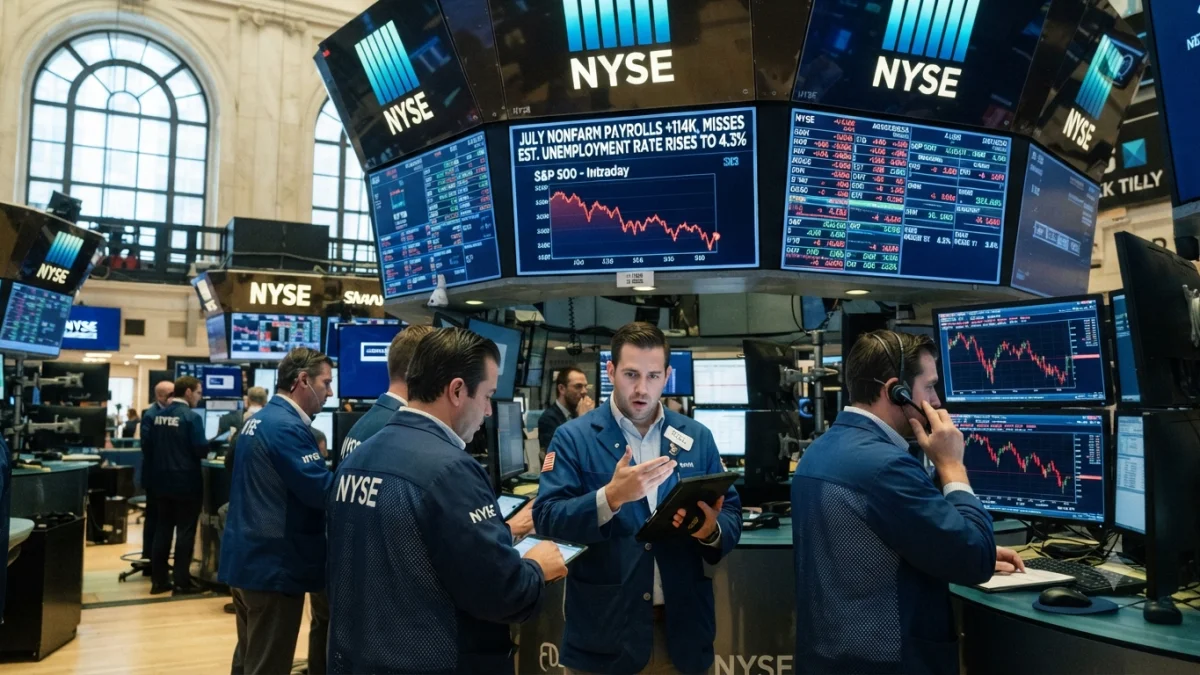
Nonfarm payrolls fell by 23,000 in July, the Labor Department said on Friday, compared with an average monthly gain of 34,000 over the previous 12 months. Employment in May and June was revised down by a combined 103,000, leaving a weaker picture of the labor market than previously reported.


The unemployment rate edged down to 4.1% from 4.2%, while the labor-force participation rate held at 61.4%. The Bureau of Labor Statistics said the number of unemployed people was about 6.9 million.
The report prompted investors to scale back bets that the Federal Reserve will raise rates at its Sept. 15-16 meeting. On Monday, market-implied odds of a September rate increase stood at about 44%, down from 67% the previous week, according to Reuters calculations. Treasury yields also declined, while the dollar remained near a two-month low.
U.S. stocks rallied after the employment figures, with the S&P 500 closing at a record high on Friday. The index gained 0.62% that day, while the Nasdaq rose 1.30%.
The labor data add to a policy dilemma for the Fed. At its July 28-29 meeting, the central bank left its benchmark federal funds rate unchanged at 3.50%-3.75%, saying economic activity was expanding at a solid pace but inflation remained elevated. Three policymakers dissented, favoring a quarter-point rate increase.
The July report showed employment declines concentrated in several areas. Local government education payrolls fell by 50,000 and retail employment dropped by 19,000. Financial activities employment declined by 14,000, while health-care employment increased by 22,000, though at a slower pace than its recent average.
Wage growth also moderated. Average hourly earnings for private-sector workers rose 3.2% from a year earlier, while the average workweek was unchanged at 34.3 hours.
Markets are now awaiting July consumer-price data due Wednesday, which could influence whether concerns about still-elevated inflation outweigh evidence of a weakening labor market. The Fed's next scheduled policy meeting is Sept. 15-16.