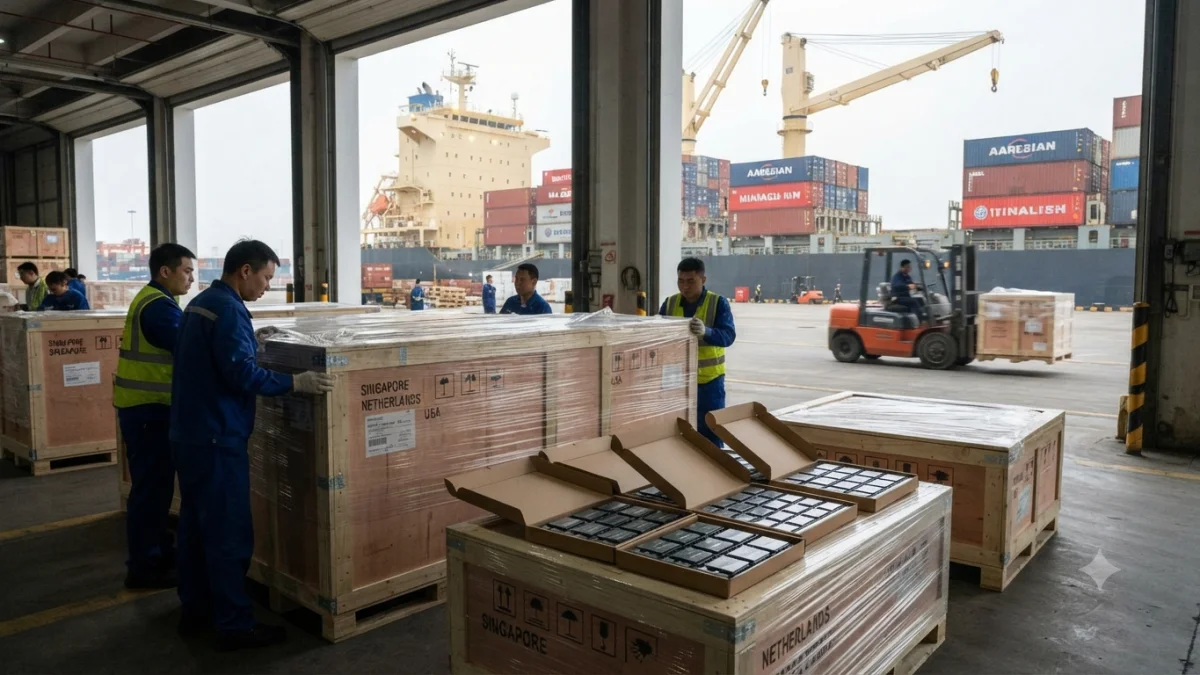


BEIJING — China’s exports surged in July, led by strong shipments of semiconductors and other high-tech products as global demand for artificial intelligence infrastructure continued to support the country’s manufacturing sector, customs data showed on Friday.
Exports rose 23.9% from a year earlier to $397.85 billion in July, beating the 22.2% increase forecast in a Reuters poll of economists. Imports increased 27.5% to $285.35 billion, leaving a trade surplus of about $112.5 billion, narrower than the $125.62 billion surplus recorded in June.


The technology sector was a major contributor to the export performance. Shipments of semiconductors nearly doubled in value from a year earlier, while exports of high-tech products rose 40.7%, according to customs data cited by The Straits Times. The gains underscored the growing role of advanced electronics in China’s overseas trade as companies and governments worldwide expand investment in AI computing infrastructure.
The latest figures extend a trend recorded in the first half of the year. China’s Ministry of Industry and Information Technology said in July that the export value of integrated circuits, measured in yuan, rose 88.7% year on year during the first six months. Exports of electronic components increased 62.6%, while exports of wind power equipment rose 35.6%, the ministry said.
China’s General Administration of Customs had reported that total foreign trade increased 16.9% year on year in the first half to 25.47 trillion yuan ($3.75 trillion), with exports up 13.4%. Mechanical and electrical products accounted for 63.5% of exports, while trade in computing-power hardware, including electronic components and computer parts, rose 56.6% to 5.13 trillion yuan.
The July data also showed continued reliance on overseas demand as domestic consumption and investment remained weaker. China’s economy grew 4.7% in the first half, slowing to 4.3% in the second quarter, according to official figures cited by The Straits Times.
The strength of exports could also increase trade tensions. China’s large trade surplus has drawn scrutiny from the United States and European Union, which have raised concerns over industrial overcapacity and considered additional trade measures. Beijing has rejected such accusations.
The July figures provide the latest official indication that technology-related exports remain a key source of momentum for China’s foreign trade as the second half of 2026 begins.