

Colombia’s 7.4-magnitude earthquake has moved beyond the immediate search for survivors into a more difficult phase of national recovery, exposing the logistical, financial and institutional pressures that follow a disaster of this scale.
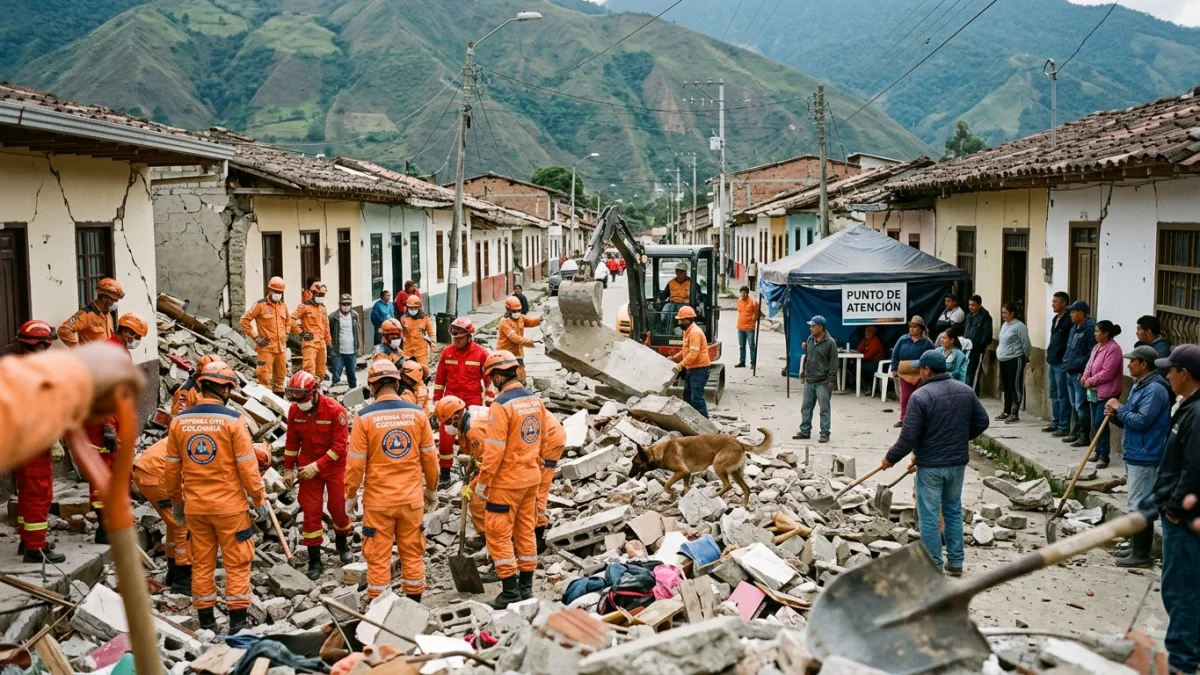
At least 273 people were dead, about 3,800 injured and 377 remained missing as of Thursday, according to the latest figures reported by Reuters. More than 12,500 homes had been destroyed, while damaged infrastructure disrupted basic services. In Cali, one of the hardest-hit cities, rescue operations were already shifting at many sites toward debris removal as the critical period for finding survivors narrowed.


The significance of the disaster now lies not only in the death toll but in whether Colombia’s emergency-management system can sustain a nationwide response while beginning the far more expensive task of reconstruction. President Abelardo de la Espriella, who took office only days before the Aug. 10 earthquake, has announced an economic emergency and a reconstruction fund intended to finance damaged homes, hospitals, schools and infrastructure. That places the new administration under pressure to maintain emergency services while securing resources for a recovery whose full cost remains unclear.
The response has demonstrated both institutional capacity and significant limits. National rescue teams, firefighters, military personnel, volunteers and international specialists have been deployed, while foreign assistance has begun arriving under Colombian requirements for certified rescue teams. Authorities have also restricted some volunteer activity around collapsed structures because untrained personnel can complicate professional search operations.
At the same time, the geography of the disaster has made national coordination difficult. The earthquake affected major urban centers including Cali and Pereira but also more isolated communities, particularly in Chocó. Reuters reported that some smaller communities faced delays in receiving government assistance because damaged infrastructure and difficult access slowed the movement of emergency teams and supplies. In Buenaventura, aid shipments were reportedly seized by armed groups, adding a security dimension to an already complex logistical operation.
The earthquake also illustrates why the scale of damage cannot be explained by magnitude alone. Colombia lies in a seismically active region where the Nazca and South American plates interact. Reuters analysis noted that the quake’s depth helped dissipate some energy, but destructive ground movement, vulnerable structures and differences in building quality can still produce severe losses. Experts have pointed to stronger enforcement of seismic standards, resilient infrastructure and preparedness as factors that can reduce casualties in future earthquakes.
For Colombia, the challenge is particularly acute because disaster preparedness is competing with other demands on public finances. Government documents issued earlier in 2026 had already acknowledged constraints on resources available for disasters. A government decree said the 2026 budget allocation for the National Disaster Risk Management Fund was insufficient for extraordinary needs and that additional resources were required for emergency response and recovery.
That fiscal pressure makes the proposed reconstruction fund important beyond the immediate relief effort. Rebuilding damaged housing and public infrastructure will require decisions over priorities, financing and the allocation of responsibilities between national and local authorities. The government will also have to maintain essential services for displaced residents while repairing hospitals, schools, roads and other infrastructure whose disruption can prolong the economic effects of the earthquake.
The disaster comes after Colombia itself sent specialized urban search-and-rescue personnel to earthquake-hit Venezuela in June and July. The Colombian government said its USAR COL-1 team included 63 rescuers and four canine units and inspected dozens of sites during an eight-day international deployment. That experience provided Colombia with recently tested rescue capabilities, although operating at home across a much larger affected area presents a different logistical challenge.
The government’s handling of the transition from rescue to humanitarian assistance will therefore be a central measure of the response. Authorities must determine which locations still warrant intensive searches, where displaced families require sustained shelter and supplies, and how damaged infrastructure can be assessed safely while aftershocks continue. More than 160 aftershocks have been reported, adding risks for rescuers and residents returning to damaged structures.
As of Friday, the confirmed picture remains fluid. Search teams are still working at priority sites, while many operations have begun moving toward debris removal and humanitarian support. The principal uncertainties are the final number of missing people, the extent of structural damage outside the main cities and the financial requirements for reconstruction. Colombian authorities and emergency agencies are continuing to monitor those figures, the safety of damaged structures, access to isolated communities, the delivery of aid and the continuing risk from aftershocks as the country moves from immediate rescue toward a prolonged recovery.