

The wait outside a collapsed building in Pereira had stretched through the day when rescuers finally found a sign that Daniela might still be alive.
The 32-year-old had disappeared after Monday’s 7.4-magnitude earthquake, leaving her father, Julio Cesar Largo, fearing the worst. She had been expected home for her son’s 12th birthday. Instead, rescuers located her nearly 38 hours after the quake beneath the remains of a four-story lodging house in central Pereira. It took about 10 more hours to free her, Reuters reported, after her arm was pinned by a metal door. When she emerged alive, relatives and onlookers cheered.


Her rescue has become one of the stories families across western Colombia are holding onto as search crews enter the final phase of operations.
The earthquake, the strongest to hit Colombia this century, struck shortly after 7 a.m. on Aug. 10, tearing through the country's coffee-growing region and damaging or destroying homes, hospitals, schools and other buildings. By Wednesday, President Abelardo De La Espriella said 265 people had died, nearly 500 remained unaccounted for and more than 3,770 had been injured. Officials estimated that more than 9,550 homes had been destroyed.
Now the clock is pressing on families and rescuers alike.
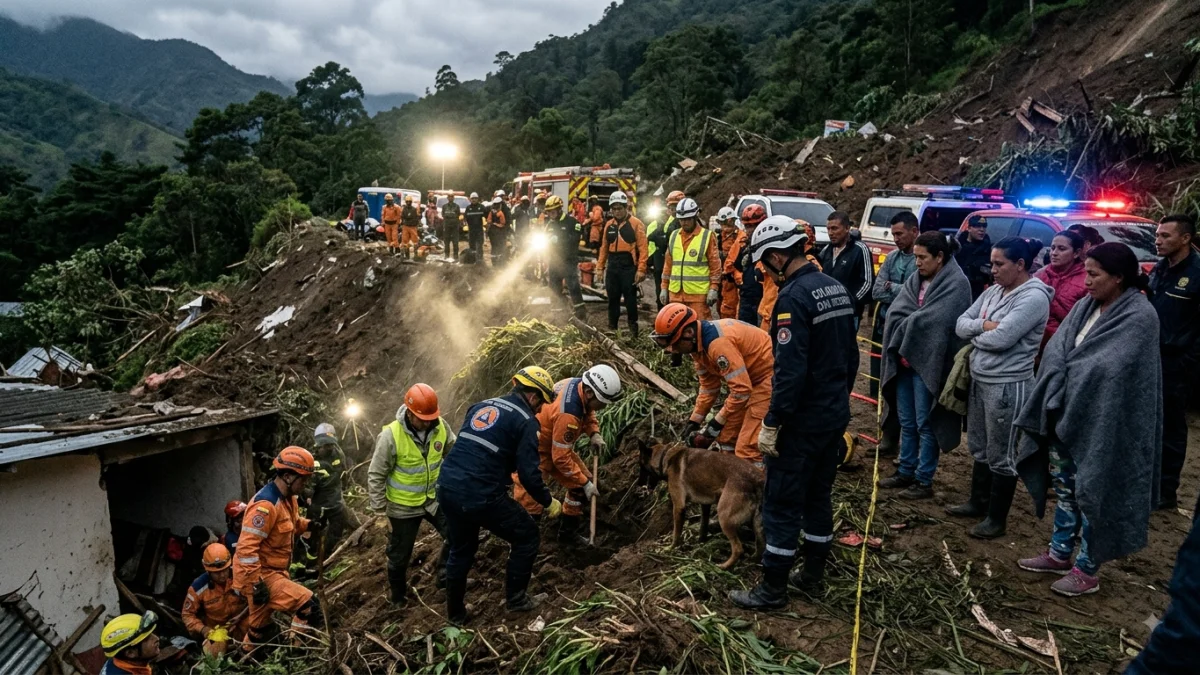
At the Torres del Limonar apartment complex in southern Cali, residents joined soldiers, municipal workers and others in bucket brigades, passing pieces of rubble away from the collapsed structure. Police restricted access to the site after rescuers said crowds were creating noise and vibrations that could interfere with sensors searching for movement beneath the debris. The risk of aftershocks also made large gatherings dangerous.
For relatives, however, the rubble remains more than a rescue site. It is the last known location of people whose fate is still unknown.
In Pereira, rescuers were also searching a collapsed bakery where they believed a street vendor, Pablo Loaiza, could still be alive. Vibration-detection equipment reportedly picked up possible signs of life, prompting relatives to gather outside. His 16-year-old niece, Sara Loaiza, told AFP: “They tell us it could be him.”
Such moments have given the search a rhythm of hope and uncertainty. A possible signal can bring relatives closer to a rescue operation; silence can return just as quickly.
Cali Mayor Alejandro Eder said Wednesday that crews were entering the “final phase” of the search. He cautioned that the designation did not mean survivors could no longer be found, only that the chances become more difficult as time passes.
The critical 72-hour period has long been an important benchmark in earthquake rescue operations, although survival beneath rubble can vary greatly depending on individual circumstances, including access to air, water and shelter. In Colombia, rescue teams have continued working with cranes, specialist equipment, dogs and, in some places, their hands as the window narrows.
The disaster has also exposed the scale of what families will face even after the search ends.
In Palmira, relatives of people who died waited outside a morgue as officials called out the names of identified bodies. Santiago Lloreda, 31, told Reuters that the earthquake killed both his mother and his 13-month-old daughter, Salma. Because the baby was too young to have a fingerprint record, identification was to rely on DNA samples sent to Bogota.
“My daughter was a dream made reality,” Lloreda said, remembering his mother as the pillar of the family and describing the care she gave the baby.
For other families, the immediate concern has been survival rather than identification.
Indira Meneses, a 49-year-old nurse in Pereira, said the front of her home collapsed while she was inside with her two children and elderly mother. Neighbors helped them escape. Five of her neighbors died beneath the rubble, she told Reuters, while her family waited for local officials to help them rebuild and replace what they had lost.
Across affected communities, residents have also organized their own response. People have brought water and food, donated blood and helped clear debris. In the hardest-hit areas, damaged roads and disrupted communications have complicated the delivery of assistance. Indigenous communities in Choco, near the epicenter, have reported particular difficulties accessing basic services.
The response has unfolded only days after De La Espriella took office, making the earthquake an early test for a new administration. The president has promised an emergency reconstruction fund for homes, hospitals, schools and infrastructure and declared an economic emergency over the damage.
But for families still waiting beside collapsed buildings, reconstruction remains a problem for another day.
The immediate question is simpler: who can still be brought out alive?
Daniela’s rescue offered one answer. She had survived long enough beneath the wreckage for rescuers to find her, and long enough for dozens of people to work for hours to free her. Her survival came as Colombia approached the point at which the search would become harder, but not necessarily hopeless.
At rescue sites across Cali and Pereira, crews continue to listen for what cannot yet be seen. For families gathered nearby, every pause in the machinery can carry the possibility of a sound from beneath the concrete.
And as the final hours of the critical search period pass, that possibility is what keeps many of them waiting.