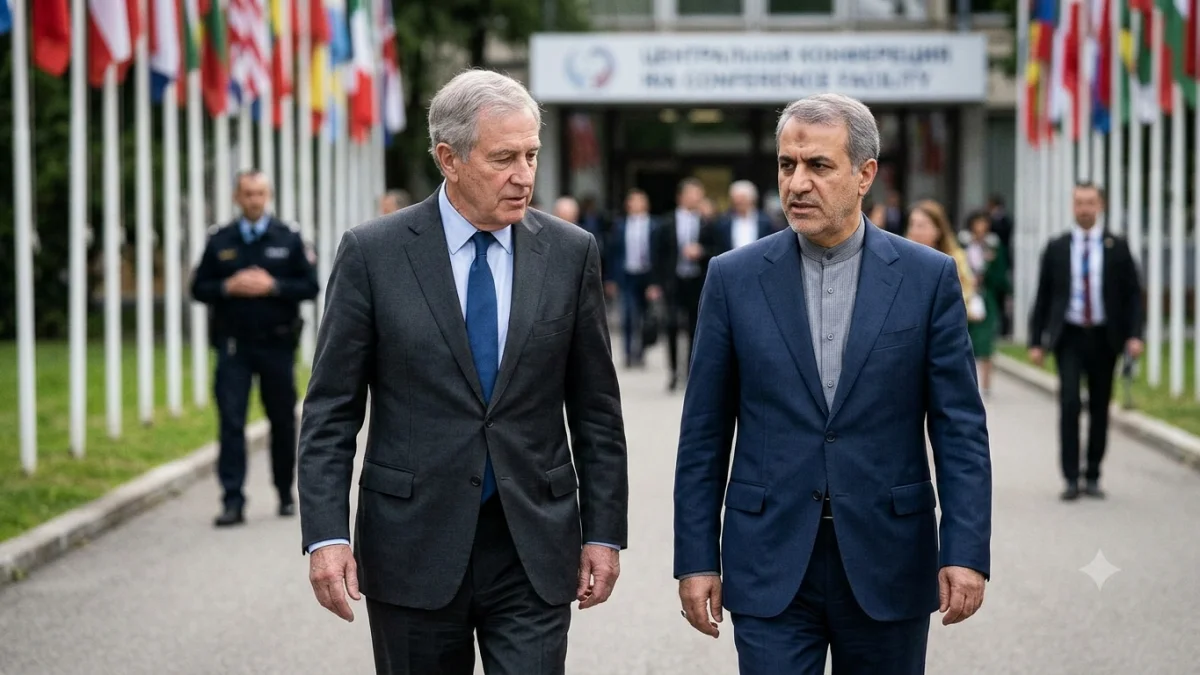


Conflicting public messages from Washington and Tehran have once again complicated efforts to assess whether the United States and Iran are moving toward meaningful diplomacy or merely managing another temporary pause in confrontation. On Aug. 4, President Donald Trump maintained that negotiations with Iran were underway following his decision to halt planned military action, while Iranian officials publicly rejected the assertion that direct talks with Washington had resumed, saying discussions were instead taking place with Oman over navigation through the Strait of Hormuz.
The divergence matters because it highlights a central feature of the current crisis: military de-escalation and diplomatic communication are no longer advancing in parallel. Markets, regional governments and commercial shipping operators are responding not only to military developments but also to contradictory political messaging that complicates assessments of immediate risk. The uncertainty has become particularly significant as the Strait of Hormuz remains central to global energy security, with disruptions affecting oil prices, shipping insurance costs and broader economic confidence.


The latest uncertainty followed President Trump's announcement that he had called off planned strikes and expected negotiations to resume, framing diplomacy as an opportunity to reduce tensions over both maritime security and Iran's nuclear activities. Iranian officials, however, disputed that characterization. Tehran acknowledged contacts involving Oman concerning shipping through Hormuz but denied that direct negotiations with the United States had begun under the terms described by Washington.
Those conflicting narratives have been accompanied by continued security incidents. On Aug. 4, a commercial cargo vessel reported being struck near the Strait of Hormuz, underscoring that operational risks remain despite renewed diplomatic messaging. Although responsibility had not been conclusively established, the incident illustrated how isolated attacks or miscalculations can quickly undermine political efforts to stabilize the region.
The pattern reflects broader developments over recent months. Since the outbreak of direct U.S.-Iran hostilities earlier in 2026, periods of military escalation have repeatedly alternated with announcements of prospective negotiations. Previous attempts to establish ceasefires or broader frameworks have frequently been accompanied by differing public interpretations of what had actually been agreed, particularly regarding freedom of navigation through the Strait of Hormuz and the sequencing of wider political negotiations.
The gap between public messaging and diplomatic reality has practical consequences beyond political optics. Energy markets have reacted sharply to every indication that confrontation might ease or intensify. Oil prices fell after Trump's announcement that military action had been suspended and talks would begin, reflecting expectations that shipping disruptions could eventually diminish. However, subsequent denials from Tehran and reports of fresh attacks highlighted how quickly market sentiment can reverse when official narratives diverge.
Regional mediation has therefore assumed increased importance. Oman has continued its long-standing role as an intermediary between Washington and Tehran, while Qatar and Pakistan have also been identified by officials and diplomats as facilitating communication intended to prevent renewed escalation. Such indirect channels have historically provided opportunities for dialogue even when direct political engagement remained politically difficult for both governments.
Analysts note that the present negotiations differ from earlier rounds because they extend beyond the Iranian nuclear issue. Maritime security, commercial navigation, regional military activity and broader deterrence arrangements have become closely interconnected. The Strait of Hormuz carries a substantial share of globally traded crude oil, making any disruption an international economic concern rather than solely a regional security issue. Consequently, negotiations increasingly encompass practical mechanisms for restoring commercial shipping alongside broader political questions.
Another complicating factor is the role of public signaling. Statements directed toward domestic political audiences may not always correspond precisely with confidential diplomatic exchanges. Officials frequently use public messaging to reassure allies, deter adversaries or influence negotiating leverage. As a result, apparent contradictions do not necessarily demonstrate that diplomacy has collapsed, but they do make independent verification considerably more difficult until official meetings or formal agreements are confirmed.
The repeated cycle of threats followed by diplomatic openings also affects credibility. For investors, commercial shipping companies and regional governments, uncertainty itself has become a strategic variable. Businesses must evaluate insurance costs, reroute vessels or delay cargo movements even when neither side has formally resumed hostilities. Likewise, regional partners must prepare simultaneously for both negotiation and renewed confrontation.
Historical experience suggests that U.S.-Iran diplomacy has often advanced through indirect contacts before becoming publicly acknowledged. However, previous negotiations have also demonstrated how fragile such processes remain when military incidents occur before confidence-building measures can take hold. The current environment reflects many of those same structural challenges, including mutual distrust, competing political narratives and disagreements over the scope of any eventual agreement.
For now, the confirmed picture remains mixed. Washington continues to describe diplomacy as active following the suspension of planned military action, while Tehran maintains that its formal discussions concern Oman and maritime arrangements rather than direct negotiations with the United States. At the same time, security incidents in and around the Strait of Hormuz continue to underscore the risk of renewed escalation. Officials and regional mediators remain focused on preserving communication channels, restoring maritime stability and determining whether indirect contacts can evolve into verifiable diplomatic progress.