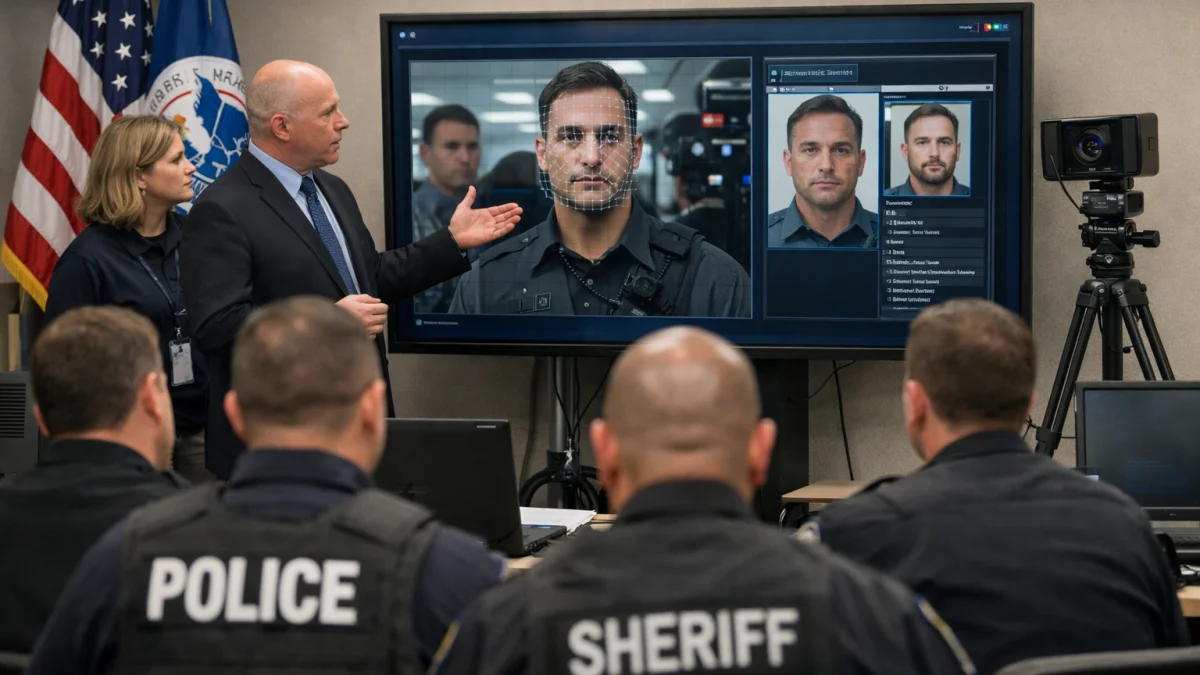


WASHINGTON — The U.S. Department of Homeland Security is expanding the use of facial-recognition technology in immigration enforcement by making a mobile identification tool available to local police agencies that work with federal immigration authorities, according to agency documents reviewed by media outlets and published this month.
The plan, first reported by 404 Media and later confirmed through a Department of Homeland Security privacy document, would allow certain local law-enforcement officers participating in federal immigration-enforcement programs to scan a person's face using a mobile application and compare the image against hundreds of millions of government records. The system is designed to help determine whether an individual may be subject to immigration enforcement action.


According to the document, the application, known as the ICE Task Force Module, is intended for use by local officers participating in the federal 287(g) program, which authorizes designated local agencies to assist with immigration enforcement. The facial-recognition system compares images against databases that include visa records and traveler-verification records maintained by federal agencies.
A Department of Homeland Security statement provided to NPR said Immigration and Customs Enforcement is committed to ensuring that local officers working with the agency “have the tools needed” to support immigration-enforcement operations. DHS did not provide detailed information on how frequently the technology has been used or the circumstances under which scans may be conducted.
The privacy document indicates the application launched in September 2025, suggesting that some agencies may already have access to the technology. Details about the number of participating departments remain unclear, although reports citing DHS records said the program could potentially reach more than 1,000 local agencies involved in immigration partnerships.
Civil-liberties advocates and technology-law experts have raised concerns about oversight, accuracy and privacy protections. Clare Garvie of New York University's Policing Project told NPR that key operational questions remain unanswered, including whether officers must have a lawful basis for a stop before using the application. “Can they walk around taking photos of whoever as sort of a dragnet way to attempt to identify individuals who might be in the country unlawfully?” Garvie said.
The technology expands on facial-recognition tools already used by federal immigration agencies, including ICE and U.S. Customs and Border Protection. DHS documents reviewed by reporters indicate that photographs collected through the system may be retained in government databases for extended periods.
Members of Congress and privacy advocates have called for greater transparency regarding the collection and storage of biometric information. DHS officials have maintained that technology-assisted identification tools support law-enforcement operations while protecting public safety.
As of Sunday, DHS had not announced any changes to the program, and the facial-recognition rollout to participating local law-enforcement agencies was continuing, according to the agency documents and public reports.