

Europe’s Wildfires Turn Villages Into Places of Flight
At about 4 a.m. on Friday, a message arrived on Leo Braun’s phone telling residents of Gey, a village in western Germany near the Belgian border, to leave immediately.


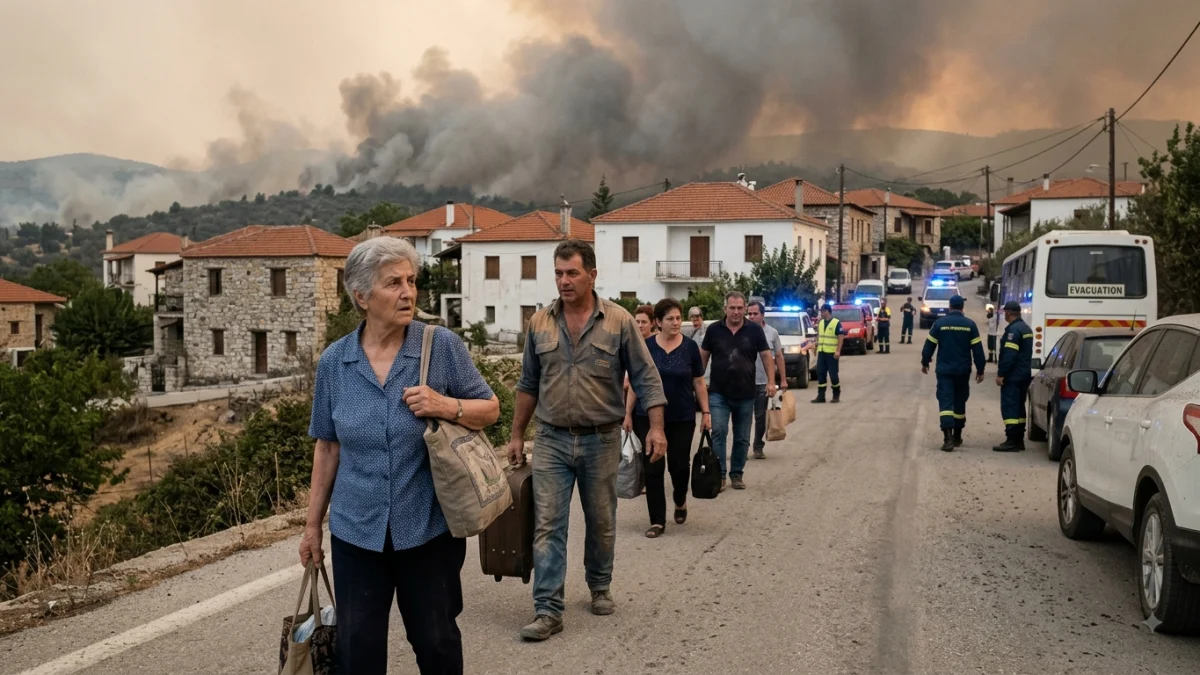
Braun and his family had already packed some belongings. They gathered what they could and fled as the wildfire moved toward the village. More than 2,000 people were evacuated and directed to an assistance centre at a primary school in a nearby community, according to local authorities.
“At about four o’clock we got a message via the app saying we had to leave the place straight away,” Braun told Reuters. “So we gathered our things — which we’d already packed beforehand — and then fled.”
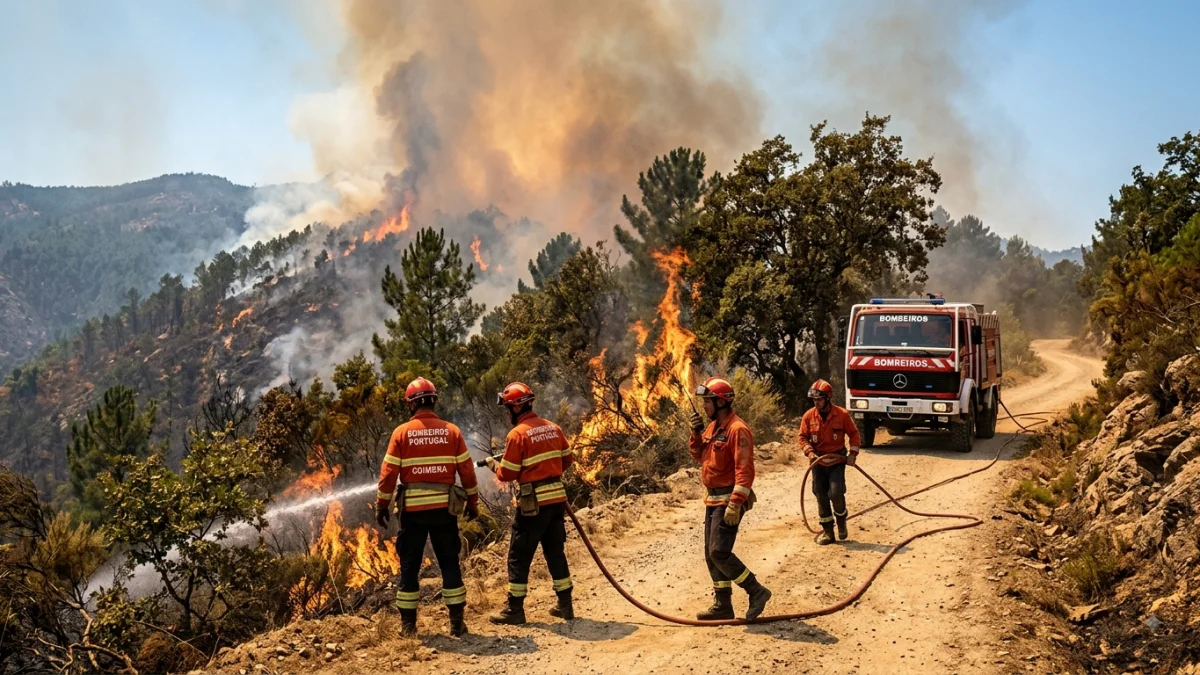
Gey was one of several European communities this week where residents and holidaymakers were forced to leave homes, hotels and beaches as wildfires spread through dry landscapes across the continent. From Germany and France to Greece, Croatia, Spain and Britain, emergency services faced fires intensified by heat, drought and, in several places, strong winds.
The evacuations have turned a familiar summer landscape of villages, forests and coastal resorts into places where people must decide what to take, where to go and how quickly they can leave.
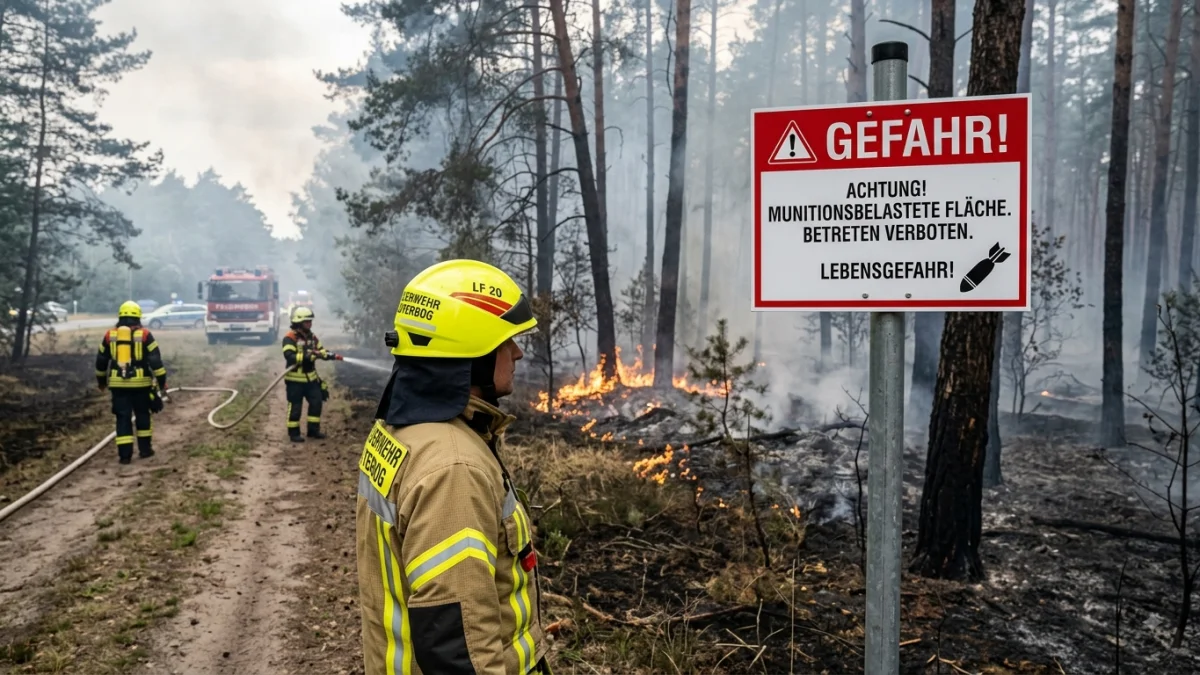
In Gey, the danger was complicated by the history beneath the forest. Unexploded Second World War munitions remain in parts of the area, and firefighters reported explosions as flames moved through the woodland. About 300 hectares were burning, while German army tanks helped clear access routes for emergency crews. Officials said the fire remained far from contained.
For residents, the evacuation was not simply a matter of watching a distant fire. Authorities urged them to take essential belongings, identification documents and necessary medicines before leaving.
Farther south, the same calculation played out in a very different setting.
In the Greek resort town of Siviri, on the Halkidiki peninsula, more than 300 people were evacuated by boat as a wildfire moved through forest toward the coast. Residents and tourists boarded dinghies, patrol boats and fishing vessels while firefighters fought the flames inland.
More than 140 firefighters, supported by aircraft and helicopters, were deployed to the blaze, according to Greek authorities. One firefighter was injured, while roads around the affected area were closed as the fire spread.
The evacuation illustrated how quickly a fire can alter the geography of escape. On land, roads can become blocked by smoke, flames or emergency vehicles. At Siviri, the sea became the route out.
The Greek evacuation came during the peak holiday season, when the peninsula was filled with visitors. In Croatia, another coastal fire struck the tourist town of Omis, where around 1,000 people were evacuated after flames reached homes and vegetation. One person died and dozens were injured, with several people hospitalized in serious condition, officials said.
In southwestern France, authorities evacuated 525 people from Luglon after a fire broke out in the Landes region. The village lies roughly 100 kilometres southeast of the Arcachon Bay area, which had already been devastated by major fires earlier in the summer. Those earlier blazes destroyed more than 50,000 hectares and prompted the evacuation of as many as 220,000 people, according to Reuters.
Spain has faced some of the most extensive fires. In northeastern Aragón, a wildfire had burned more than 9,000 hectares and forced the evacuation of 16 towns by Friday. The threat reached the historic San Juan de la Peña monastery, prompting an emergency operation to remove the remains of three kings of Aragón who ruled between 1035 and 1104.
Military personnel, police and heritage officials entered the monastery and moved the remains, historical paintings and other items to safety. The monastery itself remained intact as of Friday morning, Reuters reported. In southern Spain, a separate fire in Huelva province had burned about 31,000 hectares and forced roughly 700 people to leave their homes.
The fires have also shown that the risk is no longer confined to Europe's traditionally hottest southern regions.
In Britain, the number of wildfires in England and Wales had already exceeded the previous annual record of 1,017 set in 2025, according to the National Fire Chiefs Council. The latest fires came during the country's fifth heatwave of the year.
In Stourbridge, central England, flames spread from dry vegetation into residential areas. Several properties were affected and some homes were destroyed. Resident Paul Nash told Reuters that he and his family left after seeing the fire spread along a railway track.
“I heard a scream, and all the trees along the railway track were exploding,” Nash said. “They weren't just setting fire, they were exploding. So we just grabbed everything and left.”
Britain recorded 38.1 degrees Celsius in London on Thursday, its fifth-hottest day on record, according to the Met Office. Government figures cited by Reuters showed that about 45 million people were living in drought-affected areas and 27 million faced water-use restrictions.
Across the continent, authorities have increasingly had to prepare for fires that move faster and behave less predictably under extreme conditions. The European Union's Copernicus Climate Change Service warned of “very extreme” wildfire conditions in parts of central and eastern Europe. Scientists have linked the combination of prolonged drought and exceptional heat to climate change, creating conditions in which vegetation dries rapidly and fires can spread more easily.
For those being evacuated, however, the wider climate question is often reduced to an immediate one: whether there is enough time to get out.
In Germany, residents of Gey were told to leave before dawn. In Greece, people escaped by sea. In Croatia, families and visitors moved toward emergency shelters as flames approached the coast. In Spain, authorities moved centuries-old royal remains away from an advancing fire.
Each evacuation followed the same basic logic: leave before the fire closes the available routes.
And as emergency crews continued working across Europe, officials were still warning that the fires were not finished. In Gey, local authorities said smaller fires and hot embers remained active.
The evacuation message that reached residents before dawn had done its job. For the people who received it, the priority was no longer the landscape they were leaving behind, but finding a safe place to wait for the fire to pass.