BEAUVOIR-SUR-MER, France — In the coastal village of Beauvoir-sur-Mer in western France, farmer Stephane Delapre watched as half his free-range chickens died of suffocation during a recent heat spike. “In 42 years, I’ve never seen that,” Delapre told AFP as officials collected the carcasses. He had installed fans in the sheds housing his roughly 17,500 hens and 70,000 quails, but temperatures climbed to 40-41°C, overwhelming the measures.
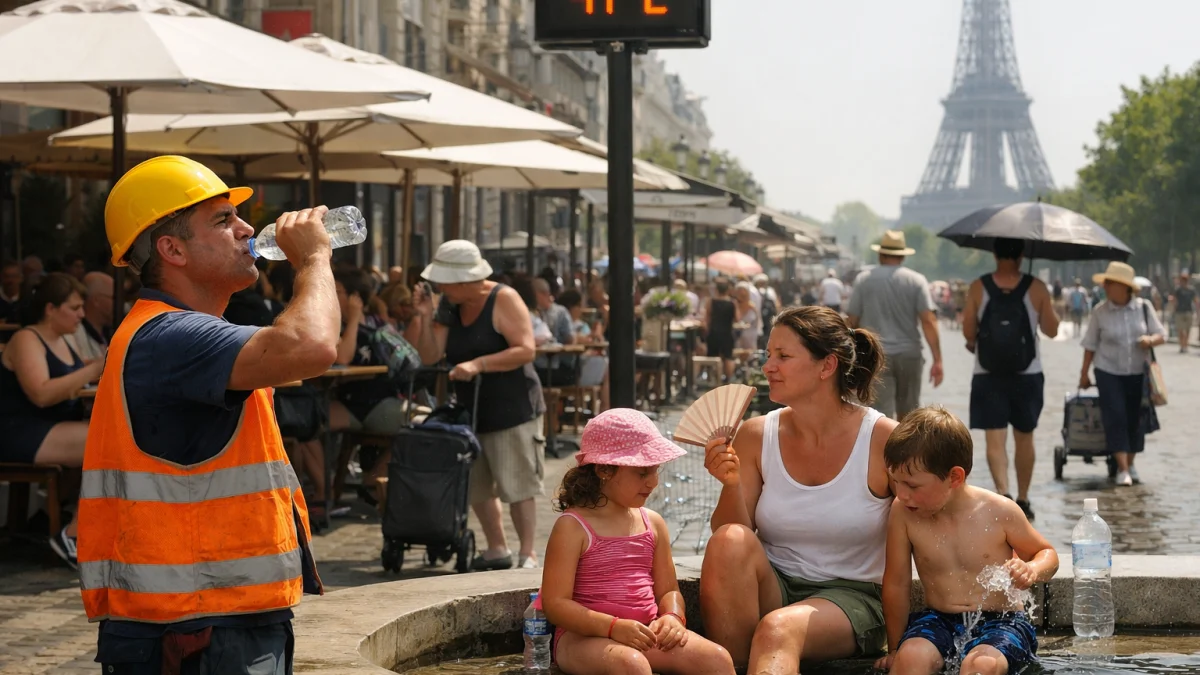
Similar scenes have unfolded across southern Europe this summer as a prolonged heatwave grips the region, with temperatures exceeding seasonal norms and exacerbating drought conditions. France, Spain, Italy, and parts of Greece and Portugal have faced repeated extreme heat, pushing agricultural systems already strained by climate trends to adapt in real time.
The human stakes are immediate for the families who work the land. For generations, many of these farmers and vineyard owners have followed practices honed over decades or centuries. Now, rising temperatures, more frequent and intense heatwaves, and shifting water availability force daily decisions that ripple through yields, costs, and long-term viability. While some adapt through technology and technique, others confront limits imposed by soil, regulations, and economics.
Prolonged heat stresses crops in multiple ways. High daytime temperatures combined with warm nights hinder vines’ recovery, increase water demand, and can accelerate ripening, altering sugar-acid balance and potentially affecting wine quality. In vineyards, this has contributed to earlier harvests in some areas and concerns over sunburn, shriveling, and reduced yields. For broader agriculture, heat and drought have hit livestock, cereals, olives, and other produce.
In southern France’s Corbières region, wildfires during intense 2025 heat burned through vineyards. Baptiste Cabal of the Cellier des Demoiselles cooperative described “catastrophic” losses, with half of some members’ vines damaged or destroyed. Such events compound the seasonal pressures of a June 2026 heatwave that has driven record cooling demand, wildfire risk, and agricultural strain across the continent.
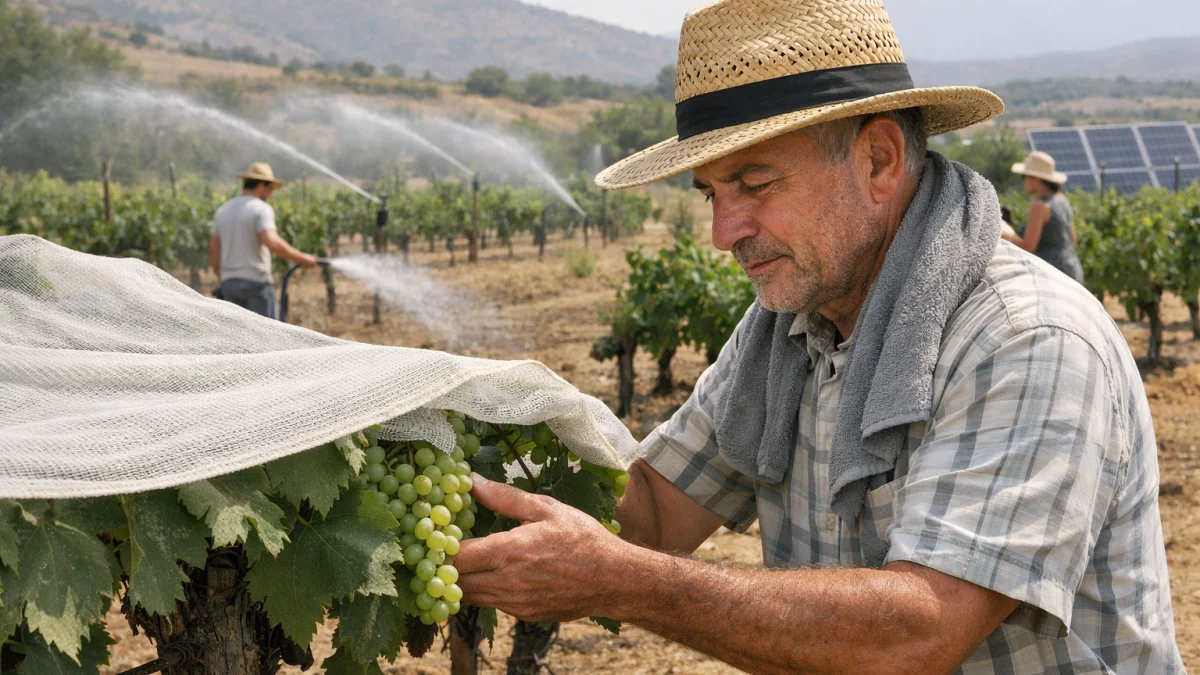
Farmers and winemakers respond with a mix of immediate tactics and longer-term shifts. Many have turned to drip irrigation where permitted, aiming to deliver water efficiently to roots and mitigate heat stress through evaporative cooling. In Languedoc, pipelines from the Rhône River help supply some areas lacking local rivers. However, regulations in prestigious appellations often limit irrigation, and water scarcity remains a binding constraint.
Shade nets and canopy management techniques offer another tool. Studies and field trials indicate that shading can reduce excessive solar radiation, moderate temperatures around clusters, help preserve acidity, and limit sunburn—though results vary by variety, timing, and intensity. Some producers experiment with these alongside cover crops or mulching to retain soil moisture.
Earlier harvesting has become more common as heat speeds ripening. In parts of France, discussions have turned to starting grape collection in early August or even July in extreme cases, rather than mid-to-late August. This helps capture grapes before they over-ripen but requires adjustments in winemaking to maintain desired styles.
Sensors and data-driven approaches are gaining ground. In Italy’s Prosecco areas, producers like Simone Rech monitor soil and air conditions to optimize water use, collecting and reusing rainwater and cellar wastewater. Similar precision efforts appear in Spain’s Cava regions.
Broader shifts include exploring later-ripening or more heat-tolerant varieties, where appellation rules allow, and considering higher-elevation sites for future plantings. Projections indicate that while southern lowlands and coastal areas face heightened risks of drought and heat stress—potentially threatening suitability in places like parts of Spain, Italy, and Greece—some higher or more northern sites may see opportunities.
Yet adaptation carries costs. Small family farms often lack capital for infrastructure like irrigation systems, shade structures, or sensors. Higher expenses for water, energy, and labor amid lower or more variable yields squeeze margins. In some cases, producers have abandoned marginal land or shifted crops.
Official data underscore the scale. The European Union agriculture sector faces average annual losses of around €28 billion from extreme weather, with projections of increases as droughts and heat intensify. Southern Europe’s traditional wine regions are among the most exposed.
Experts note that while short-term measures like deficit irrigation and canopy adjustments help buffer individual seasons, systemic resilience depends on policy support, water management, and flexibility within geographical indication systems. Some regions have begun amending rules to allow new varieties or techniques.
For now, the work continues under the sun. In Spain’s Alentejo or France’s Rhône Valley, vineyard managers walk rows checking for stress signs, adjusting where they can. Livestock farmers install misting systems or manage herds differently, as seen with dairy operations reducing milk output under heat.
The story is one of incremental, grounded responses rather than wholesale transformation. Lucio Salamini, a northern Italian vineyard owner, observed dramatic weather changes over 30 years but noted the unusual persistence of heat even at night during intense periods. His experience echoes many: the land remains productive, but the margins for error have narrowed.
As southern Europe navigates another season of extremes, these farmers and vineyard owners embody both continuity and necessary change. Their adaptations—rooted in observation, trial, and constraint—illustrate how one of the region’s defining economic and cultural sectors confronts a warming climate, one harvest at a time.