

By Friday evening, the Bald Range wildfire had grown with a speed that left little time for people in British Columbia’s southern Okanagan to decide what they could save.
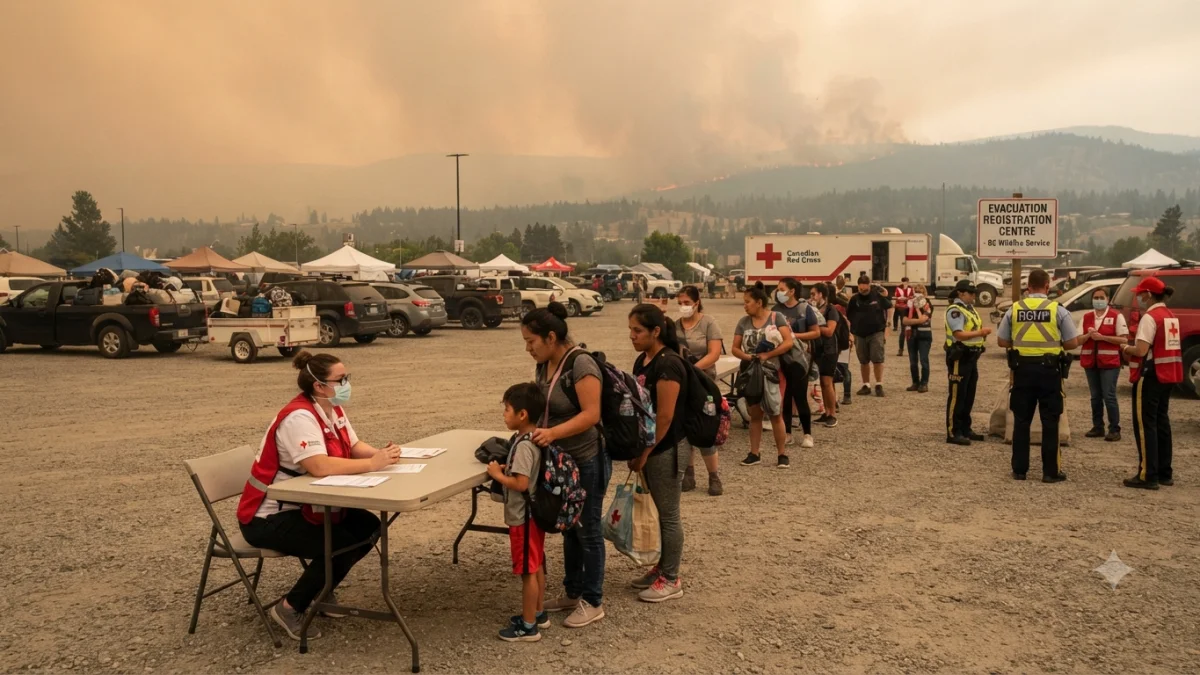
The fire, first detected west of Summerland, expanded to about 9,500 hectares by Saturday, according to provincial officials cited by Reuters. Evacuation orders spread through Summerland, Peachland and surrounding areas, sending more than 20,000 people across British Columbia away from their homes. Among those affected were farmers whose properties, crops and agricultural operations lie within a landscape where orchards, vineyards and other farms are woven into the communities along Okanagan Lake. Summerland Mayor Doug Holmes said many farms had been affected, although officials did not yet know how many structures had been lost.


For farmers, an evacuation is different from simply leaving a house. A home can be locked and abandoned for a night. A farm contains crops that cannot be moved, irrigation systems that may depend on electricity, equipment that may be difficult to replace and, in some cases, animals that require care.
The urgency was underscored by the speed of the fire.
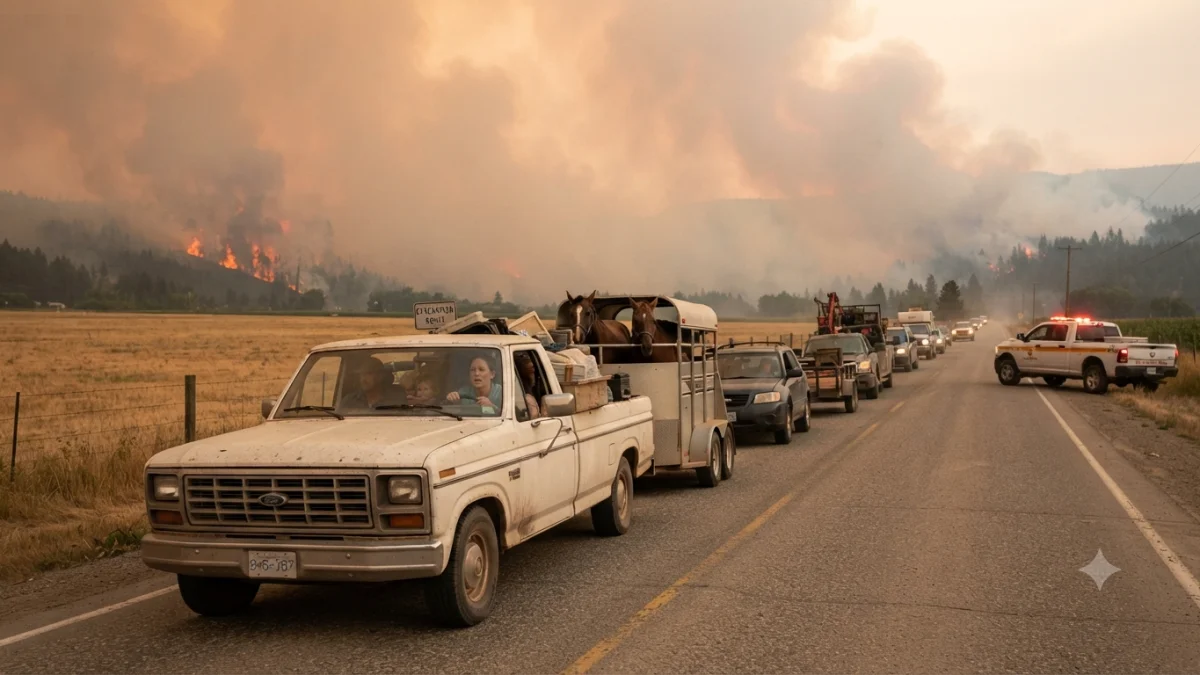
Premier David Eby said at a news conference on Saturday that a fire official had compared the blaze to “a bomb going off.” Eby said flames had reached the tops of 100-foot trees and risen far above them, while the fire generated its own weather system and lightning. Homes and properties were destroyed, and some people became trapped as conditions changed rapidly and had to be rescued, he said.
The evacuation came during the height of the agricultural and tourism season in the Okanagan, a region known for its orchards and vineyards. The southern interior produces most of British Columbia’s wine and is Canada’s second-largest wine-producing region, according to Reuters.
That timing adds another layer to the disruption. For growers, late summer is not simply another point on the calendar. It is a period when farms are preparing for or carrying out harvest-related work, while wineries and agricultural businesses depend heavily on the summer season.
Yet the immediate priority was survival.
Residents of Summerland were ordered to evacuate overnight as the fire moved quickly. Terry Fries, a Summerland resident, told Reuters that a neighbour warned him while he was watching a football game to prepare a bag. When the evacuation order came around midnight, Fries and his family drove about 45 kilometres north to Kelowna.
For people living on agricultural properties, the same narrowing window of time carried additional decisions: what machinery could be moved, whether animals could be relocated and when it was no longer safe to remain.
The evacuation also exposed how quickly essential infrastructure can become part of the emergency. Summerland lost power on Saturday, while the municipality issued a boil-water advisory after untreated water entered the system when wildfire disrupted the normal treatment process. Highway 97, a major route through the region, was closed as fire conditions deteriorated.
Those disruptions matter beyond individual households. Farms depend on roads to move workers, equipment and agricultural products. They depend on electricity and water not only for homes but for irrigation, refrigeration and other operations. When access is cut off, the economic consequences can continue even after flames move elsewhere.
The full agricultural damage was not yet known on Saturday. Mayor Holmes said authorities were still fighting the fire and could not determine how many structures had been lost. “A lot of farms have been affected,” he told Reuters. “We have to brace ourselves for the worst.”
The uncertainty is characteristic of evacuations during rapidly developing wildfires. Officials can order people out before damage assessments are possible, leaving property owners separated from land that may represent years or generations of work.
Summerland's agricultural landscape has deep roots. Local agricultural land continues to include orchards and fields, while the wider Okanagan has developed into one of Canada's most important wine-producing areas. A land listing published in July described a 30-acre property on the hills at the edge of Summerland that had been in the same family for four generations and had previously operated as an orchard.
The fire also arrived after authorities had already warned that conditions were unusually dangerous. The District of Peachland said in July that drought had left forests and grasslands exceptionally dry and that new fires could spread rapidly and become difficult to control.
By Saturday, that warning had become a mass evacuation.
Across British Columbia, more than 100 wildfires were burning, with about 1,500 firefighting personnel deployed, according to provincial figures reported by Reuters. The province had issued dozens of evacuation orders and alerts. Nationally, wildfires had burned about 4 million hectares in Canada during 2026, according to the Canadian Interagency Forest Fire Centre.
Firefighters from outside Canada were also assisting British Columbia, with personnel from Mexico, Australia, France and New Zealand among those helping battle fires, Reuters reported.
For farmers who had left the Okanagan, however, the immediate question was not the national scale of the fire season. It was what would remain when they could safely return.
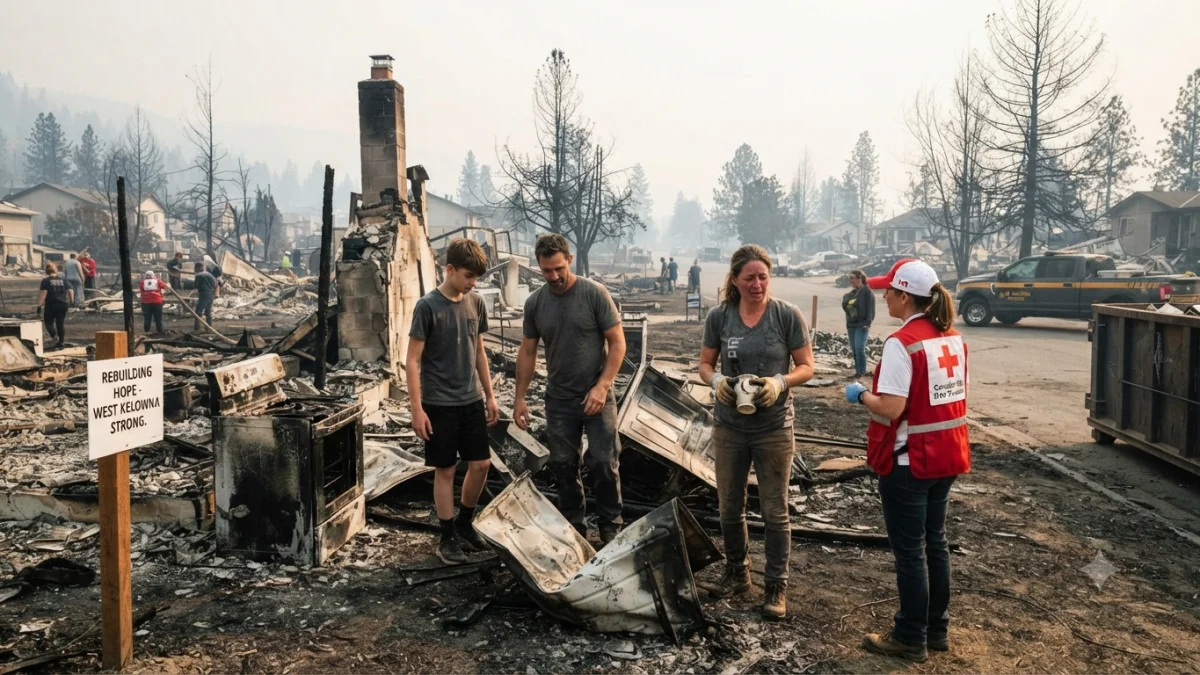
Authorities said significant property losses had occurred, but the active fire zone prevented a complete assessment. Search-and-rescue teams were still responding to people trapped by the rapidly changing conditions, while firefighters worked against a blaze intense enough to create its own weather.
The evacuation therefore left agricultural families in an unfamiliar position: away from the fields and properties on which their livelihoods depend, unable to know the condition of what they had left behind.
For now, the first measure of loss is simply whether people got out.
The next measure will come when authorities can safely enter the affected areas and determine which homes, farms, orchards, vineyards and other properties survived the fire. Until then, the Okanagan's farmers remain among the thousands displaced by a wildfire that transformed a productive agricultural landscape into an evacuation zone in a matter of hours.