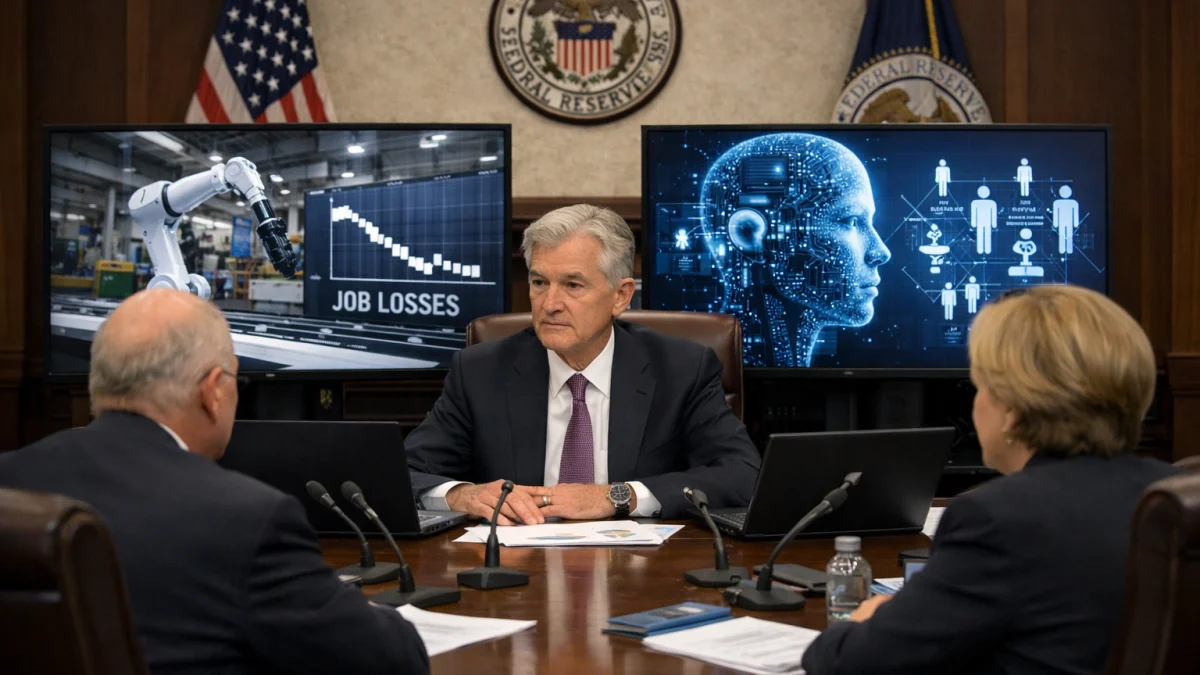


WASHINGTON — The Federal Reserve is closely monitoring the effects of artificial intelligence on labor markets, with officials and researchers examining adoption trends and early impacts on employment and productivity, according to recent analyses and speeches.
Federal Reserve officials, including Governor Michael S. Barr, have highlighted the need to assess how AI could reshape job markets in both the short and long term. In a February speech, Barr noted that while AI may disrupt certain sectors, its overall effects on aggregate employment remain limited so far, with potential benefits for productivity over time.


Recent research from Federal Reserve Banks shows mixed early signals. A May 2026 analysis by the New York Fed found little evidence of a distinct AI-driven decline in labor demand in job postings for AI-exposed occupations since the release of ChatGPT in late 2022, despite a broader slowdown in hiring.
The Board of Governors published notes in March and April 2026 tracking AI adoption. Census Bureau data indicated that about 18% of firms had adopted AI by the end of 2025, while individual surveys showed higher usage rates for generative AI tools in work-related tasks.
Some studies point to uneven effects across demographics. Researchers have observed relatively weaker employment outcomes for younger workers in certain AI-exposed fields, though broader labor market conditions, including interest rate changes, also play a role. Wages in exposed sectors have not shown significant declines.
"The labor market effects of generative artificial intelligence remain under close watch," Fed officials have stated in related publications. Details on specific policy responses to AI-driven shifts continue to evolve as data accumulates.
The central bank incorporates such technological developments into its broader economic assessments, alongside factors like inflation and overall growth. Regional Fed Banks have conducted surveys of businesses on AI implementation, revealing variations by firm size and industry.
AI adoption appears higher among larger firms and in sectors such as technology and professional services. Policymakers emphasize the importance of retraining and workforce adaptation to mitigate potential short-term disruptions.
As of Monday, the Federal Reserve continued to gather data through ongoing surveys and research. Additional reports on AI's integration into the economy and its implications for monetary policy are expected in coming months as more evidence emerges from labor market indicators and business feedback. Further details on long-term productivity projections remain subject to continued study.