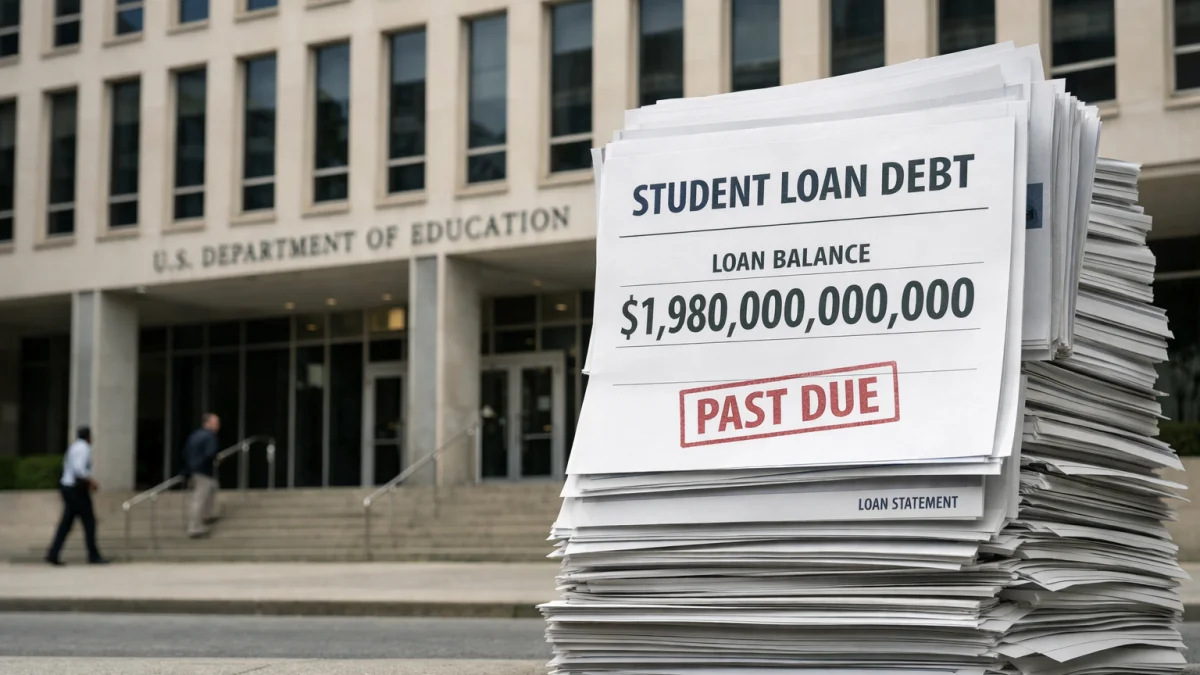


WASHINGTON — Federal student loan debt in the United States is approaching $2 trillion as the federal government intensifies efforts to return borrowers to repayment and collect on delinquent loans, according to government data and recent reports released ahead of major changes to the student loan system scheduled for July 1.
Education and Treasury Department officials have said the federal student loan portfolio stands at roughly $1.7 trillion to $1.9 trillion, depending on the measure used, with more than 40 million Americans holding federal student loans. The repayment push comes after the end of pandemic-era relief measures and amid a broader overhaul of federal student aid programs.


The Trump administration has resumed collection efforts on defaulted loans and, in March, announced that responsibility for collecting defaulted federal student debt would begin shifting from the Department of Education to the Treasury Department. Officials said the move is intended to improve management of the government's loan portfolio and increase repayment rates.
Education Secretary Linda McMahon said at the time that the federal student aid portfolio had grown to nearly $1.7 trillion and that existing programs had not been managed effectively. “American students, borrowers, and taxpayers will finally have functioning programs after decades of mismanagement,” she said in a department statement.
The repayment campaign coincides with significant policy changes taking effect on July 1. Under legislation enacted last year, borrowers will face a revised repayment system that reduces the number of available plans and introduces new borrowing limits for future students. Federal officials have described the changes as a simplification of a system that previously included multiple repayment options.
Borrower advocates and Democratic lawmakers have expressed concern about the transition. More than 60 Democratic members of Congress recently urged the Education Department to provide relief to borrowers eligible for existing forgiveness programs and warned that rising defaults could worsen as collection efforts expand.
Government officials have reported increasing financial distress among borrowers. According to Education Department figures cited earlier this year, more than 9 million borrowers were in default, while millions of others were behind on payments. Separate reports have indicated continuing backlogs in processing applications for income-driven repayment and loan-forgiveness programs.
To encourage repayment, the Education Department announced this month that borrowers enrolled in automatic payment programs would be eligible for a temporary reduction in interest rates through mid-2028. Officials said the incentive is designed to help borrowers return to good standing and reduce repayment costs.
As the July 1 changes approach, borrowers are being asked to select new repayment options or transition into revised plans. Federal agencies have said implementation efforts are continuing, while advocacy groups have called for additional guidance and assistance for affected borrowers. Details on how the changes will affect individual borrowers remain dependent on their loan type, repayment status and enrollment choices.