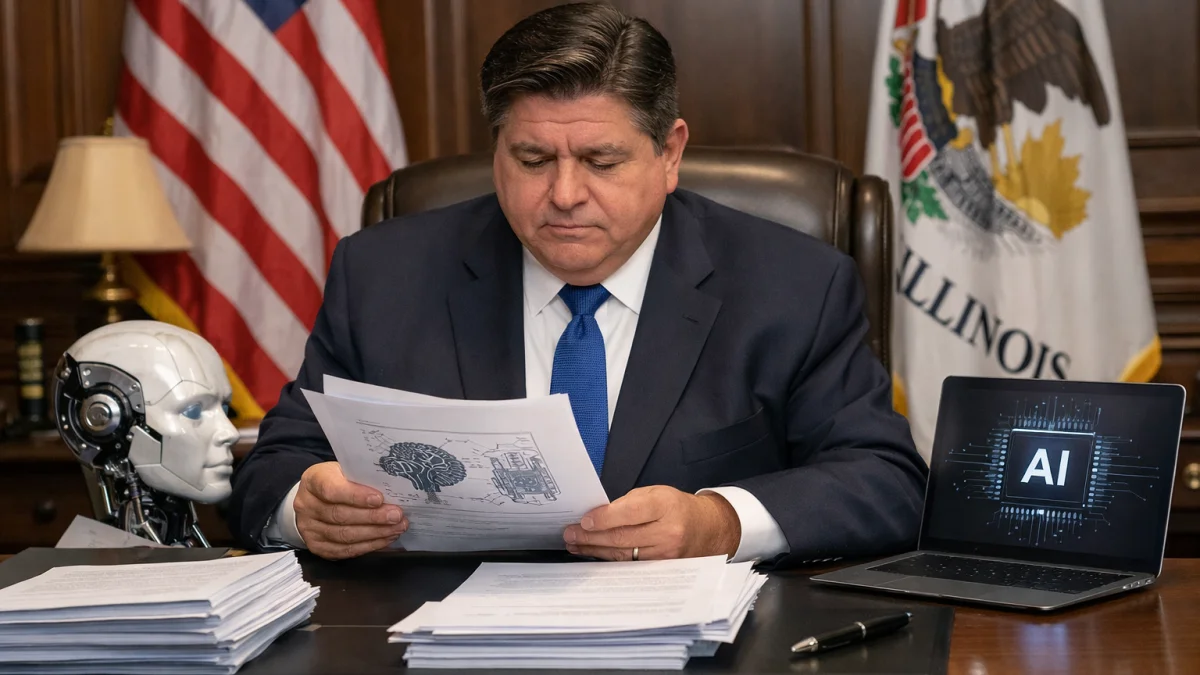


SPRINGFIELD, Illinois — Illinois Gov. J.B. Pritzker has received five AI-related regulatory bills passed by the state legislature as lawmakers adjourned the spring session, officials said.
The measures, approved in the final hours before adjournment early on June 1, 2026, address a range of issues including safety standards for advanced AI models, consumer protections and restrictions on certain AI applications. The bills now await the governor’s action.


Among them is Senate Bill 315, known as the Artificial Intelligence Safety Measures Act, which passed the House unanimously 110-0 and the Senate 52-5. It would require developers of large frontier AI models to implement transparency frameworks, undergo third-party audits of safety practices and report on potential catastrophic risks.
Other bills in the package include measures related to AI use in healthcare decisions, restrictions on AI-enabled rental pricing practices and additional consumer safeguards, according to legislative summaries and reports. The full details of all five bills vary in scope.
Lawmakers introduced an eight-bill AI package in mid-May amid concerns over the lack of comprehensive federal regulation. The session, which ended May 31, saw intense negotiations in the final days, resulting in five measures advancing to the governor’s desk.
Pritzker has signaled support for stronger AI oversight. Following passage of the key safety bill, he stated on social media, “Illinois is leading the nation in holding Big Tech accountable. I look forward to signing SB 315 and working with the legislature so that AI, when used, is used responsibly.”
The legislation positions Illinois alongside states like California and New York in attempting to set standards for AI development and deployment. Industry representatives and lawmakers have described some of the proposals as among the most comprehensive at the state level.
Critics and supporters debated the potential impact on innovation and public safety during committee hearings. Some bills faced amendments before final passage. Details on the precise provisions of each of the five bills sent to the governor remain subject to official enrollment documents.
As of Tuesday, Pritzker’s office had not announced timelines for decisions on the bills. The governor has 30 days to act on legislation received at the end of the session. If signed, several measures could take effect as early as 2027. Legislative staff continued processing paperwork following the late-night adjournment.