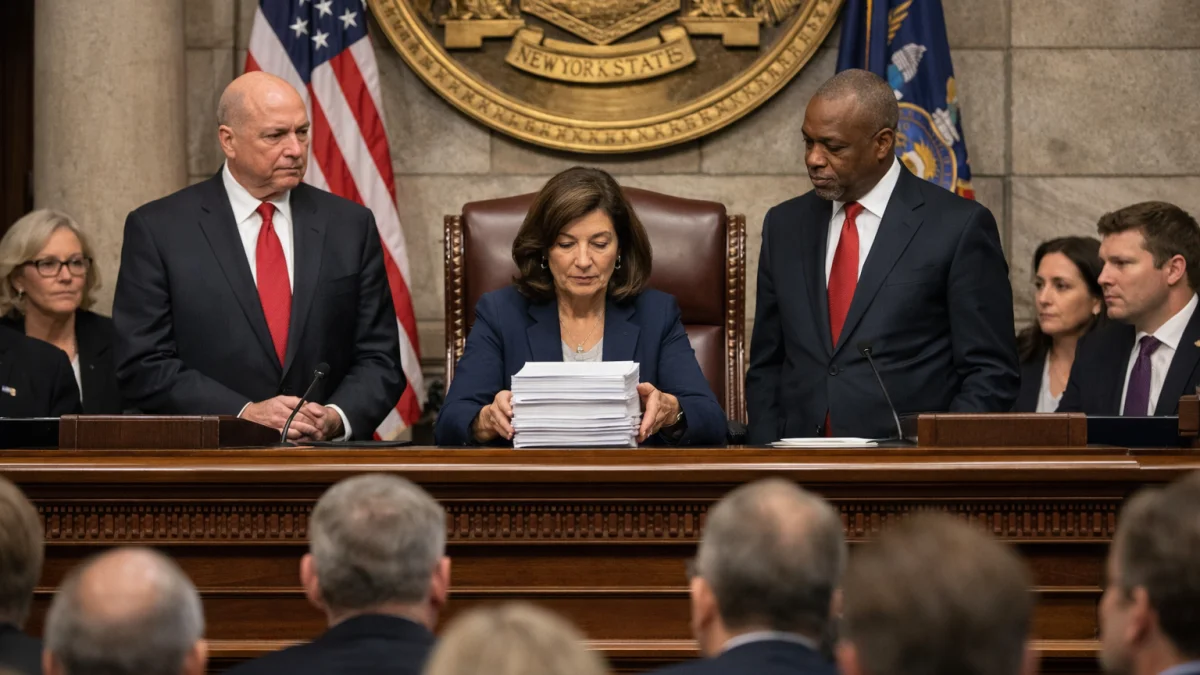


ALBANY, N.Y. — New York lawmakers concluded their 2026 legislative session with seven artificial intelligence-related bills advancing to Governor Kathy Hochul’s desk, marking one of the most extensive state-level efforts this year to regulate the rapidly expanding technology sector.
The measures, approved during the final days of the session that ended last week, address issues ranging from AI chatbot interactions with minors and transparency requirements for AI training data to restrictions on certain pricing practices and oversight of large data centers, according to legislative summaries and advocacy groups tracking the bills.


Among the most prominent proposals is legislation that would prohibit AI companies from offering companion-style chatbots to minors. The bill was backed by New York Attorney General Letitia James and passed both legislative chambers with unanimous support, according to lawmakers and legislative records.
Another measure, known as the Artificial Intelligence Training Data Transparency Act, would require AI developers to disclose information about the sources and copyright status of data used to train their models. Supporters say the legislation is intended to increase transparency around the development of generative AI systems.
Lawmakers also approved the NY FAIR News Act, which would require disclosures on news content substantially generated by artificial intelligence and establish safeguards related to journalistic materials and sources. Labor organizations and transparency advocates supported the proposal, while some media groups raised concerns about potential implications for news operations.
In addition, legislators passed a one-year moratorium on permits for certain large-scale data centers, citing concerns about electricity demand, water usage and environmental impacts associated with the rapid growth of AI infrastructure. If signed, the measure would make New York the first state to impose such a statewide pause.
State Senator Kristen Gonzalez, who sponsored several of the measures, said during the session that lawmakers were seeking safeguards as AI adoption accelerates. “We should not have to sacrifice our water, our energy, our green space and local communities for big tech,” Gonzalez told The Guardian in reference to the data-center legislation.
Business groups and technology industry representatives have expressed concerns about some of the proposals, particularly the data-center moratorium and additional regulatory requirements. They argue that restrictive measures could affect investment and technological development in the state.
The legislation now awaits action by Hochul, who has until the end of the year to sign, veto or seek amendments to the bills. As of Thursday, the governor had not publicly indicated how she would act on the package.