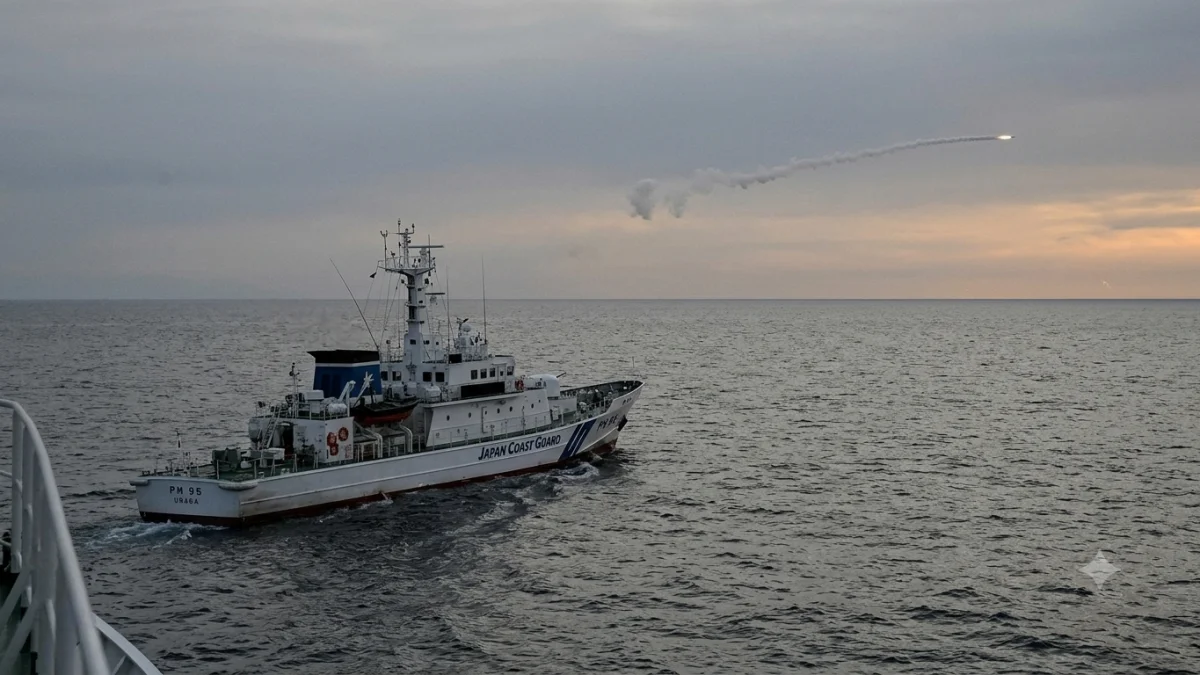


SEOUL — North Korea fired a short-range ballistic missile toward waters between the Korean Peninsula and Japan on Friday, prompting condemnation from Seoul and Tokyo and renewed concern over Pyongyang's weapons development ahead of major allied military exercises.
South Korea's Joint Chiefs of Staff (JCS) said the missile was launched from the eastern coastal city of Wonsan and flew eastward before landing in the sea. The military said it had detected and tracked the launch while maintaining close coordination with the United States and Japan.


Japan's Ministry of Defense said the projectile appeared to be a ballistic missile fired by North Korea. Japanese authorities said the missile did not land inside the country's territory or exclusive economic zone, and there were no immediate reports of damage to aircraft or vessels. The government continued gathering information and monitoring the situation.
South Korea's military condemned the launch as a provocation that violates United Nations Security Council resolutions prohibiting North Korea from conducting ballistic missile activities. The JCS said Seoul had strengthened surveillance and maintained a readiness posture in cooperation with U.S. forces.
The United States, South Korea and Japan have expanded security coordination in response to North Korea's advancing missile and nuclear programs. The latest launch came only days before annual U.S.-South Korea joint military exercises were scheduled to begin, drills that Pyongyang routinely denounces as rehearsals for invasion while Washington and Seoul describe them as defensive.
The missile test followed a series of increasingly sharp statements from North Korea criticizing Japan's military modernization and closer security cooperation with the United States and regional partners. Earlier this week, Kim Yo Jong, the influential sister of North Korean leader Kim Jong Un, warned that Pyongyang could consider "additional military options" in response to what it called Japan's growing offensive capabilities.
North Korea has accelerated missile testing and weapons development in recent years despite international sanctions. Diplomacy aimed at curbing its nuclear and ballistic missile programs has remained stalled since the collapse of U.S.-North Korea negotiations in 2019, while Pyongyang has continued to portray allied military activities as justification for expanding its arsenal.
As of Friday, South Korean, Japanese and U.S. authorities said they were continuing to analyze the missile's flight characteristics and monitor North Korea for possible additional launches.