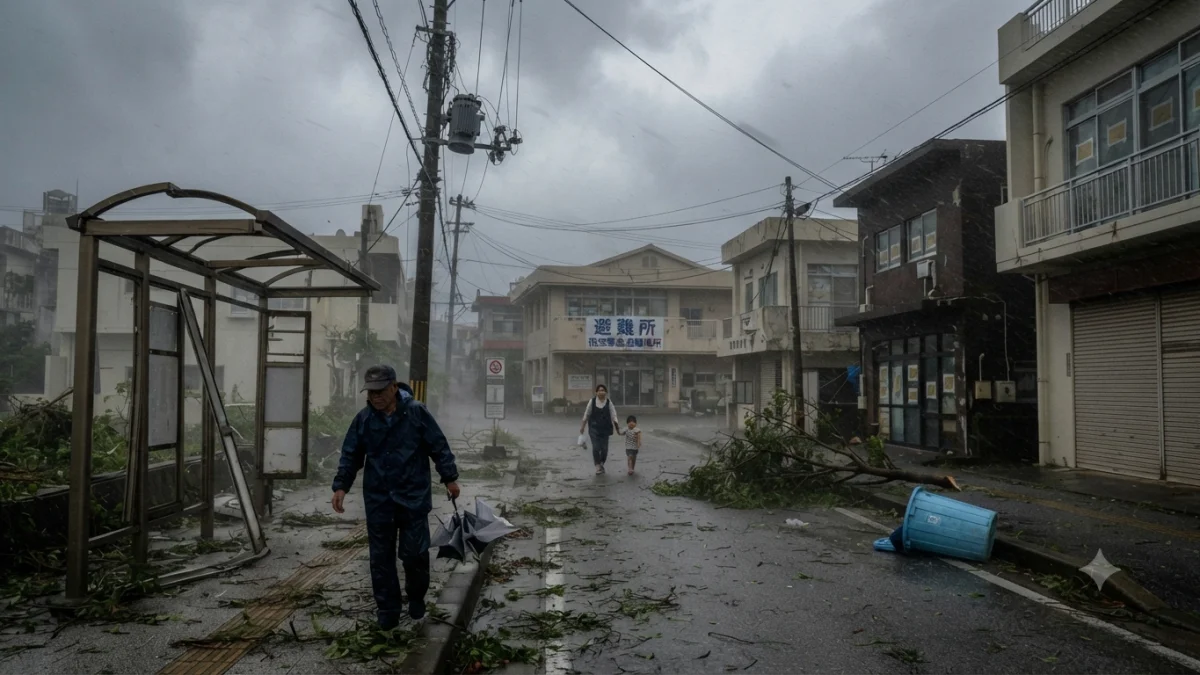


By Saturday, Typhoon Dolphin had left more than 50,000 buildings without power across Okinawa and neighboring Kagoshima, while residents of Japan’s southern islands sheltered from winds that reached 162 kph and gusted as high as 216 kph.
In Okinawa, more than 12,000 buildings had lost electricity, according to authorities, while nearly 39,000 were without power in Kagoshima. Five people in Okinawa, including three elderly residents who fell in the strong winds, suffered non-life-threatening injuries. Another person was injured in Kagoshima.


The disruption was felt alongside the more visible preparations for the storm. Evacuation centers opened across Okinawa, with about 240 people seeking shelter by midday Friday, according to the prefectural government. Naha Airport, the main gateway to Okinawa Island, closed as the storm approached, grounding domestic and international flights.
For residents, the arrival of Dolphin was therefore not simply a question of whether homes could withstand the wind. It was also a test of the everyday systems that make life possible on an island: electricity, transport, communications and access to safe shelter.
Dolphin had already weakened considerably from its earlier peak, but its size and strength still posed a serious threat. The Japan Meteorological Agency warned of strong winds, heavy rain and high waves across the Okinawa region through Sunday and advised residents to remain indoors.
The storm's approach had given communities time to prepare. On Friday, authorities in Okinawa reported that hundreds of people had moved to evacuation centers as conditions deteriorated. The evacuation response was part of a broader effort to keep residents away from the hazards created when powerful winds arrive on exposed islands, where roads, airports and other infrastructure can quickly become unusable.
The injuries recorded in Okinawa illustrated one of those less predictable dangers. Three men in their 70s were slightly injured, according to the prefectural government. Two were caught by strong winds, while another fell from a stool that was apparently blown over while he was preparing for the storm.
The power failures added another layer to the disruption. More than 12,000 buildings in Okinawa were without electricity on Saturday, according to authorities cited by Reuters. Across the region, outages exceeded 50,000 buildings, with Kagoshima accounting for most of them.
Electricity is particularly consequential during a typhoon because the same weather that knocks out power can make restoration difficult. Utility crews cannot safely work during the strongest winds, leaving communities to wait for conditions to ease before damaged lines can be inspected and repairs can begin.
Travel was similarly constrained. All flights at Naha Airport were canceled after the airport closed Friday, according to the airport and the Associated Press. Japan's two major airlines, ANA and Japan Airlines, also canceled flights to and from Okinawa.
For an island region heavily dependent on air travel, the cancellations represented more than an inconvenience. They separated Okinawa temporarily from the normal flow of people and supplies, while leaving travelers unable to leave or reach the island until conditions improved.
The storm also placed pressure on neighboring parts of southwestern Japan. In Kagoshima prefecture, which includes the Amami island chain, nearly 39,000 buildings were without power, according to authorities. Dolphin's effects extended into Kyushu as well, where residents were already dealing with the aftermath of a recent deadly earthquake.
There, some residents whose houses had been damaged by the earthquake were covering roofs and walls with blue tarps before the typhoon's arrival, hoping to prevent further water damage. The combination of earthquake damage and another severe weather event left some households facing a second round of precautions before they had fully recovered from the first disaster.
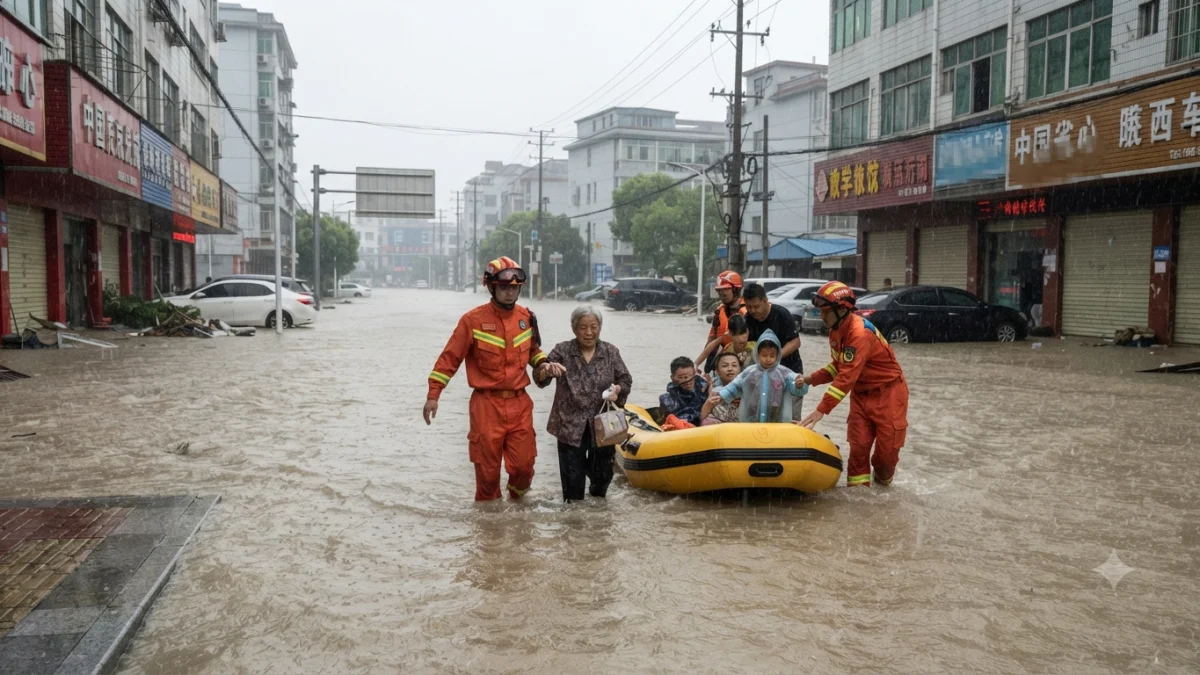
Dolphin's passage also underscored how quickly a regional weather system can become a disruption across borders. After affecting Okinawa and southern Japan, the typhoon was moving toward eastern China, where authorities prepared for heavy rain, flooding and landslides. Chinese authorities raised their emergency response level, closed ports and suspended ferries as the storm approached.
But in Okinawa, the immediate concern remained much closer to home: staying indoors, waiting for the strongest winds to pass and restoring the basic services interrupted by the storm.
The prefecture's evacuation centers, the grounded aircraft and the thousands of darkened buildings offered a measure of Dolphin's impact that wind-speed figures alone could not capture. By Saturday, the typhoon had become part of a familiar rhythm for an island community accustomed to preparing for severe weather — securing homes, seeking shelter and waiting for roads, power and flights to return.
For those still without electricity, however, the storm's effects did not end when Dolphin moved on. Recovery would begin only after the winds subsided enough for crews to assess the damage and restore the infrastructure on which daily life depends.