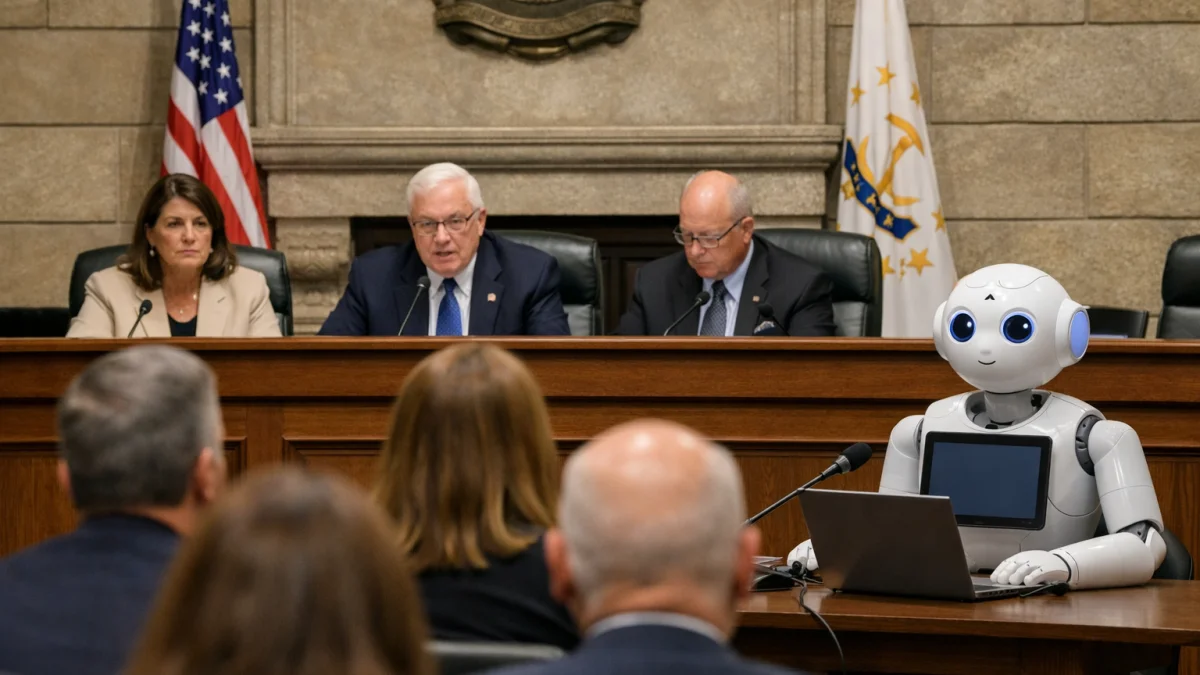


PROVIDENCE, R.I. — Rhode Island lawmakers have approved legislation that would prohibit artificial intelligence systems from providing therapy or psychotherapy services without licensed professional oversight, a move supporters say is intended to establish safeguards around the growing use of AI in mental health care.
The measure, passed by the state legislature this week, would bar individuals and companies from providing therapy or psychotherapy services through internet-based artificial intelligence unless those services are delivered by a licensed professional, according to legislative documents and statements from sponsors. The legislation was part of a broader package of bills addressing artificial intelligence and healthcare.


Supporters of the legislation, including Democratic State Senator Lori Urso, said the bill was prompted by concerns about the role of AI chatbots in mental health settings and reports involving vulnerable users interacting with conversational AI systems. “It is time to put safeguards in place to protect Rhode Islanders of all ages from this rapidly expanding technology,” Urso said in a statement released after Senate approval of the measure.
According to the legislation, licensed mental health professionals would remain responsible for therapeutic decisions, recommendations and treatment plans. The bill would also require informed consent before certain AI companion models could be used to assist in therapy or psychotherapy sessions and would impose confidentiality requirements on AI tools used in mental healthcare settings.
Lawmakers advanced a related bill that would require chatbot developers to establish protocols for responding to indications of suicidal ideation, self-harm or threats of physical harm. Under that proposal, chatbots would be required to direct users to crisis resources when such risks are detected and clearly disclose that users are interacting with an AI system rather than a human.
The legislation reflects a broader trend among U.S. states seeking to regulate AI-powered companion and mental health applications. Several states have enacted or considered measures governing chatbot disclosures, crisis-response requirements and restrictions on AI systems presenting themselves as mental health professionals.
Advocates of stricter regulation have argued that AI systems can generate inconsistent or potentially harmful responses in sensitive mental health situations. In testimony supporting the Rhode Island bill, Family Service of Rhode Island said that “an over-dependence on AI to guide clinical treatment can result in errant decision-making and harmful outcomes in client care.”
Technology industry groups and some AI developers have generally argued in other state and federal policy debates that AI tools can expand access to information and support services when used appropriately, though details of opposition to the Rhode Island measure remain unclear. No formal statewide opposition statement was immediately available.
As of Thursday, Rhode Island lawmakers had approved the legislation and sent it forward in the legislative process. The timing of final enactment and implementation details remained unclear.