

President Donald Trump’s secret transfer to a military aircraft after the NATO summit in Ankara has exposed the extent to which the Iran conflict is reshaping presidential security — and the difficult trade-offs that arise when protecting the president requires concealing his whereabouts even from people traveling with him.
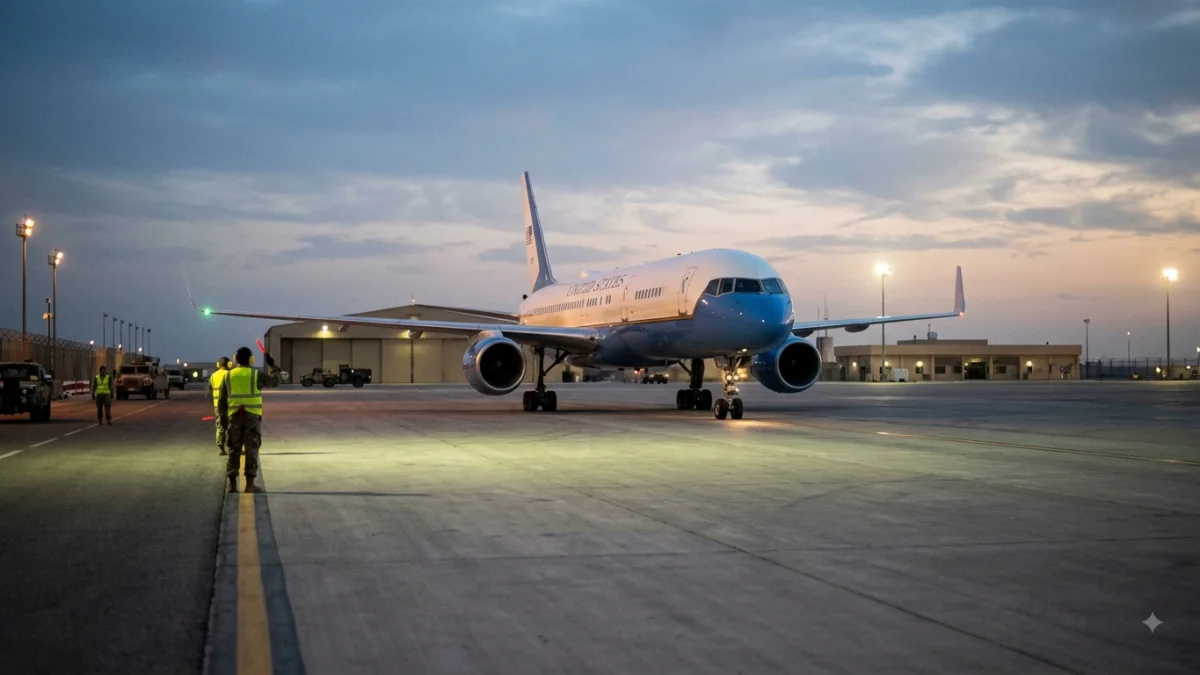
Trump said on Tuesday that he followed instructions from the U.S. Secret Service and the military when he secretly left Air Force One in Turkey last month. He was moved via a catering truck to another aircraft after U.S. officials assessed an Iranian threat, according to reporting first published by The Washington Post. Trump said he did not ask for details of the threat and suggested the aircraft he ultimately used may actually have been more vulnerable than the Air Force One aircraft left behind as a decoy.


The significance is not simply that a U.S. president faced a security threat. Presidents have repeatedly traveled secretly or used deception in high-risk environments. What distinguishes the Ankara operation is that journalists and some White House personnel remained aboard an aircraft that they believed was carrying the president, while Trump traveled separately and the White House did not disclose the arrangement for weeks. That created an unusual gap between the president's actual location and the information available to the people assigned to cover and support him.
The episode also highlights a more technical problem: the vulnerability of presidential aircraft during a rapidly changing conflict. Trump had arrived in Turkey aboard a newly renovated Boeing 747 donated by Qatar. The aircraft's accelerated conversion for presidential use had already raised questions about whether it possessed all of the defensive and secure-communications capabilities associated with the older Air Force One fleet. Trump unexpectedly chose an older presidential aircraft for the departure from Ankara, prompting questions about whether the new plane was sufficiently equipped for a high-threat environment.
Trump himself had publicly acknowledged the broader threat before the details of the operation emerged. At the NATO summit on July 8, when asked whether concerns about Iran had influenced the aircraft change, he said he was "number one on the kill list for Iran." Reuters reported at the time that Trump simultaneously said he did not expect a full-scale conflict with Iran to resume, underscoring the tension between his public assessment of the conflict and the precautions being taken around his own security.
That contradiction does not establish that U.S. officials regarded an attack as imminent. The administration has not publicly disclosed the intelligence behind the threat, and Trump said only that he understood there had been a threat. The White House has not provided detailed confirmation of the reported operation. Communications Director Steven Cheung said the administration uses available tools to address threats against the president, without detailing the intelligence assessment or operational decisions.
There is also an important distinction between the security logic and the communications consequences. Presidential protection routinely depends on secrecy. The U.S. government has previously concealed presidential travel to Afghanistan, Iraq and other dangerous locations. In 2023, President Joe Biden secretly traveled to Kyiv, with a limited press presence accompanying him. Trump himself made a covert trip to Afghanistan in 2019, while a separate press group and decoy arrangements helped conceal his movements.
Those precedents, however, generally preserved some mechanism for independent confirmation of the president's movements. During Trump's 2019 Afghanistan trip, journalists accompanied him. In the 2000 covert visit by President Bill Clinton to Pakistan, reporters were told that the president would not necessarily be on the aircraft they expected, even though the precise plane was not disclosed. In Ankara, by contrast, reporters were unknowingly aboard the decoy aircraft.
That difference matters because presidential travel is not only a security operation but also a constitutional and governmental continuity issue. A traveling press corps provides independent confirmation of the president's presence and activities. In an extreme emergency, uncertainty over where the president is — or whether he is safe — could complicate public communication and create confusion about the continuity of government. Those concerns do not outweigh the need to protect a president from a credible threat, but they illustrate why such operations are normally followed by some degree of disclosure once the immediate danger has passed.
The immediate facts remain limited. Trump says the Secret Service and military directed the switch and that he followed their advice. The administration has not publicly released the underlying intelligence, identified the precise nature of the Iranian threat or explained in detail why the alternate aircraft was selected. What is confirmed is that the president secretly separated from the aircraft carrying his aides and reporters during the return from Ankara and later rejoined the presidential aircraft in Britain. The episode leaves questions about the threat assessment, aircraft protection and the administration's handling of disclosure, all of which remain subject to further official clarification.