

Ukraine’s accusation that Russia has again used North Korean ballistic missiles in a deadly wave of attacks underscores how military cooperation between Moscow and Pyongyang is becoming an increasingly established part of the war, rather than an isolated transfer of ammunition. Ukrainian authorities said Russian strikes killed at least 10 people across the country, including seven workers at the Zaporizhstal steel plant in Zaporizhzhia, while dozens were wounded. Russia said its forces targeted military-industrial and transport facilities and denied targeting civilian sites.
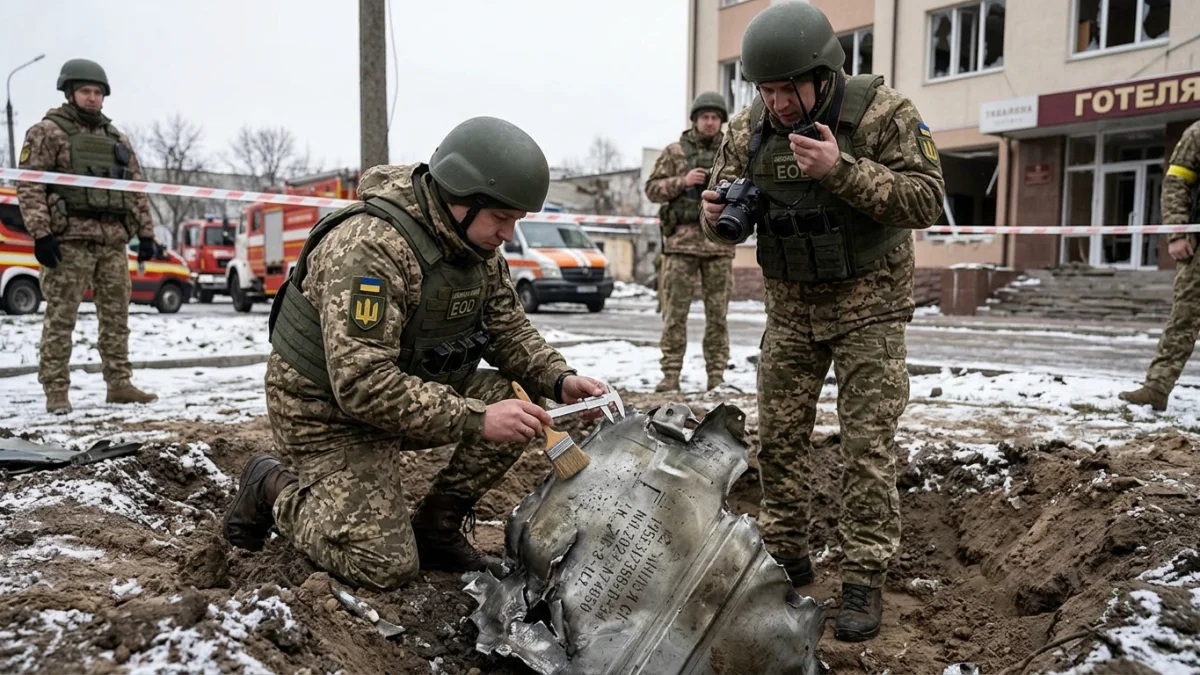
The immediate significance is less the novelty of North Korean missiles than the evidence that Moscow continues to have access to them as Ukraine faces persistent pressure on its ballistic-missile defenses. Ukrainian officials have previously identified North Korean KN-23 and KN-24 missiles in Russian attacks, and Kyiv's military researchers say laboratory analysis of recovered fragments has confirmed characteristics they associate with North Korean production.


The latest allegation also follows a more consequential development reported earlier this month. Ukrainian military intelligence said a North Korean missile unit had begun deploying to western Russia and could eventually operate as part of Russia's 112th Missile Brigade, with up to 120 ballistic missiles and six launchers. Reuters reported that about 40 North Korean missiles had already been supplied and that Ukrainian officials said at least two had been fired at Ukraine during a strike the previous week. A U.S. source told Reuters Washington was aware of the reported deployment, although Reuters could not independently verify all elements of the Ukrainian assessment.
That distinction matters. North Korean missile use in Ukraine is not itself a new allegation: Russia has employed such weapons since late 2023. What is changing is the reported scale and institutionalization of the cooperation. Reuters reported in August that North Korea had supplied Russia with millions of artillery and mortar rounds, ballistic missiles and other weapons. A Reuters analysis with the Open Source Centre identified 64 voyages by Russian-flagged cargo ships to North Korea's Rajin port between September 2023 and March 2025, carrying nearly 16,000 containers of ammunition to Russian ports.
The arrangement gives Moscow another source of ballistic missiles at a time when Ukraine's air defenses are under sustained strain. Ukrainian Defense Ministry data from May showed that Ukrainian forces intercepted more than half of the missiles launched during one particularly large attack, but the ministry said additional capabilities against ballistic threats were urgently needed. It has separately described ballistic missiles as especially difficult targets for air defenses.
For North Korea, the battlefield offers a different strategic benefit. Reuters reported that analysts believe Pyongyang can obtain economic support and military technology from Russia, while North Korean personnel and weapons gain exposure to modern combat involving drones, electronic warfare and coordinated missile and artillery operations. The use of North Korean missiles in Ukraine therefore provides Pyongyang with information about how its systems perform under actual combat conditions.
The cooperation also has an international legal dimension. North Korea has been under U.N. sanctions since 2006 over its nuclear and ballistic-missile programs. Those sanctions prohibit countries from providing certain military training and assistance involving North Korean personnel. The United States and its allies have said North Korean arms transfers and military deployments in support of Russia violate U.N. Security Council resolutions. Russia and North Korea, meanwhile, have deepened their formal relationship through a comprehensive strategic partnership treaty signed in 2024 that includes a mutual-assistance provision.
The broader military effect remains difficult to quantify. The existence of North Korean missiles does not by itself establish that they are decisive to Russia's campaign, and Ukrainian claims about future deployments or additional personnel require independent confirmation. But their continued appearance adds another variable to an already complex Russian strike arsenal and can complicate Ukraine's allocation of scarce missile-defense interceptors.
The confirmed picture is therefore one of expanding military ties between Russia and North Korea, with North Korean missiles already documented by Ukrainian authorities and further transfers reported by Ukrainian intelligence. The latest attacks have reinforced concerns in Kyiv that the flow is continuing. What remains to be established independently is the precise number of missiles recently delivered, the operational status and composition of any North Korean missile unit in Russia, and how extensively those forces are participating in strikes against Ukraine. Those questions will be central to assessing whether the latest attacks represent continued use of an existing supply channel or a broader new phase of direct North Korean military involvement.