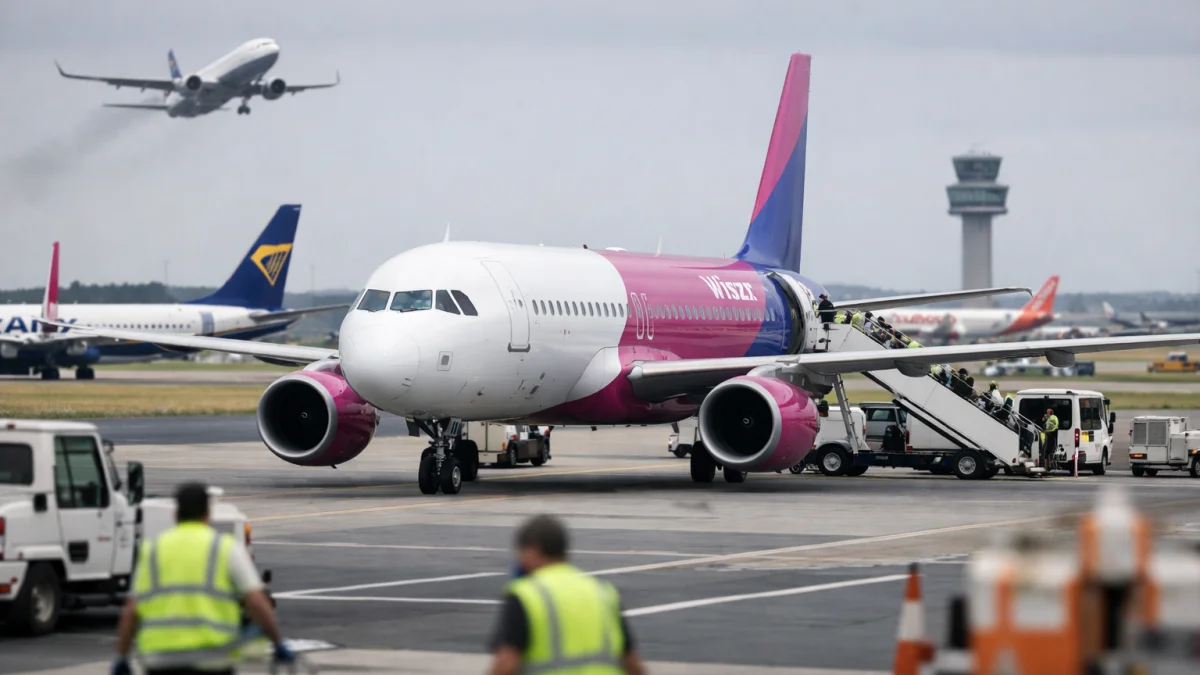


BUDAPEST — Wizz Air Holdings Plc, a major European low-cost carrier, reported slim profitability for its financial year 2026 amid ongoing engine-related fleet groundings, geopolitical disruptions and broader cost pressures in the aviation industry, according to results released on June 11, 2026.
The airline carried a record 69.7 million passengers in the year ended March 31, 2026, up from 63.4 million the previous year, with seat capacity rising 10.5 percent. Revenue increased 8.0 percent to €5.69 billion, the company said in its annual report.


However, net profit fell sharply to €1.3 million from €213.9 million in the prior year, while operating profit declined to €139.7 million from €167.5 million. The results reflected higher maintenance and depreciation costs linked to Pratt & Whitney geared turbofan engine issues that grounded a significant portion of its fleet, as well as the impact of Middle East conflicts.
Wizz Air faced prolonged disruptions from mandatory inspections and repairs on Pratt & Whitney engines, with around 38 to 40 aircraft still affected as of recent months. The company expects the full fleet to return to service by the end of 2027. Chief Executive Officer József Váradi previously stated that the number of grounded planes would fall to about 25 by the end of summer 2026.
Geopolitical tensions added further strain. Disruptions related to the conflict involving Iran in early 2026 led to route cancellations, with the company estimating a roughly €50 million negative impact on net profit for the financial year. Wizz Air shifted capacity toward European routes in response.
The wider aviation sector in 2026 has navigated rising fuel prices, supply-chain constraints, inflation and geopolitical volatility. Wizz Air hedged about 70 percent of its summer fuel needs at favorable rates, helping to mitigate some cost increases.
“It’s a big mess,” one industry observer noted in related reporting, though Wizz Air officials emphasized resilience through operational adjustments and a focus on core Central and Eastern European markets.
The airline revised its capacity growth outlook upward earlier in the year and reported strong operational reliability, achieving a 99.53 percent completion rate from January to April 2026. It continues to expand its fleet with new Airbus deliveries while deferring some longer-term commitments to manage capital expenditure.
As of June 2026, details on the full implementation of recent policy or regulatory responses to industry-wide engine and cost challenges remain unclear. Wizz Air did not immediately provide additional comment beyond its published results.