

BEIJING—Chinese artificial intelligence startup Moonshot has unveiled a new large-scale AI model that industry analysts and independent benchmark providers say approaches the capabilities of leading U.S. systems, underscoring the rapid advance of China's AI sector and intensifying global competition in generative AI.
Moonshot said its new Kimi K3 model contains 2.8 trillion parameters and is the world's largest open-weight AI model. The company said the system delivers performance close to Anthropic's frontier Fable model across a range of coding, reasoning and autonomous agent tasks while making its underlying model weights available for developers. Those claims have drawn broad attention across the technology industry, with independent observers describing the release as one of China's strongest challenges yet to U.S. AI leadership.


The launch follows a series of increasingly capable releases from Chinese AI developers including Z.ai, MiniMax, DeepSeek and Alibaba-backed projects, reflecting a broader trend rather than an isolated breakthrough, according to analysts at the Center for Strategic and International Studies. The think tank said recent Chinese models have narrowed the capability gap with leading U.S. systems in coding and agent-based tasks while competing aggressively on cost.
Technology researchers and industry executives said Chinese developers have increasingly focused on open-weight models that can be downloaded, customized and deployed by businesses. That strategy has helped expand adoption while offering lower-cost alternatives to proprietary systems developed by U.S. companies such as OpenAI and Anthropic.
The latest advances come despite continuing U.S. export controls on advanced semiconductor technology destined for China. Chinese AI companies have emphasized improving efficiency and reducing computing costs as they develop increasingly competitive models under hardware constraints.
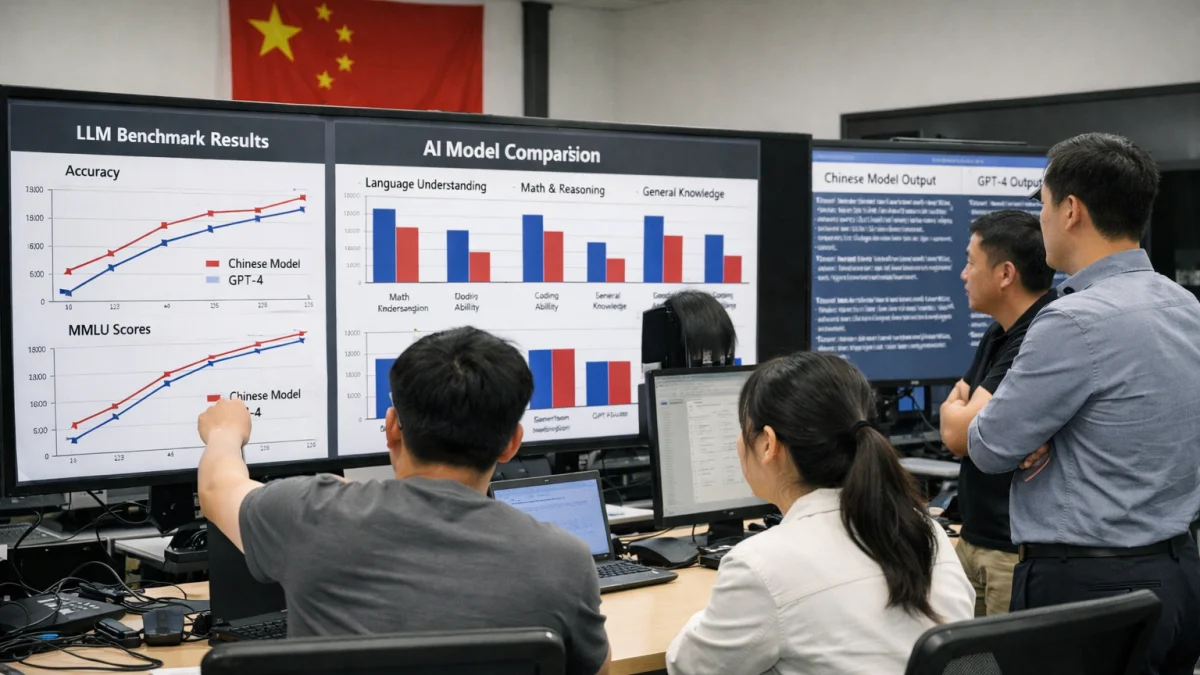
The release has also renewed debate over the balance of leadership in frontier AI. Some analysts cautioned that benchmark results measure only selected capabilities and do not necessarily reflect overall real-world performance, safety or commercial adoption. Others said the growing competitiveness of Chinese models indicates that the technological gap separating the world's two largest AI ecosystems has narrowed significantly over the past year.
As of July 19, no independent authority has declared a definitive leader in overall AI capability. However, recent model releases from both Chinese and U.S. developers suggest that competition at the frontier of artificial intelligence is becoming increasingly close, with further independent evaluations expected as new systems are tested and deployed.