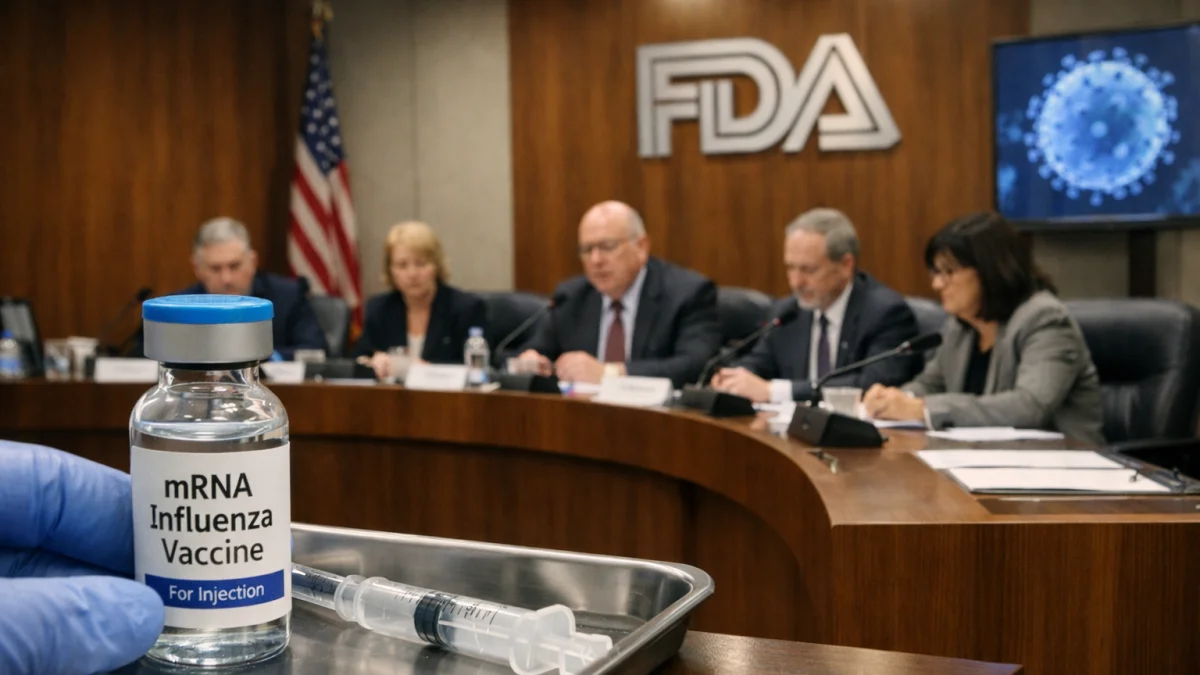


WASHINGTON — A panel of advisers to the U.S. Food and Drug Administration has recommended approval of Moderna’s experimental mRNA-based influenza vaccine for adults aged 50 and older, a key step toward what could become the first seasonal flu shot using messenger RNA technology to reach the U.S. market. The advisory committee voted on June 18 after reviewing safety and effectiveness data submitted by the company as part of its application for regulatory approval.
The FDA’s Vaccines and Related Biological Products Advisory Committee concluded that the benefits of the vaccine, known as mFlusiva, outweigh its risks in adults aged 50 to 64 and in those aged 65 and older. Committee recommendations are nonbinding, but the agency often considers them during its final review process.


According to FDA meeting materials, the panel was asked to evaluate Moderna’s application for the prevention of influenza caused by influenza A and B strains represented in the vaccine. The review was conducted during a public meeting held by teleconference on Thursday.
Moderna said clinical trial data showed the vaccine generated strong immune responses and, in certain age groups, performed better than a standard influenza vaccine. FDA staff reviewing the application said available evidence may support effectiveness in older adults, although they noted limitations, including data collected over a single flu season and the exclusion of some higher-risk populations from studies.
“The benefits of the shot outweighed its risks,” the advisory panel concluded in its recommendation following the vote.
The application has drawn attention because it would extend the use of mRNA technology beyond COVID-19 vaccines into seasonal influenza prevention. Traditional flu vaccines are generally produced using egg-based or cell-based manufacturing methods, while mRNA vaccines use genetic instructions to trigger an immune response. Supporters of the technology say it may allow manufacturers to respond more quickly to changes in circulating virus strains.
The review follows earlier regulatory scrutiny. In February, the FDA initially declined to proceed with Moderna’s application, citing concerns related to study design, before later moving forward with a formal review process.
As of June 20, the FDA had not issued a final approval decision. Agency documents indicate a decision is expected by early August, ahead of preparations for the upcoming influenza season.