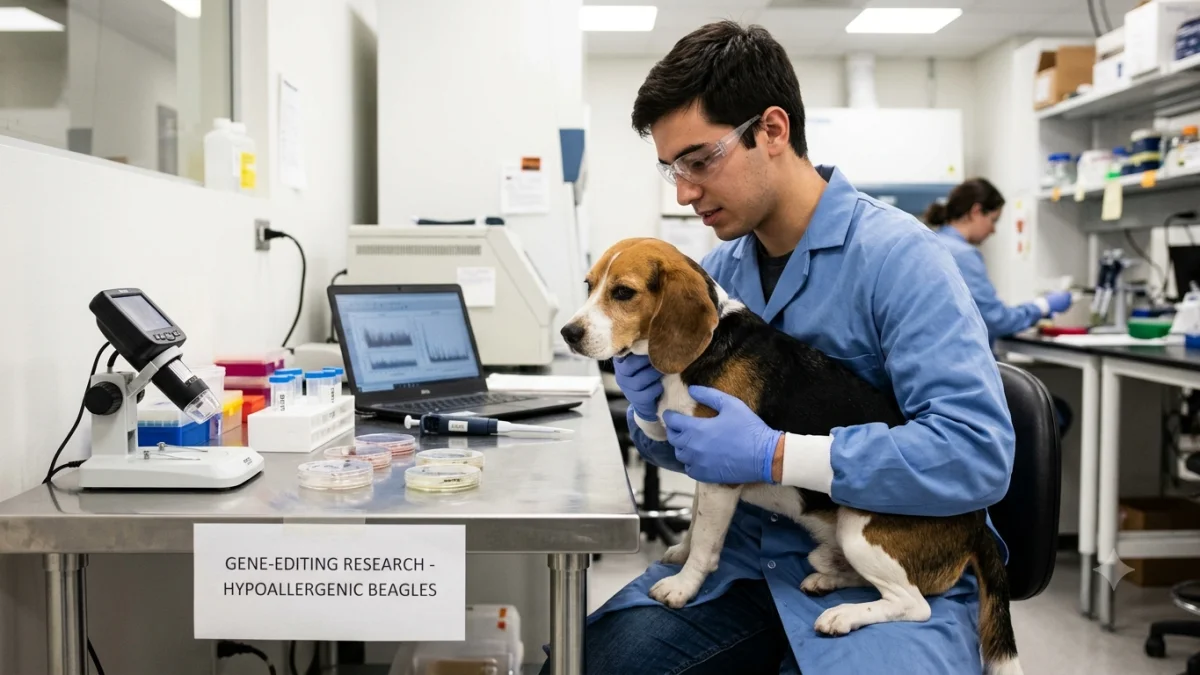


NEW YORK — Scientists have developed gene-edited beagles that do not produce a major protein responsible for triggering many dog allergies, marking what researchers say is a potential step toward expanding pet ownership for some allergy sufferers, while experts caution that further testing and long-term monitoring will be needed before the approach can be widely adopted.
The research, published on Wednesday in The CRISPR Journal, was led by biotechnology company Kindred Companion Sciences, whose scientists used the CRISPR gene-editing technique to disable the gene responsible for producing Can f 1, one of the primary allergens found in dog saliva, dander and hair. According to the researchers, two female beagles, Bailey and Alfie, were born in September 2024 carrying the genetic modification and have shown no detectable levels of the targeted protein.


Matt Walker, a geneticist and founder of Kindred Companion Sciences who has long suffered from dog allergies, said he has lived with Bailey for about 18 months without experiencing allergic reactions. Skin-prick testing conducted by the research team also showed no reaction to samples from the gene-edited dogs, while samples from other dogs triggered a response, according to the study.
"The feeling right now is sort of a mix of relief and awe and gratitude that it worked," Walker said, according to the researchers.
The scientists said they created the dogs by editing cells from a beagle, transferring the modified genetic material into donor eggs and implanting resulting embryos into a surrogate dog. Genetic sequencing and laboratory testing confirmed the absence of the targeted allergen, they reported.
Independent experts said the findings represent an important proof of concept but emphasized that broader studies are needed. Dr. Jeff SoRelle, a pathologist at the University of Texas Southwestern Medical Center who was not involved in the research, said future work should evaluate the dogs in a larger group of people with dog allergies to determine whether the approach consistently reduces allergic reactions across different individuals.
Researchers also said they must continue monitoring the animals for possible long-term health effects and assess whether the genetic modification can be safely introduced into additional breeds. Commercial availability, if it occurs, is expected to take years because of regulatory, scientific and production challenges.
The development has also prompted ethical debate. Some bioethicists have questioned whether producing genetically engineered pets could reduce adoption of dogs already living in animal shelters, while the company said its long-term goal is to develop allergy-friendly companion and service dogs rather than pursue cosmetic genetic modifications.
For now, the researchers describe the work as an early demonstration of how gene editing could address a common medical problem, with additional studies planned before any broader use can be considered.