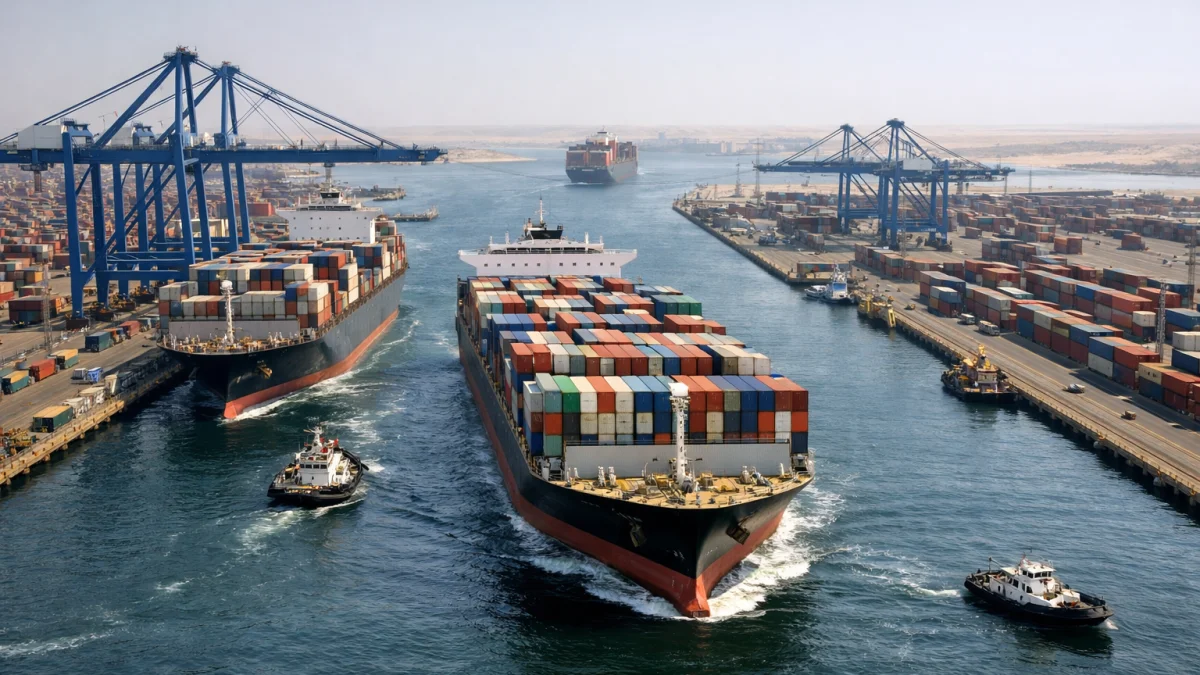
LONDON — Companies across global supply chains are expanding efforts to reduce dependence on major shipping chokepoints, adopting alternative routes, diversifying suppliers and increasing inventory buffers as disruptions continue to affect maritime trade in 2026, according to industry executives, shipping companies and government officials.
The moves come amid continuing concerns over congestion and security risks at key maritime corridors, including the Strait of Hormuz, the Suez Canal route and other heavily used shipping passages. Industry groups have warned that rerouting vessels around disrupted waterways has increased transportation costs and placed additional pressure on alternative ports and land transport networks.
Logistics providers and manufacturers have responded by redesigning supply chains to spread risk across multiple transport corridors. Some companies have shifted sourcing to a broader range of countries, while others have increased warehouse capacity closer to major consumer markets, according to industry reports and public statements. Officials in the United States and Europe have also emphasized the need to reduce reliance on concentrated supply networks.
U.S. Treasury Secretary Scott Bessent said this week that supply chain security “requires diversifying away from dangerous concentrations” and building sufficient capacity to prevent dependence on “a foreign chokepoint abroad.” He made the remarks during a speech at the Economic Club of New York, according to Reuters.
The pressure on supply chains has intensified as disruptions in one shipping lane increasingly affect others. According to research published by S&P Global Market Intelligence in April, rerouting from the Strait of Hormuz has increased traffic through secondary routes, including the Panama Canal and the Malacca Strait, creating broader network congestion rather than a single point of disruption.
Shipping industry representatives have also raised concerns about capacity constraints. During discussions with the World Trade Organization earlier this month, senior executives from major shipping firms said efforts to divert cargo from affected maritime routes were straining alternative transport options, many of which were already operating near capacity.
Some carriers have continued to evaluate route adjustments. Earlier this year, major container shipping companies developed plans for a gradual return to the Suez Canal after prolonged disruptions in the Red Sea, while maintaining contingency options should conditions change, according to a Reuters factbox published in January.
As of Friday, companies and governments continued to pursue diversification strategies while monitoring developments at major shipping corridors. Industry groups said efforts to expand routing options and strengthen supply chain resilience remain ongoing, though details of additional measures remain unclear.