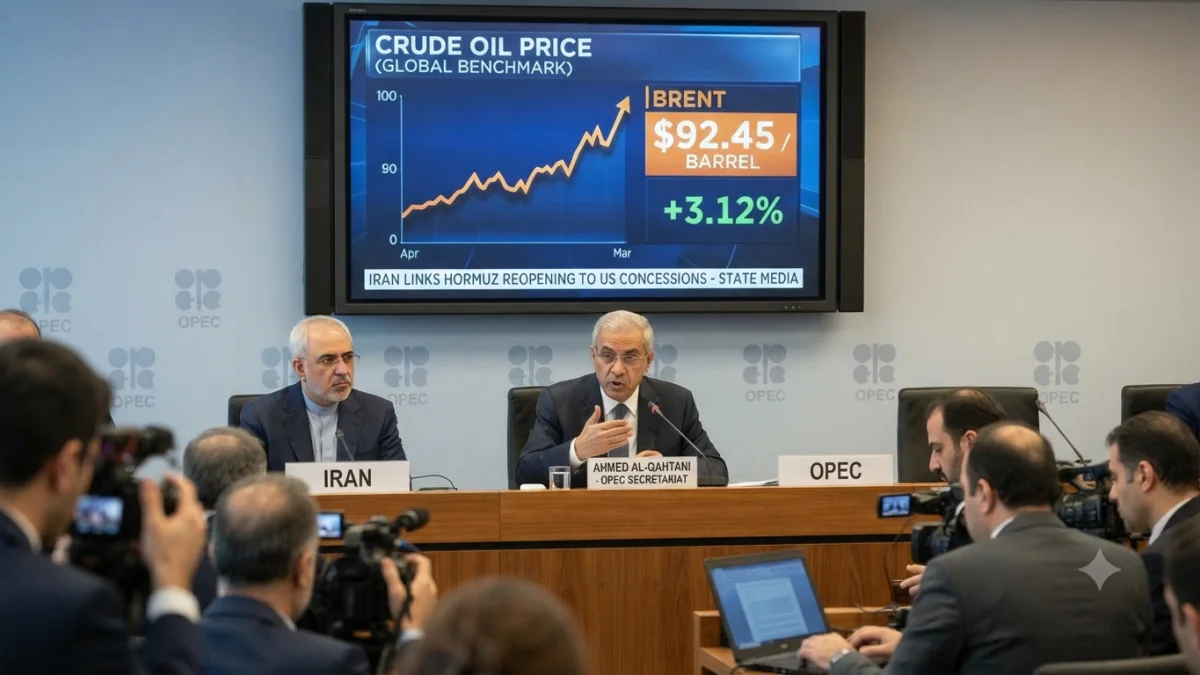


SINGAPORE — Global oil markets were assessing the potential impact of a U.S.-Iran agreement on energy supplies on Sunday, June 21, 2026, after expectations of reduced tensions in the Middle East contributed to lower oil prices and renewed focus on the outlook for Iranian crude exports. Market participants were monitoring whether any agreement would lead to a sustained return of oil flows and changes to sanctions affecting Iran’s energy sector.
Oil prices declined earlier in the week after reports that Washington and Tehran had reached an understanding covering issues including the reopening of the Strait of Hormuz and possible relief from restrictions on Iranian oil sales. Reuters reported that a U.S. official said the agreement would allow Iran to resume oil and fuel sales once signed, with conditions attached.


The Strait of Hormuz has remained a central concern for energy markets because it is a major route for global oil shipments. Analysts and traders have focused on whether commercial shipping can return to normal levels following the escalation in regional tensions. Reuters reported that oil prices fell as investors evaluated the possibility that a U.S.-Iran deal could restore supply flows, although uncertainty remained over the pace of normalization.
Iran has said the draft understanding includes provisions related to oil sanctions, nuclear restrictions and the movement of commercial vessels, according to a senior Iranian official cited by Reuters. The official said the final terms would still need further discussion, and details of implementation remained unclear.
Energy markets have also been watching how quickly Iran could increase exports if restrictions were eased. Reuters reported that a U.S. official described the arrangement as a performance-based agreement, meaning benefits would depend on Iran meeting the conditions outlined in the deal.
“Markets are broadly stripping out the embedded geopolitical risk premium in oil prices,” Priyanka Sachdeva, senior market analyst at Phillip Nova, told Reuters. She added that the process of returning to normal shipping conditions remained uncertain.
The potential increase in Iranian supply comes as global oil markets continue to monitor demand and production trends. The International Energy Agency has been assessing changes in the balance between supply and consumption, while producers and governments have continued to track the effect of regional developments on energy markets.
Some market participants have welcomed the possibility of greater supply stability, while others have noted that political agreements do not immediately translate into increased physical oil availability. The timing of any changes to exports, shipping and financial restrictions remains dependent on further steps by the parties involved.
As of Sunday, officials had not announced additional details on the implementation of the agreement, and oil markets remained focused on developments between the United States and Iran, including any formal actions affecting sanctions and energy exports.